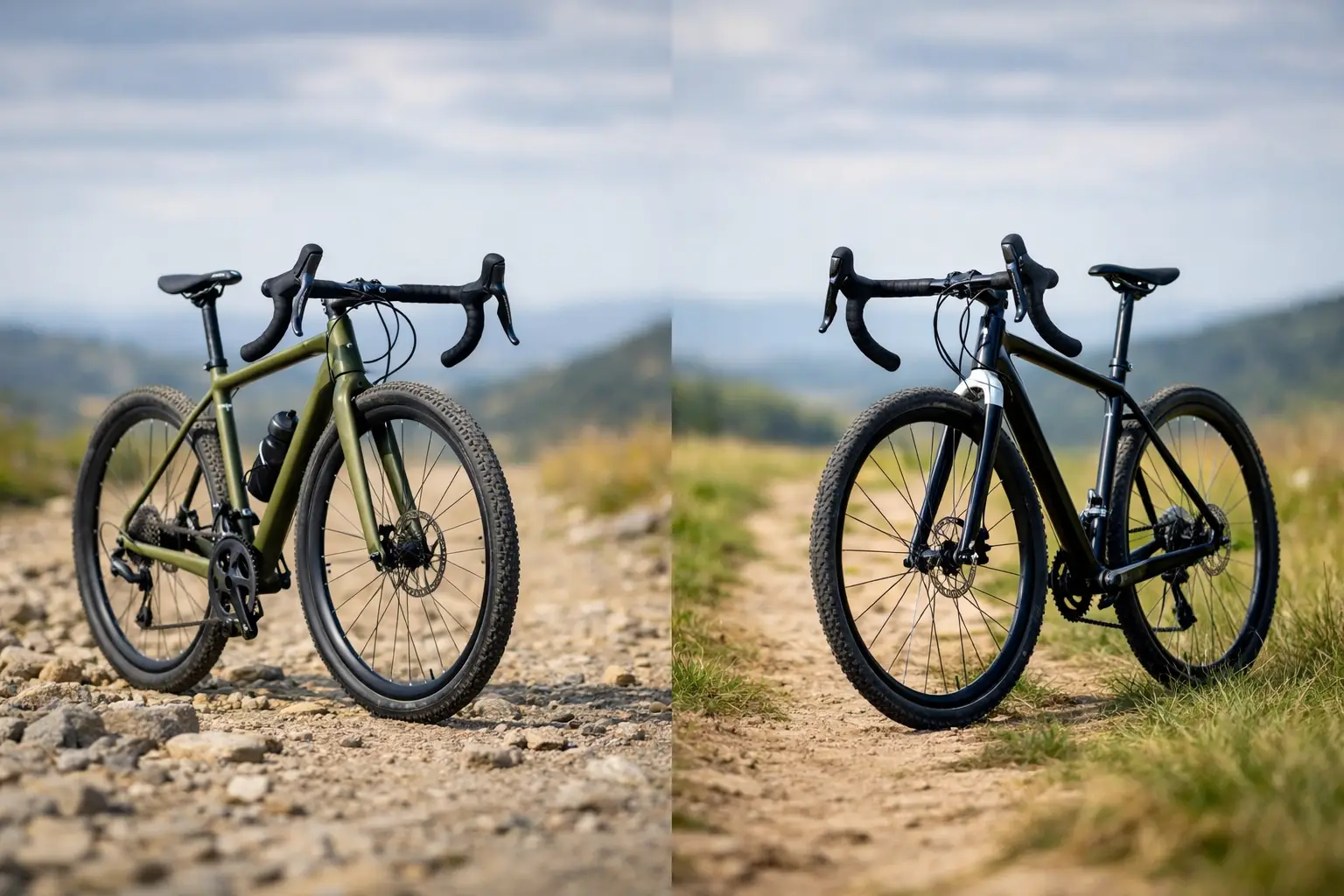
The difference becomes obvious when the ride turns rough. A cyclocross bike wants you to attack the next corner, lift it over a barrier and accelerate hard again. A gravel bike wants to cover another 80 kilometres of mixed surfaces without punishing your hands, back or tyres. In the gravel bike vs cyclocross bike decision, neither is simply a faster version of the other. They are purpose-built machines with different ideas of speed.
For riders investing in a premium frame or complete bike, that distinction matters. Geometry, tyre clearance, gearing and mounting options determine whether a bike feels brilliantly focused or frustratingly compromised on the roads, trails and events you actually ride.
Gravel Bike vs Cyclocross Bike: The Core Difference
Cyclocross bikes are designed around short, intense off-road races. A typical race lasts around an hour and combines grass, mud, woodland, ruts, sharp turns, steep banks and barriers. The bike needs instant acceleration, precise handling and enough tyre clearance to keep moving when conditions turn filthy.
Gravel bikes are designed for longer rides over mixed terrain: tarmac lanes, hardpack tracks, forest roads, loose gravel and the occasional technical section. They prioritise control, comfort and self-sufficiency at speed. That can mean anything from a fast all-road bike for long summer routes to a high-clearance machine ready for rough UK bridleways and multi-day riding.
Both usually use drop handlebars, disc brakes and wider tyres than a conventional road bike. Both can be light, fast and genuinely race-worthy. But fitting cyclocross race demands into an all-day gravel ride is not the same as fitting all-day gravel capability into a cyclocross race bike.
Geometry: Fast Reactions or All-Day Stability?
Geometry is where the personalities separate most clearly. Cyclocross geometry is traditionally more direct and lively. The wheelbase is often shorter, the front end can feel quicker, and the riding position is generally more aggressive. On a tight course, that helps you pick a line through cambers, change direction under power and respond instantly when the rider ahead opens a gap.
A gravel bike generally has a longer wheelbase and more stable steering. Its frame is often designed around a slightly more upright position, although race-focused gravel models can still be low and aerodynamic. The result is a calmer bike when the surface is loose, the descent is fast, or fatigue starts to affect your handling after several hours in the saddle.
That does not mean every gravel bike is relaxed or every cyclocross bike is twitchy. Modern designs overlap, particularly among performance brands. A rider who races fast gravel events may prefer a sharper gravel platform, while a cyclocross racer who also rides winter lanes may choose a more forgiving setup. Frame size and fit matter just as much as the headline geometry figures. A poorly fitted race bike is never the quick option.
Tyres and Clearance Change What You Can Ride
Cyclocross race tyres are commonly capped at 33 mm under UCI rules, though riders outside regulated racing may fit wider rubber where the frame allows. Narrower tyres cut through mud effectively, can feel rapid on grass and reduce the chance of clogging in thick conditions. A proper cyclocross tyre has a pronounced tread pattern, built to find grip on wet roots, off-camber ground and greasy climbs.
Gravel bikes normally clear significantly wider tyres. Many performance gravel frames are happiest with 40 to 45 mm tyres, while more adventure-led models can accept 50 mm or more. That extra volume lets you run lower pressures for traction and comfort, smoothing out washboard tracks, loose stones and broken farm lanes. It also brings more confidence when the route is less predictable than the map suggested.
Tyre choice can blur the categories, but it cannot erase the frame’s limits. Fitting a fast 35 mm semi-slick tyre to a gravel bike can make it lively for dry cyclocross-style riding. Fitting wider tyres to a cyclocross bike may improve comfort, but clearance, mud build-up and handling can still hold it back. If you regularly ride loose, rocky or deeply rutted gravel, clearance is a performance feature, not a luxury.
Gearing: Repeated Sprints vs Long-Range Efficiency
Cyclocross gearing is selected for repeated changes of pace. A 1x drivetrain is common because it simplifies shifting and improves mud clearance, with a cassette range chosen for hard accelerations and short, steep climbs. The focus is keeping the right gear available while racing at high intensity, rather than carrying every ratio for a six-hour route.
Gravel gearing needs a broader brief. Steep, loose climbs can demand a low gear that preserves traction and saves your legs, while fast road sections may reward a bigger top end. A 1x setup remains popular for its simplicity and chain retention, but 2x drivetrains are still a strong choice for riders who want closely spaced road gears alongside a useful climbing range.
There is no automatic winner. If your riding is race laps, winter intervals and short, punchy courses, cyclocross ratios make sense. If a typical Sunday ride mixes lanes, long gravel climbs and exposed tracks, gravel-specific gearing gives you more options when conditions and fatigue change.
Comfort, Storage and Practical Details
A gravel bike is usually the more adaptable ownership proposition. Many have mounts for extra bottles, top-tube bags, mudguards or luggage, making them practical for big days, commuting and bikepacking. Some use frame shapes and carbon lay-ups intended to take the edge off constant vibration. These details do not make a gravel bike soft. They help you maintain speed when the route is rough enough to wear down a more rigid setup.
Cyclocross bikes are intentionally stripped back. Carrying a bike over barriers is easier without extra hardware, and race frames avoid unnecessary weight or clutter. Mud clearance around the fork crown and stays is a priority. For dedicated racers, that focused simplicity is exactly the point.
If winter riding is part of your plan, consider mudguards carefully. Gravel bikes are more likely to support them cleanly, while most cyclocross bikes are better left as race-day tools. The right bike should suit the rides that fill your calendar, not only the one event that first caught your attention.
Which Bike Is Faster?
On a traditional cyclocross course, the cyclocross bike is faster in the right hands. Its handling, race position and tyre setup are designed for the stop-start brutality of the discipline. It is built to be driven hard for an hour.
On mixed-surface endurance routes, a gravel bike is usually faster in the real-world sense. Its greater tyre volume, stable handling and broader gearing allow you to carry speed for longer and make fewer compromises when the surface changes. A gravel bike with fast-rolling tyres can also be remarkably quick on tarmac, especially when compared with a cyclocross bike wearing aggressive mud tyres.
Speed therefore depends on terrain, distance and rider intent. The lighter-looking bike is not always the faster purchase.
Choose a Cyclocross Bike If Racing Is the Priority
A cyclocross bike is the right call when you are committed to the race season, want the sharpest possible handling and expect to ride muddy circuits, grass and technical woodland regularly. It is also a strong winter training bike for riders who value high-intensity off-road sessions and a direct, race-ready feel.
Be realistic about its limits. It can handle gravel roads and dry trails, but it is less accommodating when rides become long, loaded or consistently rough. For an enthusiast whose main goal is pinning on a number and racing locally, that trade-off is worthwhile.
Choose a Gravel Bike If Your Riding Varies Week to Week
Choose gravel if your routes rarely stay on one surface, you want room for wider tyres, or you value a bike that can cover training miles, endurance events and weekend exploration with equal confidence. A performance gravel bike is particularly compelling for road riders and triathletes who want an off-season machine that still feels efficient when the pace rises.
It can also be the smarter one-bike solution. With the right wheelset and tyres, a fast gravel frame can move convincingly between road-biased training, dry cyclocross practice and demanding off-road routes. That versatility matters when you want premium performance without a bike for every niche.
Before choosing, focus on the terrain you ride most, the tyre size you genuinely need and the position you can sustain at effort. If you are between sizes or comparing race-focused frames, expert fit guidance is worth having before you commit. The best choice is the bike that makes you eager to take the rough route home – and fast enough that you will.