A sportive can turn a bike purchase into a much bigger decision than choosing the fastest-looking frame. You may be riding 60, 100 or 160 kilometres over broken lanes, steep climbs and exposed open roads, often with hours still to ride after the initial excitement has faded. So, which bike suits sportives? For most riders, it is an endurance road bike with the right fit, sensible gearing and tyres that match the route – but the best answer depends on how you ride and what you want from the day.
A sportive bike needs to feel quick when the pace lifts, composed when the road surface deteriorates and comfortable enough that you can keep producing power late into the event. That does not automatically mean choosing the lightest bike, the most aerodynamic bike or the one ridden by the fastest group in the car park.
Which bike suits sportives for your riding style?
The first question is not how far the event is. It is how you want to ride it. A rider aiming to finish strongly with friends has different priorities from a racer chasing a gold-standard time, and both need a bike that supports their position rather than fights it.
Endurance road bikes: the strongest all-round choice
Endurance road bikes are designed around sustained speed and all-day control. Their geometry is usually less aggressive than a pure race frame, placing the handlebars slightly higher and reducing the reach to the front of the bike. That can ease pressure on your hands, shoulders and lower back without making the bike slow.
For UK sportives, this balance is hard to beat. Wider tyre clearance lets you run 28 mm, 30 mm or even 32 mm tyres where the frame allows it. At appropriate pressures, wider tyres offer more grip and comfort on imperfect tarmac, and they can reduce the fatigue caused by constant road buzz. Modern endurance frames are also plenty efficient when paired with quality wheels and a well-maintained drivetrain.
Choose this category if you want one premium road bike for regular training, weekend club rides, long charity events and sportives. It is particularly sensible for newer distance riders, anyone returning after injury, or riders who know they struggle to hold a very low position for five or six hours.
Race bikes: for riders who value sharp handling
A race-oriented road bike has a lower, longer position and more immediate handling. It rewards a rider who is flexible, well-conditioned and comfortable spending long periods with their body lower at the front. On a hilly sportive, a lightweight race bike can feel brilliant when the road pitches up or the bunch starts accelerating out of every bend.
The trade-off is that a race bike is less forgiving of a poor fit. A slammed stem and a long reach may look purposeful, but if it closes your hip angle, overloads your neck or makes you shift around on the saddle, it will cost you more speed than it gains. The fastest position is one you can actually sustain.
A race bike suits sportives if you already ride one comfortably on four-hour training rides and enjoy a responsive, direct feel. It also makes sense if your event calendar includes fast road races, criteriums or competitive club riding. You do not need to move to an endurance frame simply because the route is long.
Aero road bikes: fast on the right course
Aero road bikes are no longer limited to flat, pan-flat circuits. Many combine aerodynamic tube profiles with low weight, integrated cockpits and clearance for modern road tyres. On a rolling sportive with long exposed sections, a well-fitted aero bike can save meaningful energy at speed.
However, aero performance only works when your riding position is sustainable. Deep front ends and integrated bars can limit adjustment, so cockpit dimensions matter before you buy. Consider the road surface too. An aero bike with 28 mm tubeless tyres can be a very capable sportive machine; one restricted to narrow tyres and an overly stiff setup may feel harsh on rough lanes.
If you regularly ride at a strong pace, enjoy a lower position and want to hold speed through windy terrain, an aero road bike is a serious option. For a mountainous event ridden mainly at climbing speeds, its advantage is smaller, though not irrelevant.
Fit matters more than frame category
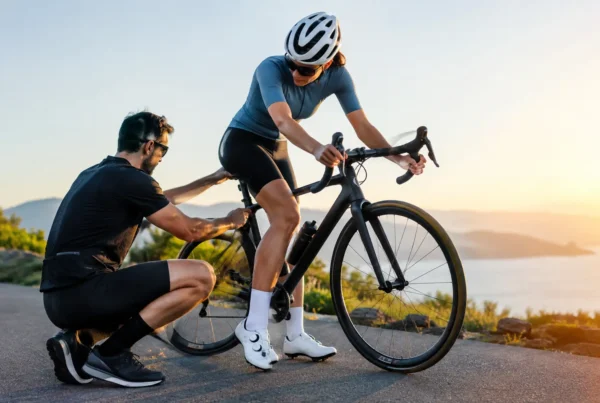
Two riders can complete the same sportive on completely different bikes, but neither will enjoy it if their fit is wrong. The key contact points are saddle, pedals and handlebars. Your saddle height and fore-aft position affect how efficiently you turn the pedals, while reach and handlebar drop determine how well you can breathe, steer and stay relaxed.
Do not choose a size solely because it is the size you rode ten years ago, or because a friend of the same height rides it. Proportions vary significantly. Arm length, torso length, flexibility and preferred riding position all influence the right frame and cockpit setup.
Before committing to a high-performance build, compare the stack and reach figures with a bike that you know feels good. A specialist retailer such as Trifit Bikes can help you interpret those numbers and select a frame size that gives you room to fine-tune the position. Small adjustments to stem length, spacers, bar width and saddle choice are normal. They are not signs you bought the wrong type of bike.
Gearing for British sportive climbs
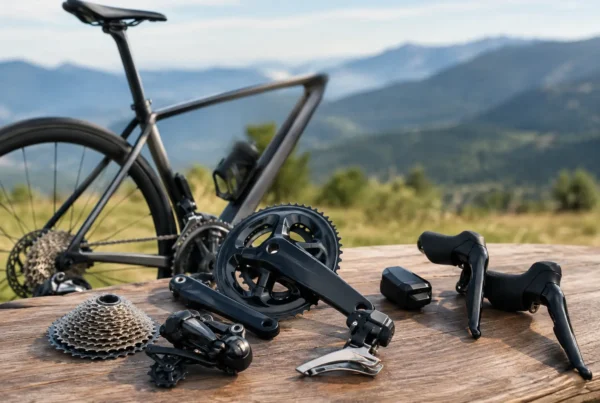
Gearing is where confident preparation beats bravado. A compact chainset, typically 50/34, paired with an 11-34 or 11-36 cassette gives most sportive riders a useful spread for fast flats and steep gradients. On flatter routes, a 52/36 chainset can suit strong riders who spend plenty of time pushing higher speeds. For demanding hill events, a lower gear is rarely a regret.
Being able to keep a comfortable cadence on a steep climb protects your legs for the final third of the route. Grinding a massive gear may feel impressive for a few minutes, but it can push you beyond a sustainable effort and leave little for the next climb. Electronic shifting from Shimano Di2 or SRAM AXS makes gear changes precise under load, but the ratio choice still matters more than the technology.
Tyres, wheels and comfort without compromise
Tyres are one of the most effective upgrades for sportive performance. A quality 28 mm tyre is an excellent starting point for many riders, delivering low rolling resistance, better comfort and dependable grip. If your frame and wheels permit it, 30 mm tyres can be even better on coarse roads or longer events. Tubeless setups add puncture protection and allow lower pressures, although they need careful installation and periodic sealant checks.
Wheel depth should match the route and your confidence in crosswinds. Mid-depth carbon wheels offer a useful blend of aerodynamic gain, climbing weight and predictable handling. Very deep rims can be quick in calm conditions, but a gusty exposed course may make them tiring to control, particularly for lighter riders.
Comfort is not softness for its own sake. A bike that tracks confidently over rough surfaces lets you stay seated, maintain traction and deliver power smoothly. That is performance over 160 kilometres.
Do you need a gravel bike or a triathlon bike?
A gravel bike is the right tool when the event includes genuine unpaved sectors, poor tracks or mixed-surface riding. For a normal tarmac sportive, its wider tyres and relaxed handling may be enjoyable, but it will generally feel less immediate than an endurance road bike. If most of your riding is road-based, buy the road bike and use tyre choice to increase versatility.
A triathlon or time trial bike is usually not the best default for a conventional sportive. It excels when you can ride steadily in the aero position on suitable roads, but group-riding etiquette, frequent climbing, descents and technical lanes can make a road bike safer and more practical. Save the TT bike for events and training where its aerodynamic advantage can be used properly.
Choose the bike you will train on
The right sportive bike should make you want to ride more before the start line, not merely impress on a specification sheet. Test the position over distance, fit the tyres your local roads deserve and choose gearing that keeps you spinning on the steepest hill you expect to meet. Arrive with a bike that feels like part of your body, and you will have far more left to enjoy the final kilometres.