A missed shift when the pace lifts is more than an irritation. On a fast group ride, a race-start climb or the final kilometres of a triathlon bike leg, it can cost momentum you have worked hard to build. This electronic groupset buying guide cuts through the specification noise, helping you choose a drivetrain that suits your bike, your events and the way you want to ride.
Electronic shifting is now firmly established on premium road, gravel, time-trial and mountain bikes. It offers precise shifting under load, clean cockpit integration and the option to customise controls through a compatible app. But the best system is not automatically the one with the largest price tag. The right choice comes down to gearing, braking, bike compatibility and the practical details you will live with every week.
What an electronic groupset changes
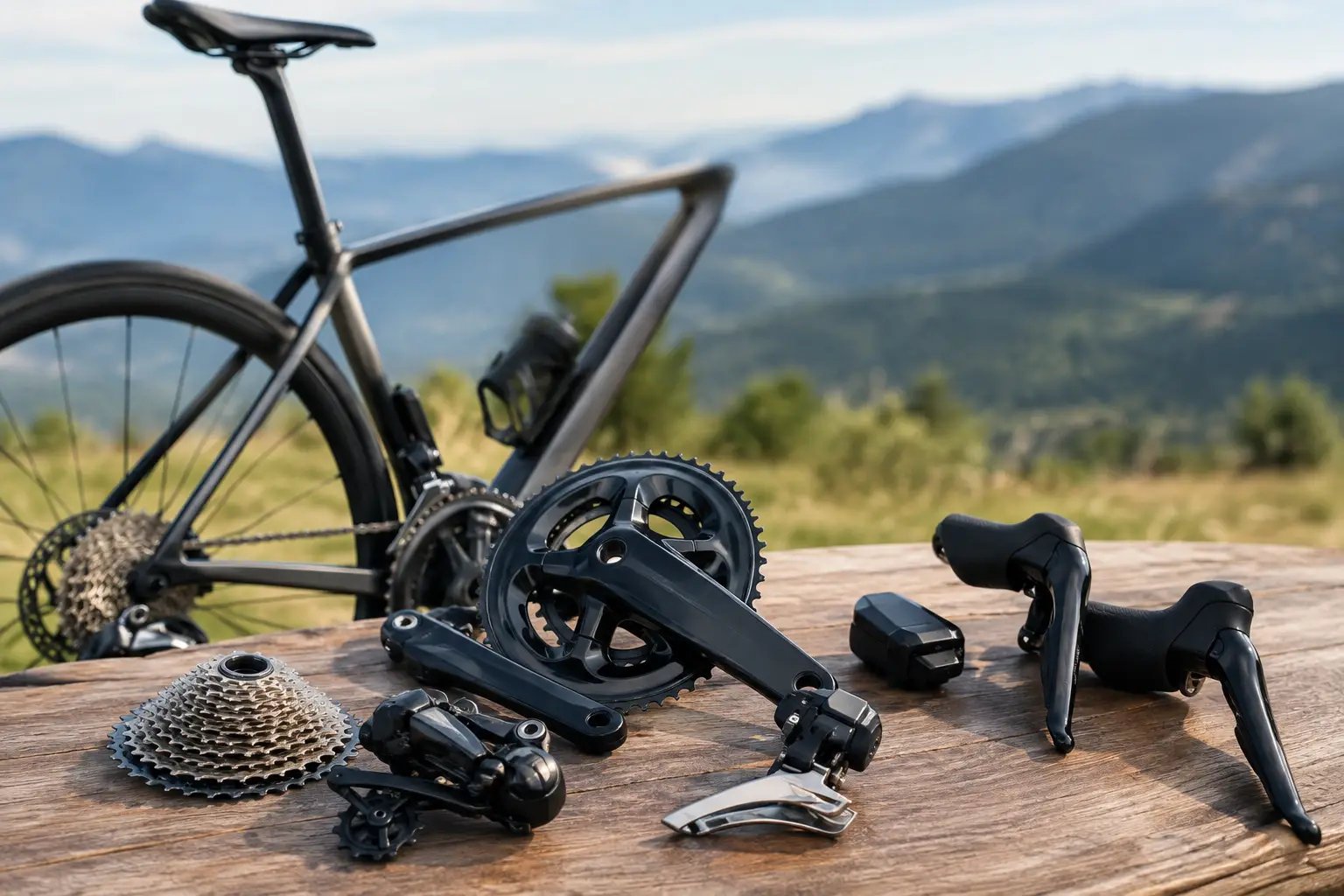
An electronic groupset uses motors in the derailleurs and electronic switches at the levers or controls. Rather than pulling a mechanical cable, a button press sends a signal that moves the chain across the cassette or chainrings. The result is a consistent shift feel, even after thousands of wet-weather miles, because there is no cable tension to gradually drift out of adjustment.
For performance riders, the greatest benefit is control. You can shift from the drops, hoods or, on compatible triathlon and TT builds, the base bar and extensions. Many systems also allow multi-shift functions, so holding a button can move through several gears quickly. That matters when a sharp change in gradient catches the group out.
Electronic shifting does not create free watts on its own. A well-maintained mechanical groupset still performs brilliantly. What electronic shifting delivers is repeatable operation, fewer exposed cables around the front of the bike and a highly refined experience under pressure.
Electronic groupset buying guide: start with your riding
Before comparing model names, decide what your bike needs to do. A rider training for flat, fast time trials may value tightly spaced gears and remote extension shifters. A sportive rider in Yorkshire or the Lake District may need a wider cassette and lower climbing gear. Gravel riders often favour the chain security and simplicity of a one-by drivetrain.
A two-by system gives closer jumps between gears and a wider overall range. It remains the strongest all-round choice for road racing, long-distance road riding and most triathlon builds. A one-by system removes the front derailleur, reduces complexity and keeps the chain more secure over rough terrain, but cassette gaps can be larger. It is increasingly popular for gravel, cyclocross and certain TT setups.
Think about cadence honestly. If you prefer spinning at a steady rhythm, closely spaced cassette sprockets will feel worthwhile. If your local routes are relentlessly steep, prioritise a low enough bottom gear instead of choosing ratios solely because they appear race-focused.
Shimano Di2, SRAM AXS and Campagnolo Wireless
Shimano Di2 and SRAM AXS dominate the premium electronic market, but they take different approaches. Neither is universally better. The better system is the one that fits your bike and preferred setup.
Shimano Di2 is known for light, positive shifting and an excellent range of road gearing options. Current 12-speed road Di2 systems commonly use wireless communication between the shift levers and the bike, while the derailleurs connect to a central internal battery. This creates a tidy arrangement with only one main battery to charge. Dura-Ace Di2 sits at the race-first end of the range, while Ultegra Di2 brings much of the same shifting technology to a more attainable level.
SRAM AXS is fully wireless at the derailleurs. Each derailleur uses a removable rechargeable battery, while the shifters typically use replaceable coin-cell batteries. The removable batteries are a practical advantage for travel, as you can carry a spare in a jersey pocket or charge one away from the bike. SRAM also makes it straightforward to build around one-by gearing, and its X-Range approach uses closer chainring ratios with wider-range cassettes.
Campagnolo Wireless provides another premium road option, with distinctive ergonomics and a refined Italian finish. It is less common than Shimano or SRAM, so availability of replacement parts and your existing wheel compatibility deserve particular attention before committing.
Do not choose purely by claimed weight. Lever shape, button placement and the logic of shifting functions are felt every time you ride. If possible, spend a few minutes with each system on a bike. The most intuitive control layout is often the fastest one for you.
Get the gearing and brakes right
A groupset is a system, not just a pair of derailleurs. Cassette range, chainrings, crank length, chain, brakes and rotors all need to work together. A compact chainset paired with a suitably wide cassette can be the sensible choice for a strong rider tackling hilly events. There is no prize for pushing a bigger gear than the course demands.
Hydraulic disc brakes are the standard choice on modern performance bikes because they offer confident, controlled braking in poor weather and on long descents. Rim brakes remain relevant on lightweight older frames and certain race builds, but options are becoming more limited. If you are upgrading an existing bike, the frame and fork dictate this decision.
For road use, 12-speed has become the premium benchmark, offering a broad gear range without turning every cassette jump into a compromise. It also means components are specific: do not assume an older 11-speed chain, cassette or derailleur will work in a new 12-speed electronic setup.
Check compatibility before you buy
Compatibility is where expensive mistakes happen. Start with the frame. It must support the brake type, axle standard and tyre clearance you want, while also providing the correct routing and mounting points for the selected derailleurs and battery.
Next, inspect your rear wheel freehub. Many Shimano road cassettes fit the widely used Shimano HG road freehub body, while SRAM cassettes with a 10-tooth smallest sprocket generally require an XDR freehub. Changing a freehub body is often possible, but it depends on the wheel manufacturer and model. Factor this into the true cost of an upgrade.
Bottom bracket and crank compatibility matter too. Frames may use threaded, press-fit or proprietary bottom bracket standards, and crank spindle dimensions vary by brand. A front derailleur also needs the correct mounting arrangement, whether direct mount, braze-on or clamp-on.
TT and triathlon bikes need an extra level of planning. Check that your chosen system supports the number and location of shift buttons you need, including extension and base-bar controls. A clean installation should retain easy access to charging ports and leave enough adjustment range for a proper bike fit. On an aero bike, fit should always lead the specification.
Battery life and real-world ownership
Battery anxiety is usually overstated, provided charging becomes part of your routine. A central Di2 battery generally delivers many rides between charges, while SRAM AXS batteries can be swapped in seconds. Both systems give warnings before power becomes critical, but do not wait for them before a major event.
Charge the bike the day before a race, a long club ride or travelling with it. With AXS, a charged spare battery offers useful reassurance. With Di2, make sure the charging cable is packed if you are away for several days. Firmware updates are also worth checking periodically, particularly after adding new components or controls.
Electronic systems reduce cable-related maintenance, not maintenance altogether. Keep the chain clean, monitor chain wear, check derailleur alignment after a knock and replace worn brake pads promptly. Accurate shifting depends on these basics.
Is the upgrade worth it?
If your current mechanical groupset is working well, electronic shifting is a luxury rather than an emergency purchase. The value becomes clearer when you are building a new performance bike, replacing a worn drivetrain, simplifying a cable-heavy cockpit or preparing a dedicated race machine.
For a complete bike purchase, judge the drivetrain alongside the frame, wheels, fit and intended use. A superb groupset cannot compensate for the wrong geometry, and a slightly lower-tier electronic system on the right bike is often the stronger investment. At Trifit Bikes, that performance-first view helps riders choose specifications that make sense beyond the product page.
Choose the system you will trust when the road pitches up, the weather turns and the result matters. The best electronic groupset is the one that gives you the right gear immediately, every time, then lets you focus on the ride ahead.