A premium bike should feel fast before the numbers tell you it is. When the saddle supports your effort, the controls sit where your hands expect them and your position lets you breathe under pressure, you can focus on the road, the course or the rider ahead. That is where meaningful bike fit outcomes begin: not with one perfect-looking position, but with a setup that helps you produce repeatable performance.
For a triathlete holding an aero position through the final kilometres, a road rider climbing out of the saddle, or a gravel rider spending long days over rough ground, fit is part of the bike’s performance specification. Frame geometry, cockpit choice and contact points all need to work together. Getting this right before buying a high-value bike or frame protects the investment and gives every ride a clearer purpose.
What Good Bike Fit Outcomes Actually Look Like
The best outcome is not simply a lower front end or a more aggressive position. It is a position you can hold effectively for the type of riding you do. A rider preparing for short time trials can usually accept more aerodynamic compromise than someone targeting all-day sportives. Equally, a flexible rider may be able to ride low without discomfort, while another rider may be quicker with a slightly higher, more sustainable cockpit.
Comfort matters, but performance riders should think of it in practical terms. The goal is controlled comfort: no persistent pressure points, numb hands, unstable hips or pain that changes the way you pedal. A little fatigue at the end of a hard session is normal. Needing to sit up because your neck, back or shoulders have become the limiting factor is a sign that the position may not be supporting the job you are asking it to do.
A successful fit should also make your pedal stroke feel consistent. Your hips should remain stable enough to apply force without rocking across the saddle. Your knees should track naturally, and you should not have to reach or lock your elbows just to use the drops, hoods or aero extensions. These details influence efficiency, but they also improve confidence when the pace rises.
Start With Your Riding Goal, Not a Frame Size
Two riders of the same height can need very different bikes. Leg length, torso length, arm length, mobility, injury history and riding goals all shape the answer. That is why choosing solely from a size chart can be risky, particularly with race-focused frames that have long reaches, low stack heights or integrated cockpits with limited adjustment.
Before comparing models, define what your next bike needs to do. A road racer might prioritise responsive handling and a low aerodynamic posture. A long-distance rider may need more stack height and more room to move between hand positions. For triathlon and TT, the key question is often whether you can maintain a powerful aero position for the full duration of your event, rather than how low you can get in a static photograph.
This does not mean performance and comfort are opposites. In many cases, the rider who is stable, relaxed and able to stay in position is the quicker rider. The right geometry gives you scope to tune the fit with sensible adjustments instead of relying on an extreme stem, a tower of spacers or a saddle pushed to its limit.
Frame Geometry Sets the Available Range
Stack and reach are useful starting points because they describe the frame’s front-end position more clearly than seat tube length alone. Stack influences how high the front of the bike sits, while reach indicates how far forward it is. But they are only part of the story. Handlebar reach, stem length, headset spacers, crank length, saddle rails and, on TT bikes, pad stack and pad reach all change the final result.
Integrated aero cockpits deserve particular attention. They look clean, reduce drag and can save weight, but they may offer fewer ways to alter stem length or bar height after purchase. Check the available spacer systems, bar widths and extension adjustments before committing. A beautiful race bike is only the right bike if it can be set up around you.
The Contact Points That Shape Your Position
Most fit adjustments happen at three places: the feet, saddle and cockpit. Each one affects the others, so changing one part without considering the full position can create a new problem elsewhere.
Cleats and Pedals Create the Foundation
Cleat position influences how your foot sits over the pedal axle and how your knee tracks through each revolution. A poorly positioned cleat can contribute to hot spots, calf tightness or knee discomfort, particularly during high-cadence efforts and long climbs. Float also matters. Some riders benefit from more freedom of movement, while others prefer a more fixed feeling. The correct choice depends on natural alignment and previous issues, not simply what a fast rider in your club uses.
Shoe fit is just as relevant. A premium drivetrain cannot compensate for shoes that pinch the forefoot or allow the heel to lift. Make sure your shoes provide a secure hold without creating pressure as your feet swell on a long ride.
The Saddle Supports Power and Control
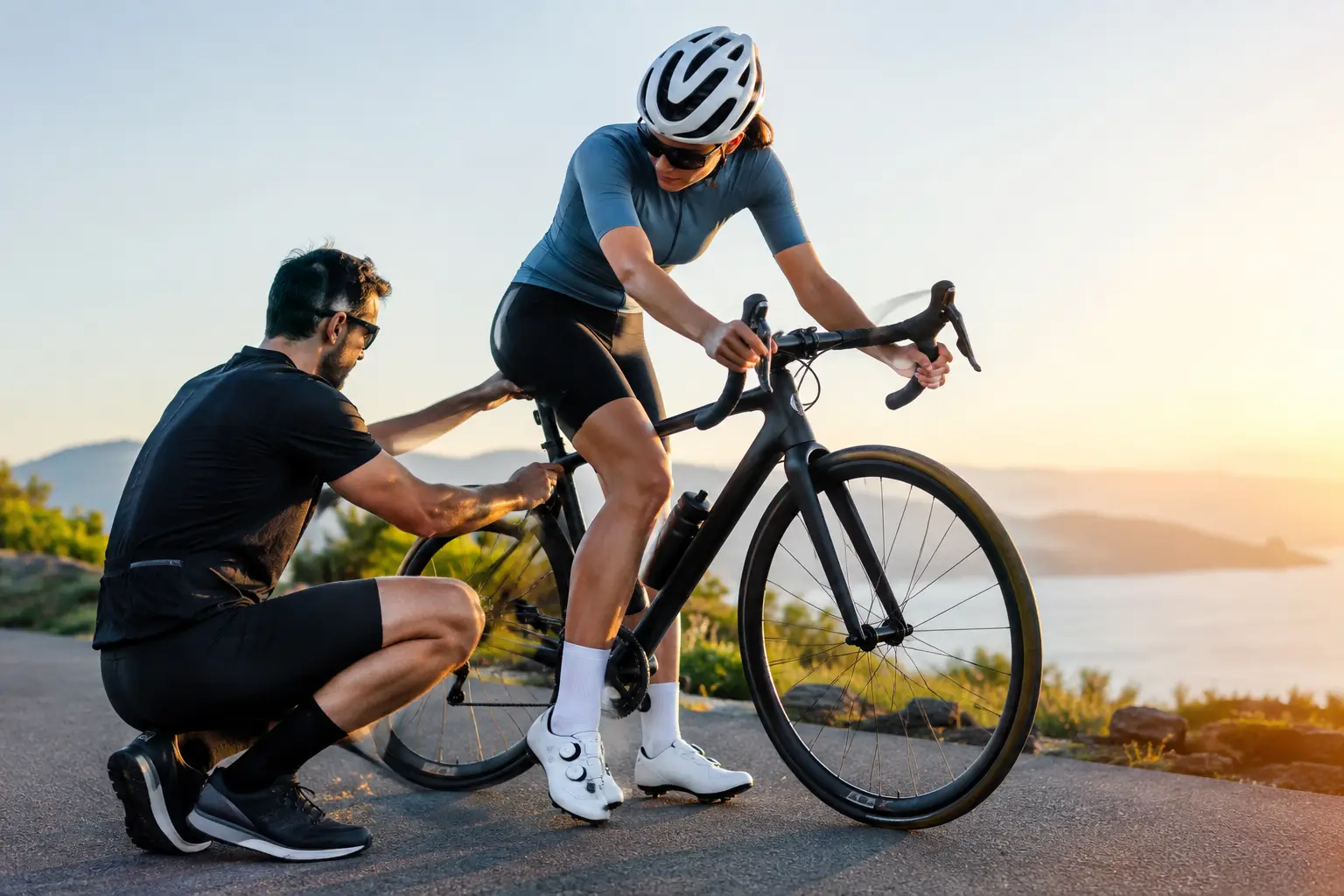
Saddle height is often the first setting riders change, yet it is not a number to copy from another bike. A saddle that is too high can lead to hip rocking, over-reaching at the bottom of the stroke and excess pressure through the hands. Too low, and you may feel cramped, lose leverage and load the front of the knee.
Fore-aft position and tilt matter too. Moving the saddle changes your relationship with the pedals and the bars, which is why it should not be used as a quick fix for an overly long or short reach. On a triathlon bike, saddle position can be more forward to support an aero posture, but it still needs to let you generate power without sliding forward or placing undue stress on the hips.
Saddle shape is personal. Width, relief channel, profile and padding can all affect comfort. More padding is not automatically better: a soft saddle can create movement and pressure over distance. The right model supports your sit bones while allowing free pedalling.
The Cockpit Determines What You Can Hold
Handlebar width, reach and drop affect breathing, shoulder comfort and control. Narrower bars may suit some riders chasing aerodynamic gains, but if they restrict your chest or make steering tense, the trade-off may not be worth it. For road and gravel riding, enough width and a stable hand position can be more valuable than a small theoretical drag saving.
For TT and triathlon, arm pads and extensions deserve the same scrutiny as the frame. Pad height and reach should allow you to rest your weight securely through the forearms, keep your shoulders controlled and look ahead without straining your neck. Extension angle can improve wrist comfort and help some riders maintain their position, but there is no universal setup.
Why Adaptation Is Part of the Fit
Even a well-considered new position can feel unfamiliar. If you have moved from an endurance road bike to a race bike, or from road riding into triathlon, your body may need time to adapt. A more aerodynamic posture asks more from the neck, shoulders, hip flexors and core. Expecting to hold it for three hours on day one is unrealistic.
Introduce changes progressively. Start with shorter rides, then add race-pace intervals once the position feels controlled. Keep an eye on what happens after the ride as well as during it. A position that feels fine for 30 minutes but produces recurring knee pain the next day deserves attention.
Do not make five adjustments at once. Change one variable, ride enough to assess it, then decide whether to keep it. This makes it far easier to identify what improved the ride and what did not. If discomfort persists, worsens or affects daily movement, seek advice from a qualified fitter or healthcare professional rather than riding through it.
Turning Fit Guidance Into a Better Bike Purchase
When you are choosing between performance frames, fit guidance helps narrow the field quickly. Bring useful information to the decision: your current bike measurements, any professional fit coordinates, your preferred saddle height, the rides or events you are training for, and any recurring discomfort. Photographs or notes from your present setup can also help show what has and has not worked.
Then assess the whole build, not just the headline frame. Check the crank length, handlebar dimensions, stem options, seatpost offset and aero cockpit adjustability. A bike may be available in the right nominal size but supplied with components that need changing to achieve your target position. Knowing that before you buy avoids unnecessary cost and delays.
At Trifit Bikes, fit-oriented support should be part of the purchase conversation, especially when selecting a premium road, TT or triathlon machine. The aim is to match you with a platform that can deliver the position you need, not force your body to accommodate a bike that looks right on paper.
The most useful measure of a fit is simple: when the effort starts, does the bike help you stay composed, powerful and in position? Choose the frame and setup that let you answer yes, then give yourself the time to make that position your own.