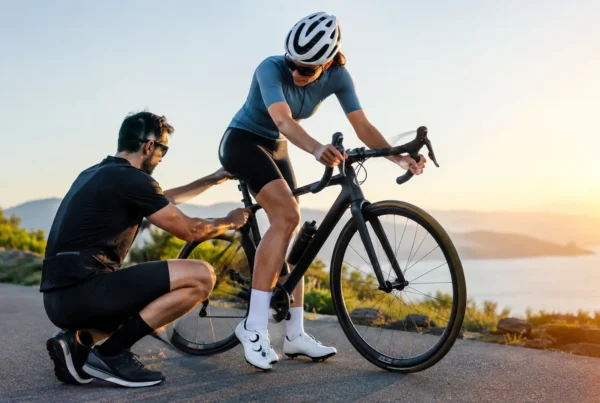
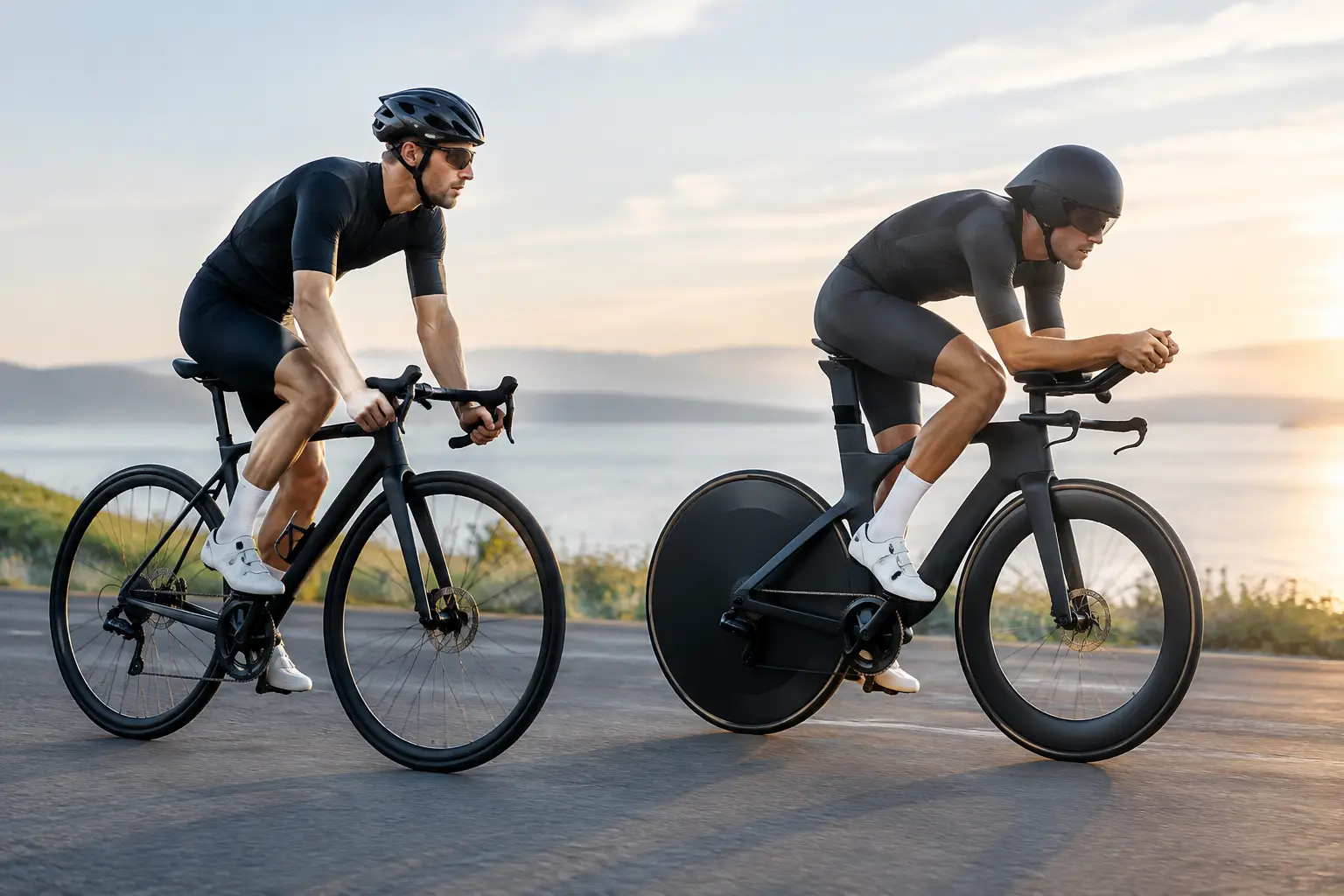
A faster bike is appealing, but upgrading from road to TT bike is not simply a purchase for more speed. It is a shift in position, handling and race-day routine. Get it right and you can save meaningful time over a flat or rolling course while arriving at T2 with energy left to run. Get it wrong and an expensive aero machine can feel uncomfortable, awkward and no quicker than the road bike you already own.
For triathletes and time-trialists who are starting to race seriously, a dedicated TT bike can be one of the most valuable performance upgrades available. The key is knowing whether your events, position and ambitions justify it.
When a TT bike makes sense
A TT bike earns its place when aerodynamic efficiency matters for long enough to outweigh its compromises. For non-drafting triathlon, duathlon and time trials, that threshold arrives sooner than many riders expect. Once you are regularly racing sprint or standard-distance triathlon, targeting 10-mile, 25-mile or longer TTs, or training specifically to hold an aero position, a purpose-built machine becomes a logical step.
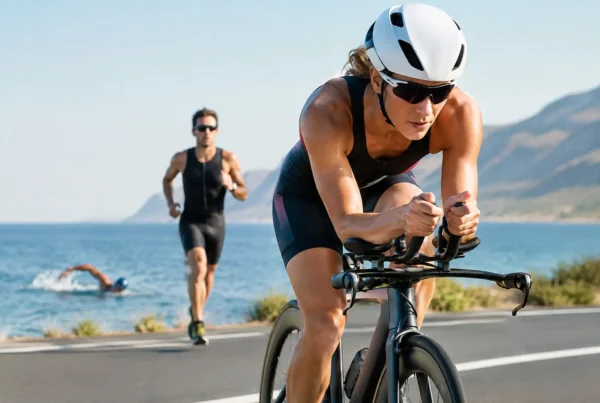
The main gain is not simply deeper tube profiles or a hidden front brake. It is your body position. At typical race speeds, the rider creates the largest share of aerodynamic drag. A well-fitted TT bike supports your forearms, rotates your torso forwards and lets you present a smaller frontal area to the wind. That is where the time comes from.
Road bikes with clip-on aerobars can be an excellent bridge. They are cost-effective, practical for group rides and allow you to test whether you can hold an aero posture. But they have limits. A road frame is designed around a different saddle position and front-end reach. You may struggle to achieve a low, stable position without placing too much weight through your arms or compromising pedalling comfort.
A dedicated TT bike gives you more scope to move the saddle forwards, set the arm pads accurately and keep the front end controlled at speed. If your road-bike setup feels like a compromise every time you get onto the extensions, that is a strong signal that a TT platform could suit you.
Upgrading from road to TT bike: what really changes
The first surprise for most riders is that a TT bike does not feel like a road bike with aerobars. The steering is generally more deliberate, the braking position is different and the forward saddle position changes how your hips and quadriceps work. At low speed, through tight turns or on rough roads, it can feel less intuitive. That is normal.
A TT bike is designed to travel quickly in a controlled line. Once settled on the extensions, it should feel calm and efficient, especially on open roads. It is not designed to replace every ride in your week. For social miles, bunch riding, steep technical descents and poor winter conditions, most riders will still value a conventional road bike.
There is also the question of course profile. On flatter, faster routes, aero gains are particularly valuable. On rolling terrain, the benefit remains strong because speed carries over the crests and into false flats. On a very hilly course with frequent sharp corners, a light road bike may be the simpler and, for some riders, faster choice. Your power, confidence on descents and the length of each climb all matter.
Fit comes before frame choice
Do not choose a frame solely because it looks fast or because a professional athlete rides it. The fastest TT bike is the one that lets you sustain an aerodynamic position while producing your normal power and breathing freely.
Start with your fit coordinates rather than your road-bike size. Stack and reach are useful, but a TT fit also depends heavily on pad stack, pad reach, extension angle, saddle setback and crank length. Two bikes labelled as the same size can place the pads in very different positions. Integrated front ends add another layer, as adjustment ranges vary between brands and models.
A proper fit should establish a position you can hold for the duration of your target event. For a 10-mile TT, a more aggressive setup may be realistic. For a middle-distance triathlon, comfort, hip angle and fuelling access deserve more weight. Chasing the lowest possible front end is rarely productive if it causes you to sit up, shuffle on the saddle or lose power after 30 minutes.
This is also where buying from a specialist retailer matters. Before committing to a premium frame or complete bike, confirm the available pad adjustment, base-bar width, extension options and saddle rail compatibility. A bike that can be tuned around your body is a better investment than one that only works in its stock configuration.
Allow for the practical fit details
Small details can decide whether a position works. Consider whether you need room for a hydration system between the arms, whether your preferred saddle shape supports a rotated pelvis and whether the extensions can be raised or angled to suit your wrists. If you use a power meter, electronic shifting and race-specific bottles, plan those choices at the same time rather than adding them as an afterthought.
If possible, leave budget for a fit check after the first few rides. Your position often evolves as you adapt to spending more time in the aero bars.
What to look for in a first TT bike
At this level, modern carbon frames from brands such as Cervelo, Argon 18, Canyon and Factor offer genuine aero development, clean integration and race-ready geometry. The right choice is less about chasing one headline feature and more about matching the bike to your fit and racing priorities.
Electronic shifting is especially useful on a TT bike. Being able to change gear from both the extensions and base bar makes pacing smoother when a course rises, turns or changes with the wind. Shimano Di2 and SRAM AXS systems both provide precise shifting, while the better option will often be the one with the gearing range and cockpit configuration that suits your needs.
Wheel choice has a large effect on speed, but it should match the roads and your confidence. A deeper rear wheel can be a strong upgrade for most race routes. At the front, choose a rim depth you can control in crosswinds, particularly if you race on exposed courses. A slightly shallower wheel that lets you stay relaxed in the aero position is usually faster than a deeper option that has you gripping the base bar.
Tyre clearance and tyre choice matter too. Modern fast-rolling tubeless tyres in an appropriate width can improve comfort and rolling resistance on British roads, where surfaces are rarely as smooth as a promotional photograph suggests. Do not undermine a premium aero bike with unsuitable pressures or worn tyres.
Budget for the full race setup
A TT bike purchase is often followed by the equipment that makes it genuinely race-ready. That may include pedals, a rear-mounted bottle carrier, a front hydration solution, computer mount, storage box, race belt and a reliable set of training wheels or tyres. None of these items needs to be bought all at once, but they should be factored into the overall budget.
It is also worth protecting the bike’s performance with regular maintenance. Integrated cockpits and hidden cabling look clean, but can take more care when adjusting the front end or travelling to an event. Learn how to remove and refit the wheels, charge the electronic drivetrain and pack the bike securely before race week.
Give yourself time to adapt
The transition is physical as well as technical. Begin with short, quiet-road sessions in the aero bars, then build duration gradually. Practise looking ahead rather than down, drinking while on the extensions, braking from the base bar and moving safely between positions. If you are training for triathlon, include controlled brick sessions so you can understand how the new hip angle affects your run.
Do not judge the bike on your first ride. Your neck, shoulders and hip flexors may need several weeks to adapt. A sustainable position, consistent training and sensible pacing will deliver more than an ultra-aggressive setup you cannot maintain.
A TT bike should make you want to commit to the course ahead: head down when it is safe, power controlled, equipment working and no doubts about your position. Choose the platform that fits that purpose, set it up properly, and let every race effort count.