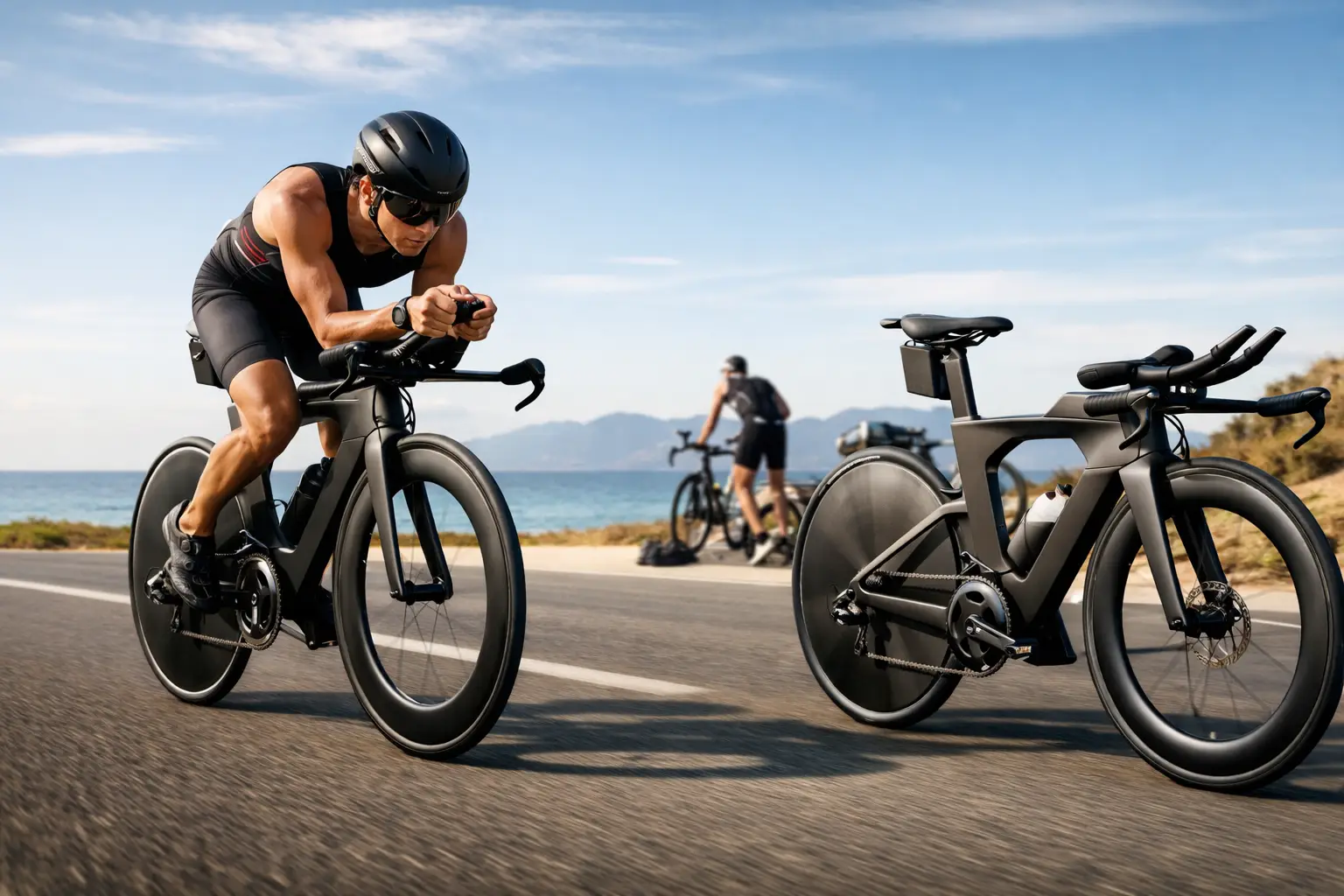
A triathlon bike earns its place long before the finish chute. It needs to hold speed into a headwind, keep your position comfortable for hours and leave enough energy in your legs for the run. The best triathlon bikes 2026 has to offer are not simply the most expensive machines. They are the bikes that match your race distance, fit requirements and ambition.
For a first 70.3, a stable carbon frame with sensible adjustment can be the smarter purchase than a full flagship build. For an experienced athlete chasing qualifying times, integrated storage, a refined front end and top-tier wheels can make a meaningful difference. Start with fit, then buy the fastest bike that genuinely works for you.
Best triathlon bikes 2026: our race-ready picks
This is a performance-led shortlist for athletes shopping at the premium end of the market. Specifications, colours and availability can change between model years, but these platforms remain among the strongest choices for serious triathlon and time-trial riding.
Cervelo P-Series: best for proven all-round speed
The Cervelo P-Series remains one of the easiest high-performance tri bikes to recommend. It brings the brand’s well-established aero pedigree into a package that suits a broad range of athletes, from committed age-group racers through to riders stepping up from an adapted road bike.
Its appeal is not just outright drag reduction. The P-Series offers a clean, purposeful race position with useful scope to refine pad height, reach and extension angle. Disc brakes provide confidence on wet British roads and technical descents, while the frame has the composure needed for long-course racing. Choose it when you want a focused triathlon bike without paying solely for marginal gains at the very top of the range.
Cervelo P5: best for uncompromising racing
The Cervelo P5 is built for athletes who know their position and want a flagship frame designed around speed. It is a serious machine: highly integrated, aggressively aerodynamic and intended for riders who measure progress in watts, minutes and placings.
That integration brings trade-offs. A P5 rewards a professional-quality fit and careful cockpit setup, rather than frequent large changes in position. It is also a premium investment. But when the fit is right, its low-drag frame design, race-focused handling and high-end electronic drivetrain options make it a compelling choice for fast 70.3 and Ironman racing, as well as flat and rolling time trials.
Canyon Speedmax CF: best value performance platform
The Canyon Speedmax CF is a strong option for athletes seeking modern aero design and integrated race features without moving immediately into flagship pricing. Its carbon chassis is made for sustained speed, with a practical approach to hydration, nutrition and adjustment that makes sense for long-course competition.
Look closely at the individual build, rather than buying purely by model name. A Speedmax CF with reliable electronic shifting and wheels suited to your local courses may be a better race bike than a higher-spec build that forces compromises elsewhere. Budget for a proper fit, pedals, race-day storage and, if necessary, wheel upgrades before stretching for the most expensive configuration.
Canyon Speedmax CFR: best for marginal-gain hunters
The Speedmax CFR sits at the sharper end of the Canyon range. It is aimed at athletes who want every major component of the bike working towards lower drag, controlled handling and efficient long-distance pacing.
The frame is only part of the equation. The value of a CFR-level bike lies in its complete system: an advanced cockpit, integrated storage, premium wheelset and race-ready electronic shifting. For a rider already well fitted to an aero position, that can be a very effective package. For somebody still finding comfort on the extensions, the CF may deliver nearly as much real-world speed for less money and with more flexibility in the overall budget.
Argon 18 E-119 Tri+: best for fit-led athletes
Argon 18 has long understood that a fast position must also be a sustainable position. The E-119 Tri+ is an excellent choice for athletes who want a genuine superbike but need detailed control over their front-end setup.
Its aerodynamic profile is race-ready, yet the platform’s adjustability is the real attraction. Pad stack, reach and extension configuration affect not only comfort but also how well you can stay low, breathe freely and produce power late in the bike leg. That matters more than a headline aerodynamic claim. The E-119 Tri+ is particularly worth considering for riders with specific fit needs, or those working closely with an experienced fitter to dial in a new position.
Factor Slick: best boutique performance choice
The Factor Slick is for the athlete who values distinctive engineering alongside elite-level performance. It is a striking, highly aerodynamic triathlon platform with the detail and finish expected from a premium race brand.
This is not the default choice for every buyer, and that is part of its appeal. A Slick makes most sense when you want a high-end build tailored around your preferred drivetrain, wheels and contact points. It demands the same commitment to fit and setup as any integrated superbike, but gives discerning racers a seriously fast and individual race machine.
What separates a fast tri bike from a fast-looking one
A deep-section frame, hidden cables and carbon wheels look the part, but the rider creates the largest aerodynamic system. If your cockpit is too long, too low or too narrow for you to sustain, you will sit up, shuffle around and lose the advantage the frame was meant to provide.
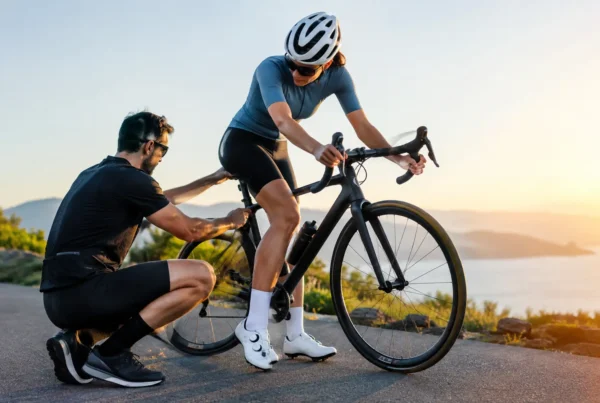
Prioritise adjustability around the arm pads and extensions. You need enough range to establish a relaxed shoulder position, a stable armrest platform and a hip angle that lets you run well afterwards. A bike fit before purchase is especially valuable when moving from road cycling to a dedicated triathlon frame, or changing to a more aggressive setup.
Storage is another practical performance feature. For middle- and long-distance racing, the cleanest bike is often the one that lets you carry bottles, gels and tools without taping equipment to the frame. Look for well-integrated hydration and bento storage, but make sure it suits how you actually fuel. A beautifully integrated bottle system is of little use if it is awkward to refill or impossible to reach at race pace.
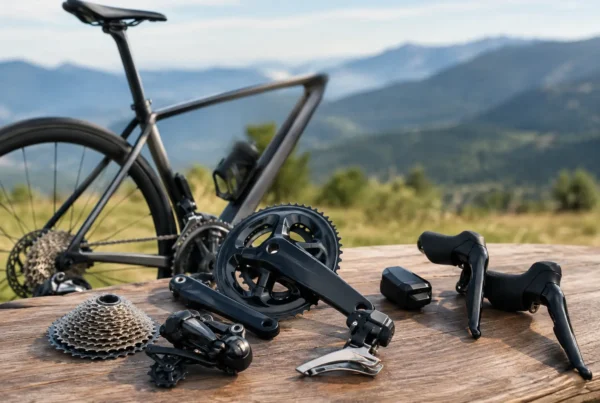
Electronic shifting is now a sensible priority on premium tri bikes. Shimano Di2 and SRAM AXS systems offer precise shifting under load, and multi-position controls can be useful when moving between base bar and extension positions. Your preferred system may come down to feel, charging routine and the build specification available, but either can deliver reliable race-day performance.
Choose your bike around your racing, not the catalogue
For short, flatter time trials, outright aero efficiency and a narrow, aggressive position often take priority. A deep front wheel and a clean front end can be worthwhile, provided crosswinds do not compromise your confidence. For 70.3 racing, you need a balance of speed, fuelling access and handling across changing road surfaces. Full-distance triathlon puts comfort, storage capacity and position durability at the top of the list.
UK roads add another consideration. Disc brakes are a practical advantage for wet-weather training, uneven surfaces and variable descents. Tyre clearance also matters more than it once did. Running a quality wider tyre at an appropriate pressure can improve comfort, grip and rolling efficiency, particularly over rougher tarmac.
Do not overlook wheels, but do not let them dictate the entire purchase. A well-fitted tri bike on sensible wheels will be faster than an ill-fitting superbike with the deepest carbon rims. If you race in exposed conditions, choose a front wheel depth you can control when gusts arrive. Confidence is speed.
Get the setup right before race day
Once you have selected a frame, spend time on the details that turn it into your bike. Set saddle height and fore-aft position first, then work forward to pad stack, pad reach and extension angle. Test the position during sustained indoor efforts and long outdoor rides, not only during a few minutes on a fitting jig.
Practise drinking, eating and shifting in the aero position. Check that your bottle, nutrition and repair kit stay secure over rough roads. Use the same saddle, shorts and footwear combination you intend to race in, because small contact-point changes can alter comfort significantly over several hours.
At Trifit Bikes, specialist guidance can help you compare frame options, electronic groupsets and race-ready builds before you commit. For a purchase at this level, that confidence matters as much as the component list.
The right triathlon bike should make holding your race position feel natural, not heroic. Choose the frame that fits your body, supports your fuelling plan and suits the courses you ride, then give yourself time to train in it. That is where speed becomes repeatable.