A fast bike only delivers its advantage when it suits the way you ride. In the tt bike vs road bike decision, the headline is simple: a TT bike is built to save time against the clock, while a road bike is built to perform well across far more situations. The right choice comes down to your events, terrain, training routine and, above all, your position on the bike.
TT bike vs road bike: the core difference
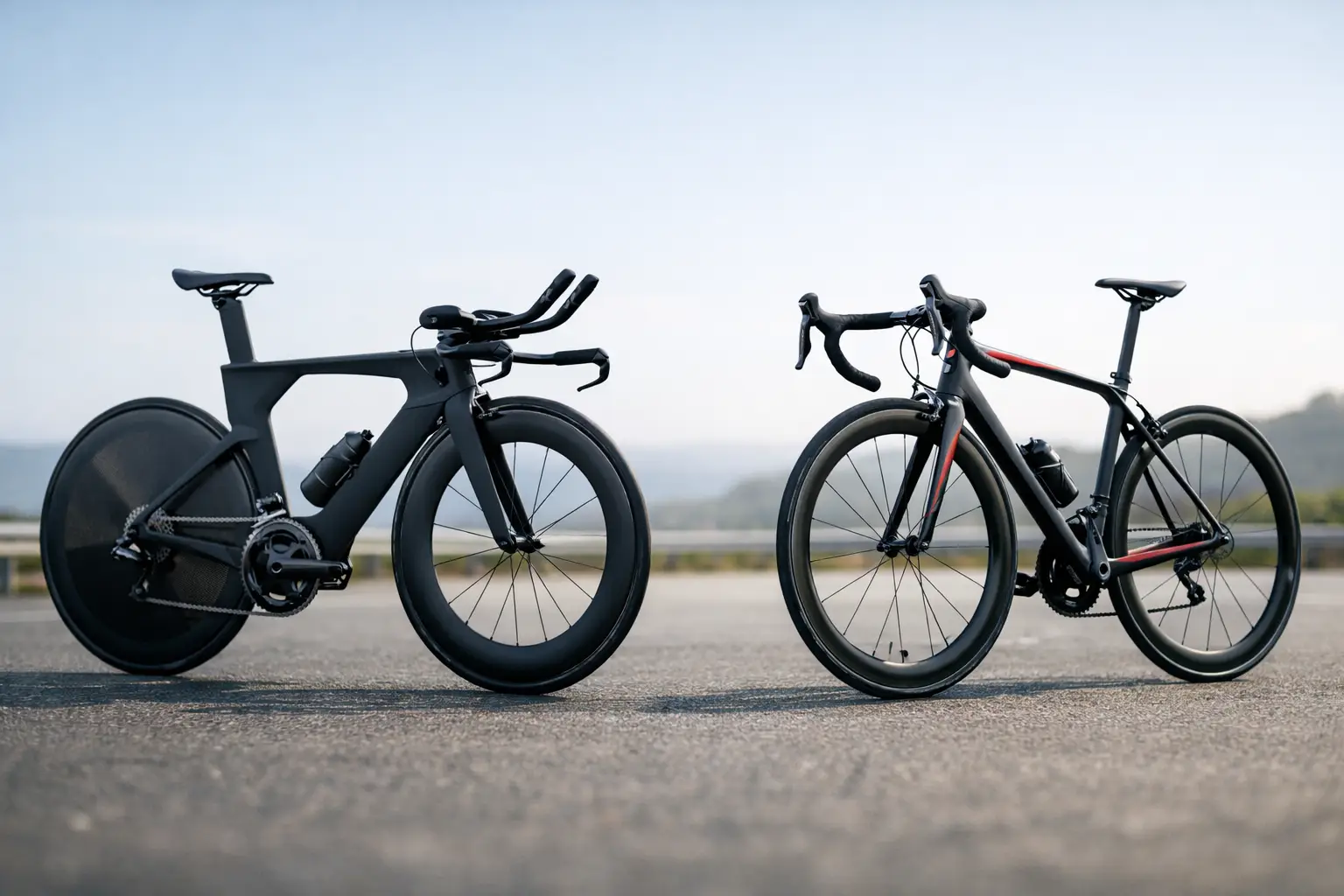
A time-trial bike is designed around aerodynamic efficiency. Its frame shape, integrated front end, deep tube profiles and forward-riding position are all intended to reduce drag at sustained speed. The base bar gives you control for starting, braking and cornering, while the extensions and arm pads create the narrow, low position used on faster sections.
A road bike puts handling, versatility and rider movement first. Drop handlebars offer several hand positions, the geometry is generally more forgiving, and the bike responds naturally to climbs, corners, bunch riding and changing road surfaces. Modern aero road bikes can be exceptionally quick, but they do not place the rider in as aggressive an aerodynamic position as a properly fitted TT machine.
That distinction matters because air resistance becomes the main force working against you once speed rises. On a flat or rolling course, especially when riding solo, the rider and bike package matters far more than a few grams of frame weight. A TT bike allows you to hold a lower-drag shape for longer, provided that shape is sustainable.
When a TT bike is faster
For dedicated time trials and non-drafting triathlon, a TT bike is normally the fastest option. At race pace, the aerodynamic gains from forearm support, narrow frontal area and a clean front end can be significant. The exact saving varies with speed, wind, course profile, clothing, wheels and rider position, but the advantage is real when you can stay comfortably on the extensions.
The key word is comfortably. A very low front end may look fast in a studio photo, yet cost time if it closes your hip angle, restricts breathing or forces you to sit up every few minutes. A fast TT position balances low drag with enough stability and power production to hold it for the whole event.
TT bikes also make sense for triathletes who want to protect their legs for the run. A well-set-up position can help manage hip angle and muscle loading, although there is no single triathlon position that works for every athlete. Your flexibility, pelvic control, event distance and running style all affect the setup.
On technical courses with repeated sharp turns, steep climbs or poor surfaces, the margin can narrow. A TT bike still has aero benefits on the straights, but a confident rider on a road bike may gain time through corners, climbing rhythm and safer braking. Course knowledge is part of the equipment decision.
The TT bike position is the product
It is tempting to compare frame materials, wheel depth and electronic shifting first. Those specifications matter, but fit has the greatest influence on whether a TT bike feels fast or frustrating. Pad stack and reach, extension shape, saddle position and crank length need to work together rather than chasing a copied professional setup.
Before committing to a frame, consider whether its adjustment range suits your current position and your likely progression. Premium TT platforms can offer substantial cockpit adjustment, but not every frame accommodates every rider. Fit guidance before purchase is a far better investment than trying to force an unsuitable frame to work later.
Where a road bike wins
A road bike is the better all-round choice for most riders because it can do almost everything. It is the natural tool for group rides, sportives, hilly training routes, café stops, fast descents and road races where drafting is allowed. It is also easier to live with if you only have room and budget for one performance bike.
The handling benefit is immediate. Your hands sit close to the brake levers, you can shift body weight easily through bends, and you have more freedom to stand, move around the saddle and react to changing conditions. On wet British roads, narrow lanes and busy group rides, that flexibility is valuable rather than merely convenient.
Road bikes are not slow. A modern aero road bike with a good tyre setup, deep-section wheels and a rider who can maintain a tidy position on the drops is a highly effective race machine. For short club time trials, rolling terrain or the athlete who races occasionally, it may be the smarter and more efficient purchase.
If your racing includes draft-legal triathlon, a road bike is required. Clip-on extensions may be permitted in some events and configurations, but rules vary, so always check the race regulations. In most road races and group rides, fixed aero extensions are impractical or prohibited because they reduce access to the brakes and compromise close-quarters control.
Comfort, confidence and training value
A road bike usually offers more day-to-day comfort, but comfort is not simply a matter of upright versus aggressive. A correctly fitted TT bike should allow you to ride hard without numb hands, excessive neck strain or an unstable feeling at the front wheel. It will still demand adaptation, particularly in the shoulders, neck and hip flexors.
For a rider training six days a week, a road bike often provides more variety. You can climb out of the saddle, descend with confidence and join friends without changing your riding habits. That can make it easier to build consistent volume, which remains more valuable than owning specialist equipment that stays in the garage.
Conversely, triathletes need time in their race position. Buying a TT bike but completing nearly every session on a road bike can leave you underprepared for the demands of a long, low aero effort. The best approach for many serious athletes is a road bike for general riding and a TT bike for event-specific sessions, provided the budget and storage allow it.
The cost question: one bike or two?
A TT bike is a specialist purchase, so assess the complete setup rather than the frame alone. You may need race wheels, suitable tyres, a hydration system, aero bottles, storage for nutrition and a fitting appointment. Integrated systems can be exceptionally clean in the wind, but they can also take more thought to adjust, travel with and maintain.
A road bike spreads its value over more miles. It can be fitted with lighter climbing wheels, durable winter tyres or a fast wheelset for race day. It is easier to sell on to a broad market and generally more practical if your riding changes from season to season.
There is also a middle ground. An aero road bike paired with quality clip-on extensions can be an effective stepping stone for short-course triathlon or occasional time trials. It will not replicate the fit range or aerodynamic integration of a dedicated TT bike, but it lets you test whether racing against the clock is becoming a real priority.
How to choose the right bike for your racing
Choose a TT bike when your calendar is centred on non-drafting triathlon, open time trials or long solo efforts where flat-to-rolling speed is the goal. You should be ready to spend time refining your position and practising braking, cornering and riding safely on the extensions.
Choose a road bike when you want one high-performance machine for training, climbing, group riding and occasional racing. It is also the better answer if you are new to performance cycling, still developing handling confidence or primarily ride technical and varied terrain.
If you are torn between the two, be honest about the rides you will actually do rather than the races you might enter. A dedicated TT bike is thrilling when it is used for its purpose. A premium road bike is the performance choice you can reach for on almost any Sunday morning.
Trifit Bikes can help serious riders match frame choice and specification to their intended position, event plans and budget. Start with the event that matters most this season, then choose the bike that gives you the confidence to train consistently and race at full commitment.