The Cervelo P-Series is built for the moment a triathlon stops being about simply finishing and starts being about holding speed for longer. It is a dedicated race platform with genuine aerodynamic intent, practical race-day storage and the fit range needed to turn strong bike fitness into a faster split. In this Cervelo P-Series review, we look at where it delivers, where riders need to be realistic, and who will get the most from it.
Cervelo P-Series Review: the race-bike proposition
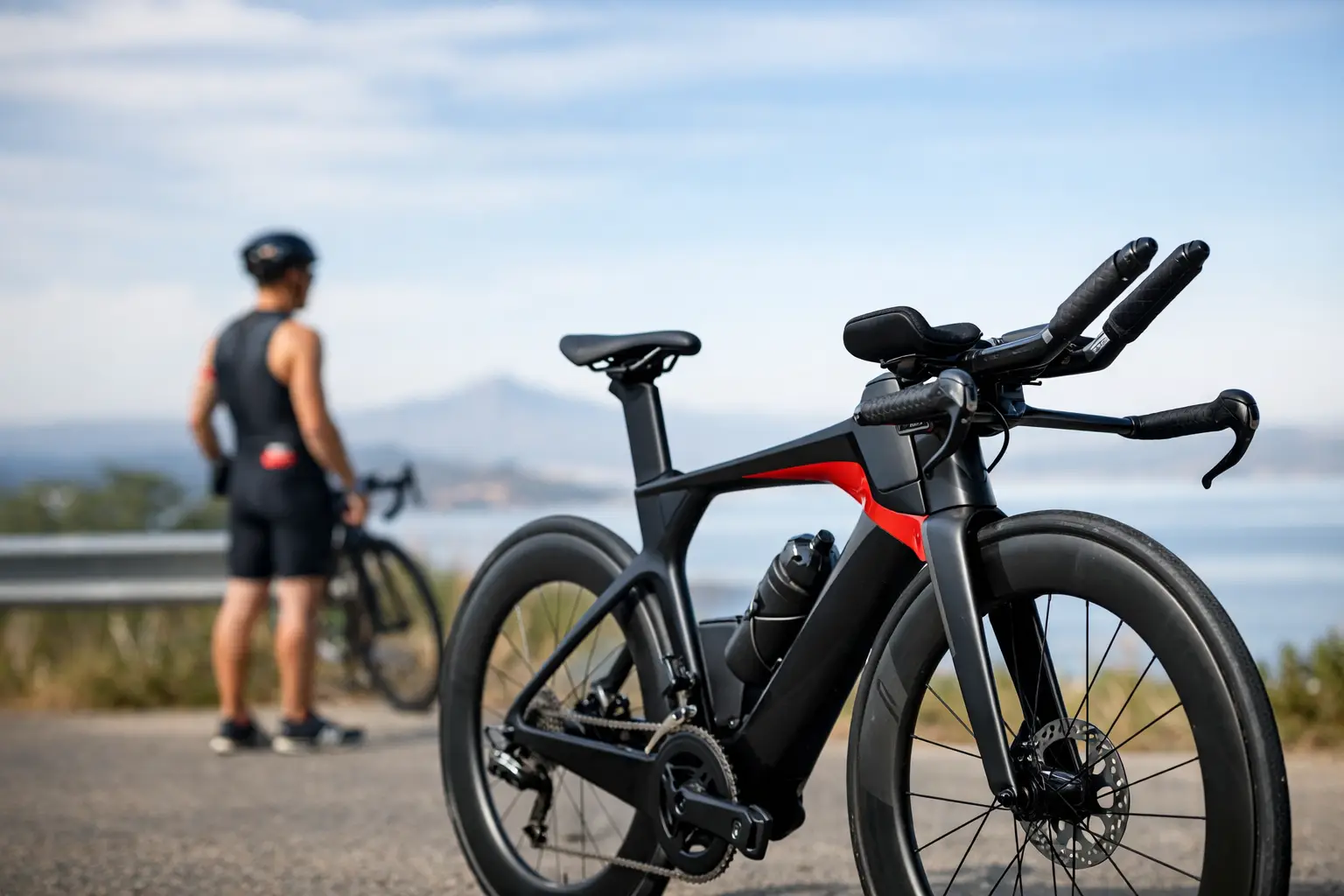
The P-Series occupies a valuable position in Cervelo’s triathlon and time-trial line-up. It is not positioned as the brand’s most extreme, no-compromise superbike, but it carries much of the thinking that matters on the road: a clean aerodynamic frame, a stable handling character, integrated hydration and nutrition options, and a cockpit designed around a purposeful aero position.
That makes it particularly appealing to age-group triathletes and serious time trial riders. You are buying a bike designed to race, rather than adapting a road bike with clip-on extensions and hoping the fit works out. The frame profile, cable routing and storage solutions all serve the same aim: reducing the aerodynamic and practical compromises that cost time over a long course.
Cervelo has a long history in this category, and the P-Series feels like a mature expression of that experience. It is fast without becoming needlessly complicated. For a rider who wants premium performance but still values a bike that can be set up, maintained and travelled with sensibly, that balance is a major part of its appeal.
Aerodynamics that work beyond the wind tunnel
Aero performance is the central reason to consider the P-Series. Its tube shapes are designed to manage airflow at realistic riding angles, while the front end keeps the rider’s arms and torso in the low, narrow position where the biggest gains are usually found. The most important point is that the bike supports an effective position rather than chasing an eye-catching frame shape alone.
At 25mph in a time trial or on a flat, fast triathlon course, the difference between a road-bike set-up and a properly fitted tri bike is significant. At typical long-course speeds, the benefit is still meaningful because aerodynamic drag remains the biggest resistance a rider faces. The P-Series gives you a platform capable of carrying speed efficiently, provided your position is properly dialled in.
Its storage integration also matters more than many riders expect. Bottles, gels and tools can create considerable drag when they are added as an afterthought. The P-Series is designed to accommodate race essentials in a controlled way, helping you fuel consistently without turning the bike into a collection of exposed accessories. Exact storage equipment and specification can differ by model year and build, so check the current configuration before making a final choice.
Fit comes before frame size
A P-Series can be exceptionally quick, but only when it fits the rider. Triathlon bikes are less forgiving of a casual size choice than road bikes because the contact points are more specialised. Saddle height and fore-aft position, pad stack, pad reach, extension length and armrest width must work together. A low front end may look aggressive, but it is only fast if you can sustain it while producing power and breathing freely.
Cervelo’s geometry offers a useful spread of stack and reach options across the size range, giving experienced fitters room to create a position for different body proportions. That is encouraging for riders with a clear fit prescription, as well as those moving from a road bike and looking for their first dedicated tri machine.
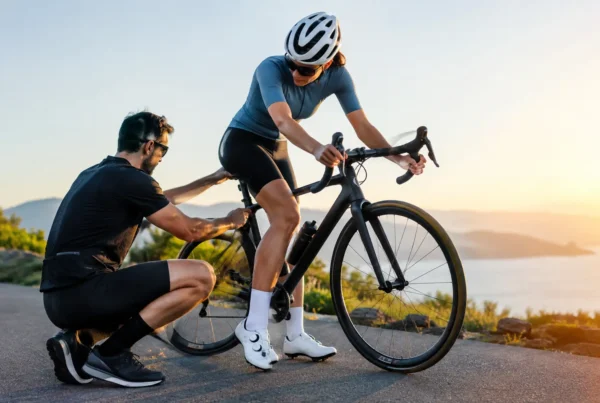
Before ordering, use your current bike measurements as a starting point, not a final answer. A rider comfortable on a road bike with a moderate drop may need time to adapt to a triathlon position. Flexibility, hip mobility, race distance and injury history all play a part. If you are choosing between two sizes, professional fit guidance is worth more than an attractive component upgrade that leaves you compromised at the front end.
The cockpit is an adjustment tool, not decoration
The P-Series cockpit should be viewed as a system to refine your position. Small changes to pad height, reach or extension angle can improve comfort and reduce frontal area. This is why a clean-looking front end should never take priority over adjustability.
For sprint and Olympic-distance racing, some riders can tolerate a lower, more aggressive position. For 70.3 and full-distance events, sustainable comfort often wins. The quickest position is the one you can hold from the first mile to the final transition, even when fatigue builds and your core starts to switch off.
Ride feel, handling and everyday usability
Pure triathlon bikes are not bought for café-ride comfort, and the P-Series makes no attempt to disguise its purpose. It places the rider forward and focused, with handling intended for committed riding on fast roads. Once settled into the extensions, it feels stable and composed, which is exactly what riders want when holding an aero position for long periods.
That stability is valuable in crosswinds, on sweeping descents and when passing traffic disturbs the air. It does not make the bike immune to poor conditions, and deep-section wheels will still need careful handling in gusts, but the frame gives a reassuring foundation rather than a nervous one.
The trade-off is low-speed manoeuvrability. Tight turns, technical town-centre sections and crowded transition areas require more attention than they would on a conventional road bike. Riders new to tri bars should practise clipping in, braking, cornering and moving safely between base bar and extensions before race day. That is not a P-Series weakness – it is simply part of using any dedicated time-trial machine properly.
Practicality is better than the aggressive silhouette suggests. The storage layout helps keep nutrition organised, and modern electronic drivetrain builds offer clean shifting with minimal effort from the aero position. Mechanical options can be an excellent value choice too, particularly for riders who prefer simpler servicing or would rather allocate more budget to wheels, tyres and a proper fit.
Specification: choose the build for your racing priorities
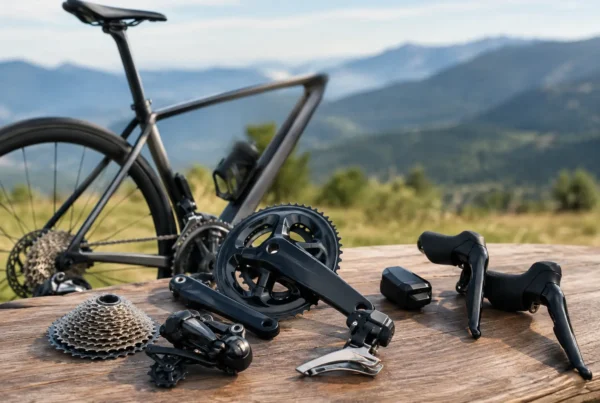
P-Series builds commonly sit in the performance sweet spot: quality carbon frames, proven wheelsets and drivetrain options that are ready to race while leaving scope for future upgrades. The right build depends less on badge value and more on what will genuinely improve your event performance.
Electronic shifting is a strong option for triathlon. Being able to change gear from both the base bar and extensions keeps your rhythm smoother across rolling courses and through junctions. It is especially useful when terrain changes quickly or when you need to sit up briefly for safety and still want immediate control of the drivetrain.
Wheels deserve equally careful thought. A deep rear wheel or disc can be a powerful upgrade on suitable courses, but a more manageable front wheel may be the faster real-world choice for a lighter rider or an exposed event. Tyre selection and pressure are also crucial. Fast, appropriately wide tubeless or clincher tyres at sensible pressures can improve rolling resistance, comfort and confidence over imperfect British road surfaces.
Do not overlook the saddle. A triathlon-specific saddle that supports a rotated pelvic position can transform your ability to remain aero. If you are spending heavily on a P-Series, budget for this contact point and for time to test it in race kit, rather than assuming the supplied saddle will suit every rider.
Who should buy the Cervelo P-Series?
The P-Series makes most sense for triathletes who regularly race, ambitious first-time buyers entering dedicated triathlon bike territory, and time trial riders who want a refined aero platform without moving into the highest-priced superbike category. It is a serious machine, but not one that demands an elite-level race calendar to justify it.
It is particularly well suited to riders who value integrated fuelling, a stable ride and a fit-led approach to speed. If your priority is a lightweight bike for hilly sportives, group rides and occasional triathlons, a fast aero road bike may be the more versatile investment. Likewise, riders without access to safe roads for extension-bar training may struggle to use the P-Series to its potential.
For athletes committed to improving their bike leg, however, the P-Series gives you a credible route to faster racing. Start with the correct size, build the position gradually, practise your fuelling and handling, then choose upgrades based on the demands of your actual events. A well-fitted Cervelo P-Series with reliable tyres, sensible wheels and a position you can hold is ready to make every training mile count when the race clock starts.