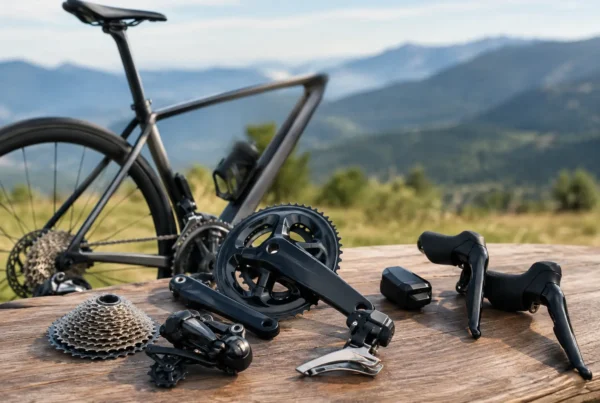
The first hard acceleration out of a corner tells you most of what matters in a Shimano Ultegra Di2 review. The shift lands immediately under real pedalling load, the chain stays composed, and there is none of the slight hesitation that can make a mechanical drivetrain feel like it needs managing when the pace rises. Shimano’s 12-speed Ultegra Di2 is built for riders who want race-ready performance without paying Dura-Ace money – and it delivers that brief convincingly.
For fast road riding, long-course triathlon and time-trial builds, Ultegra Di2 sits in a particularly strong position. It is light enough for a serious climbing bike, reliable enough for big training mileage, and polished enough to suit premium aero frames. It is not a budget upgrade, and it is not the lightest electronic groupset available. What it offers is a very complete performance package with few compromises once it is correctly set up.
Shimano Ultegra Di2 review: the key reasons it stands out
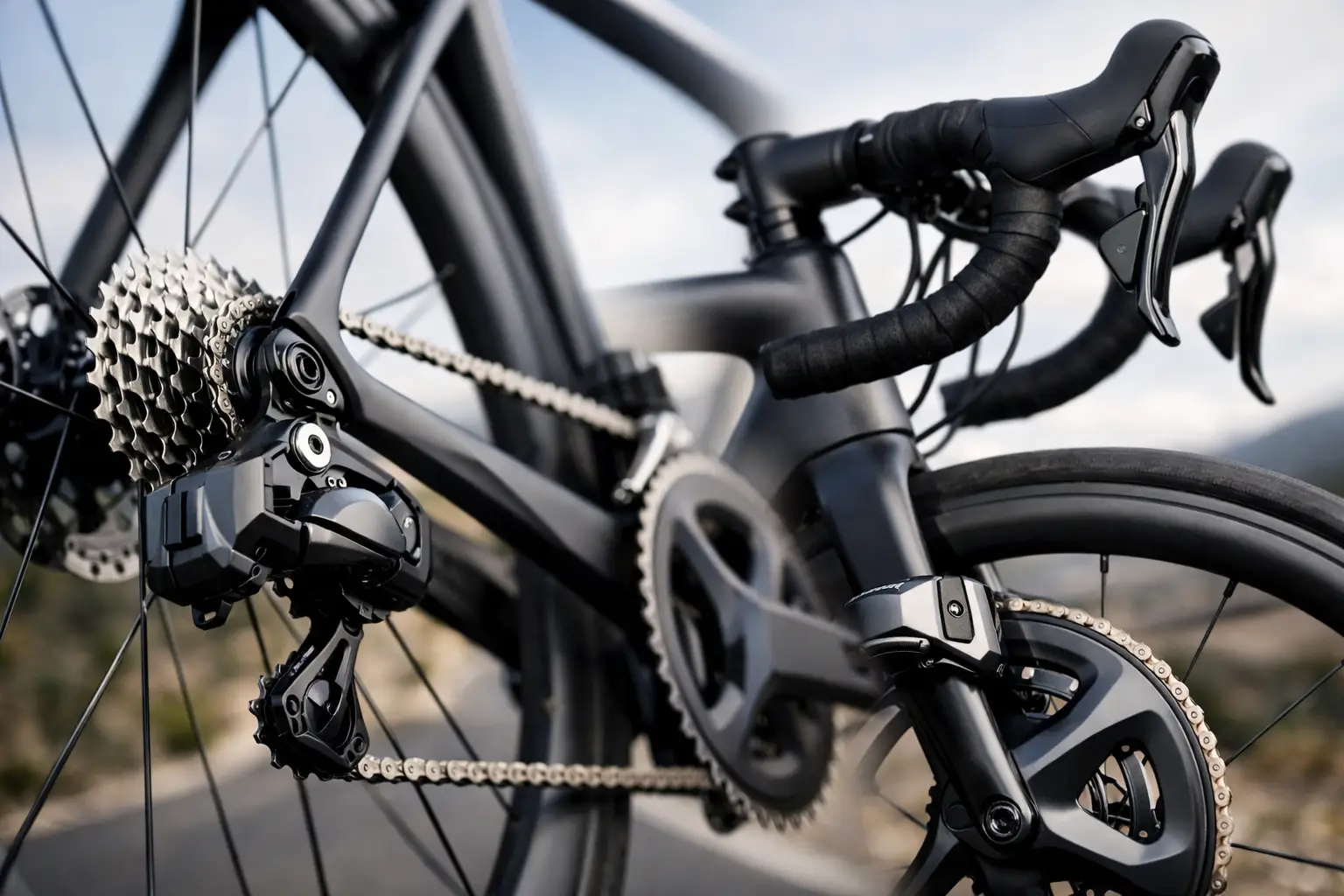
The current 12-speed Ultegra Di2 R8100-series groupset takes much of the shifting architecture and braking feel introduced with Dura-Ace Di2, then brings it to a more attainable price point. The headline feature is the semi-wireless layout. The shift levers communicate wirelessly with the rear derailleur, while the derailleurs remain wired to the internal battery.
That arrangement keeps the cockpit clean and avoids frequent charging of individual levers. Charging is handled through the rear derailleur, while the central battery is tucked safely inside the frame. For most riders, battery life is measured in many weeks or months rather than rides, depending on use and connected accessories. It is a sensible system for a performance bike: minimal fuss, stable connections and no clutter around the bar.
The standout, though, is shift quality. Ultegra Di2 shifts with a short, defined lever action and a quick response from the derailleurs. Front shifts are especially impressive. Moving between chainrings while holding a steady effort is controlled and quiet, without the clatter or hesitation associated with older front derailleurs. Under load, it feels like a drivetrain designed around racing rather than simply electronic convenience.
The rear derailleur is equally assured. A shift from the middle of the cassette to a larger sprocket on a steep ramp is clean, provided the drivetrain is maintained and adjusted properly. It does not give you permission to shift carelessly under maximum torque, but it handles the sort of pressure produced in a breakaway, sprint lead-out or tired final climb extremely well.
Gearing that works for modern fast road bikes
Ultegra Di2 uses Shimano’s 12-speed road cassette options, including 11-30T and 11-34T ranges. Paired with 50-34T, 52-36T or 54-40T chainsets, that gives buyers useful scope to build around their terrain and ambitions.
For most UK road riders, a 52-36T chainset with an 11-30T cassette remains an excellent all-round race setup. It gives close ratios for holding speed in a group while retaining a low enough gear for tough, rolling routes. Riders based in hillier areas, those taking on long alpine events, or anyone prioritising freshness over pride will appreciate the 11-34T cassette. With a 50-34T chainset, it makes a very capable endurance and sportive combination without making the bike feel under-geared on the flat.
The 54-40T option is more specialised. It suits powerful riders, flatter fast events and aero road builds where sustained high speed matters. It can also make sense on a time-trial bike, although the best gearing for TT and triathlon depends heavily on course profile, target speed and cadence preference. Bigger is not automatically faster if it leaves you grinding a gear late in the ride.
Shimano’s closely spaced sprockets are a real advantage here. Twelve speeds give you small, useful cadence changes rather than a cassette full of theoretical ratios. On fast rolling roads, that makes it easier to settle into an efficient rhythm instead of repeatedly choosing between slightly too easy and slightly too hard.
Braking performance is a major part of the upgrade
Ultegra hydraulic disc brakes deserve as much attention as the shifting. They offer strong stopping power with controlled modulation, particularly from the redesigned lever shape. There is a clear sense of where the pads engage, followed by progressive power as you pull harder.
That matters in UK conditions. On a wet descent, a brake that gives consistent feedback is more valuable than one that simply feels sharp at the first touch. Ultegra Di2 lets you brake later with confidence, scrub speed accurately before a corner, and maintain control when the road surface is far from perfect.
The lever ergonomics are also a meaningful improvement for many riders. The hoods feel secure, the reach is manageable, and the buttons are distinct enough to use with full-finger gloves. Riders with smaller hands should still test their preferred cockpit where possible, especially on an integrated bar and stem setup, but the overall shape is excellent for long days as well as short hard efforts.
The trade-offs to consider before buying
Electronic shifting is not maintenance-free. Ultegra Di2 still needs a clean chain, a straight derailleur hanger, correctly aligned brake calipers and occasional software checks. Its performance is so precise that poor setup is easier to notice than it is on a less refined mechanical system. A worn chain or contaminated cassette will not be hidden by the electronics.
Cost is the other consideration. A full Ultegra Di2 bike commands a meaningful premium over an equivalent mechanical build, and replacement parts are not cheap. If your priority is maximum value, Shimano 105 Di2 offers much of the same electronic experience at a lower cost, albeit with extra weight and slightly less premium finishing.
Dura-Ace Di2, meanwhile, is lighter and carries the flagship badge. For riders focused on every gram, or those building an uncompromising race bike, it remains the top Shimano choice. Yet the performance gap on the road is much smaller than the price difference suggests. Ultegra Di2 is often the smarter place to spend, leaving more of the budget for faster wheels, high-quality tyres or a professional bike fit.
There is also a compatibility point for triathlon and TT riders. Road Ultegra Di2 is an outstanding drivetrain platform, but aero extensions, base-bar controls and satellite shifters need to be specified carefully around the frame and intended cockpit. Internal cable routing, junction locations and the exact control configuration vary between bikes. This is a situation where fit and build advice can prevent an expensive compromise.
Who should choose Ultegra Di2?
Ultegra Di2 is ideal for the rider buying a premium carbon road bike for fast club rides, racing, sportives and structured training. It is equally compelling on an aero road bike, where clean wireless lever installation complements an integrated front end. For the rider who rides consistently and values accurate shifting every time, it feels like a genuine performance upgrade rather than a luxury extra.
Competitive triathletes and time-trial riders will also appreciate the reliability and crisp gear changes, particularly when holding aero position makes reaching conventional levers inconvenient. The right configuration matters more than the logo on the derailleur, so choose gearing and control placement for the event you actually ride.
It may be less compelling for a cyclist who prefers simple, fully self-service maintenance, rides infrequently, or is allocating a fixed budget across a whole new bike. In those cases, a mechanical groupset or 105 Di2 may deliver a better overall build. There is no benefit in choosing Ultegra Di2 if it forces compromises on frame fit, wheels or tyres.
For riders who want a drivetrain that matches the ambition of a high-performance bike, Shimano Ultegra Di2 remains one of the safest and strongest choices available. Get the fit right, choose the gearing honestly, and it will reward every hard effort with the sharp, dependable response a serious bike should have.