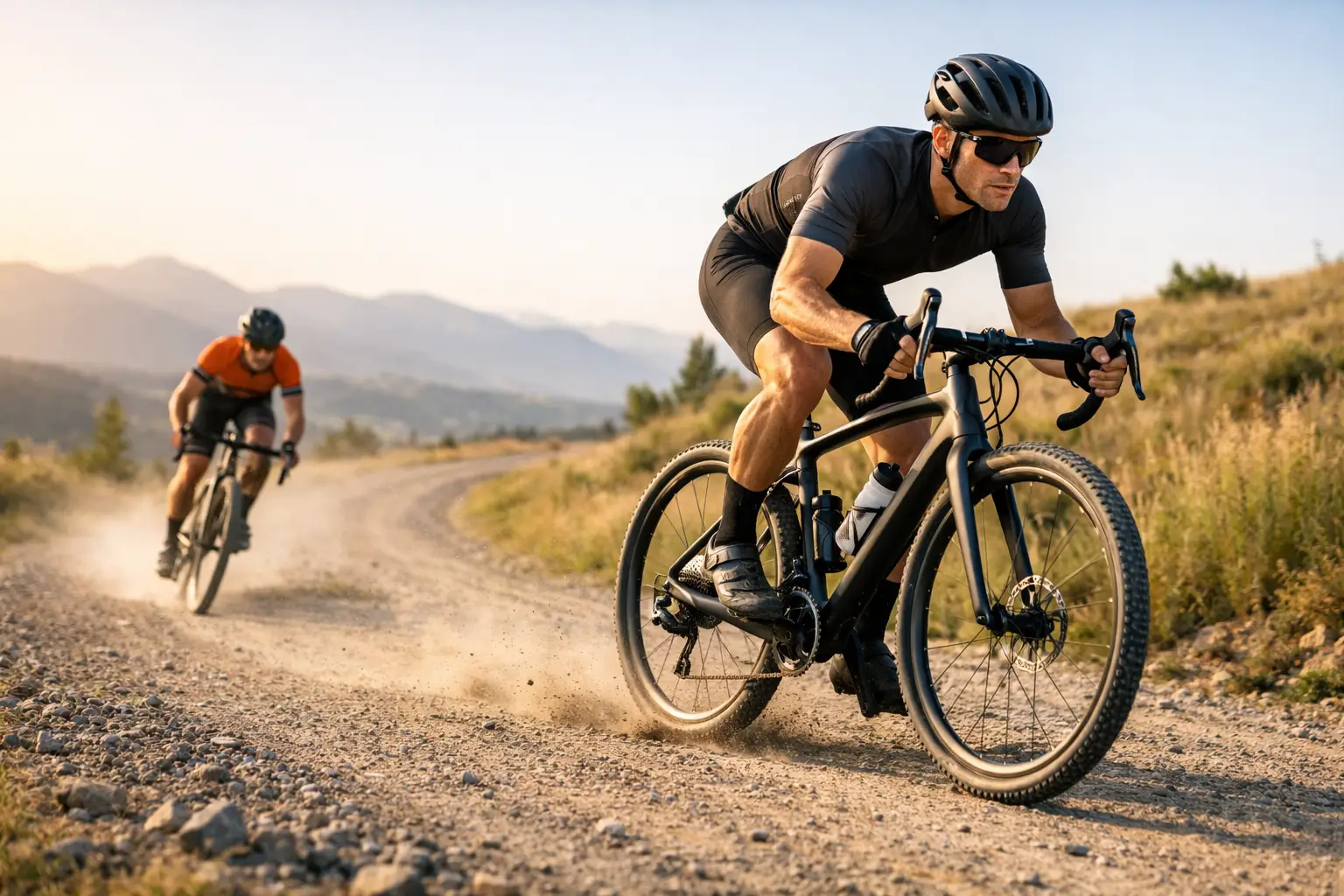
A gravel race rarely rewards a bike that does one thing brilliantly and everything else reluctantly. You need speed on exposed farm tracks, control when the surface breaks up, and enough comfort to keep producing power after three hard hours. The best gravel bikes for racing are built around that balance: efficient frames, purposeful handling, meaningful tyre clearance and components chosen for the course rather than the showroom.
For a rider moving from road, the temptation is to buy the lightest bike with the deepest wheels. For a rider coming from mountain biking, it can be to prioritise huge tyres and maximum stability. Both approaches can work, but neither is automatically fast. The right race bike matches the terrain, distance and your position on the bike.
What makes a gravel bike race-ready?
A true gravel race bike should feel eager when you put power through the pedals. Its geometry is usually lower and more stretched than an adventure-focused gravel bike, putting more weight over the front wheel and helping it hold a precise line at speed. That does not mean it should be harsh or nervous. A well-designed race frame remains composed over loose stone, washboard surfaces and rutted tracks, letting you stay seated and keep momentum rather than fighting the bike.
Frame weight matters, particularly on hilly courses, but aerodynamic efficiency increasingly matters too. Gravel events often contain long sections of tarmac, compact hardpack or open doubletrack where maintaining 30 km/h takes less drama than repeated accelerations. A frame with clean cable routing, an efficient riding position and sensible tube shaping can save energy without sacrificing all-terrain capability.
Tyre clearance is the detail that separates a versatile race bike from a narrow-use machine. For fast, dry UK summer courses, a 40 mm tyre may be ideal. For wet forest tracks, loose chalk, deep gravel or longer endurance races, 45 mm or more gives valuable grip and comfort. Clearance around the tyre must leave room for mud. A frame that technically accepts a wide tyre but clogs in poor conditions is not the right tool for winter racing.
Five of the best gravel bikes for racing
The following models represent different approaches to fast gravel riding. Exact specifications, wheelsets and gearing vary by build level, so judge the frame platform first and then choose the build that suits your racing.
Cervelo Aspero
The Cervelo Aspero remains a strong choice for riders who approach gravel racing with a road racer’s mindset. It has a lively, direct feel and a geometry designed to make fast handling feel natural rather than twitchy. The adjustable trail concept allows the handling to remain balanced as tyre size changes, which is useful if your season spans dry fast events and rougher wet races.
Choose it if you value rapid acceleration, purposeful steering and the option to run a fast wheel and tyre setup. It is particularly convincing for mixed-surface racing where road pace still counts.
Factor Ostro Gravel
The Factor Ostro Gravel is aimed squarely at performance-led riders who want aero thinking brought to an off-road platform. It is a premium option with a clear focus on speed, stiffness and an integrated race-bike feel. For long exposed courses where groups stay together at high pace, that efficiency can be a real advantage.
This is not the obvious choice for a rider seeking a relaxed, heavily laden adventure bike. It is for the racer who wants a fast position, quality wheels and a frame that rewards committed pedalling.
Canyon Grail CFR
The Canyon Grail CFR offers a modern race-gravel package with confident control over demanding surfaces. Its design favours hard riding, with room for practical race tyres and geometry that can handle fast descents without making the bike feel slow on smoother sections.
It suits riders who race varied routes and do not want to compromise too heavily towards either pure road speed or mountain-bike-style capability. A higher-spec build with quality carbon wheels makes it especially capable for competitive all-day events.
Cannondale SuperX
The Cannondale SuperX brings cyclocross pedigree to gravel racing. That background shows in its responsive handling, low weight and ability to react quickly when a course demands repeated changes of pace. If your local races include tight turns, punchy climbs, off-camber sections and technical woodland, it deserves serious consideration.
Its race character will appeal to aggressive riders, while the platform still has the tyre clearance and composure needed for modern gravel. It is a compelling option for anyone who races cyclocross as well as gravel.
Argon 18 Dark Matter
The Argon 18 Dark Matter takes a slightly broader view of performance. It is capable enough for competitive gravel events while giving riders more scope to tailor fit, tyre choice and setup for rougher routes. That adaptability is valuable if one weekend means fast dry lanes and the next means a longer race across loose, uneven terrain.
For riders who want a premium race bike without committing to the most extreme position or narrowest use case, it is a well-judged platform.
Match the bike to the race, not the marketing
The fastest choice for a smooth, rolling event is not always the best choice for a rain-soaked race with muddy singletrack. Before choosing a frame, look honestly at the events you plan to enter most often.
For dry, hardpacked courses with plenty of road, prioritise a relatively aerodynamic frame, responsive geometry and fast-rolling 38-40 mm tyres. A 2x drivetrain can make sense here, particularly if you regularly spin out a 1x setup on quick tarmac descents. The smaller jumps between gears also help when the pace is high in a group.
For rougher, steeper or muddier routes, greater tyre volume and a 1x drivetrain are often the better call. A 42-45 mm tyre run tubeless at a sensible pressure brings more speed than many riders expect because it reduces bouncing and improves traction. A wide-range cassette also means you can keep cadence under control when climbs become loose or slippery.
Wheels deserve as much attention as the frame. A light, dependable carbon wheelset with a wide internal rim supports modern gravel tyres properly, helping them corner predictably at lower pressures. Deep rims can be quick on open courses, but only if crosswinds and rough surfaces do not leave you tense on the bars. Reliability matters: a race is not the place to discover a marginal tyre fit or a sealant problem.
Fit is your most useful performance upgrade
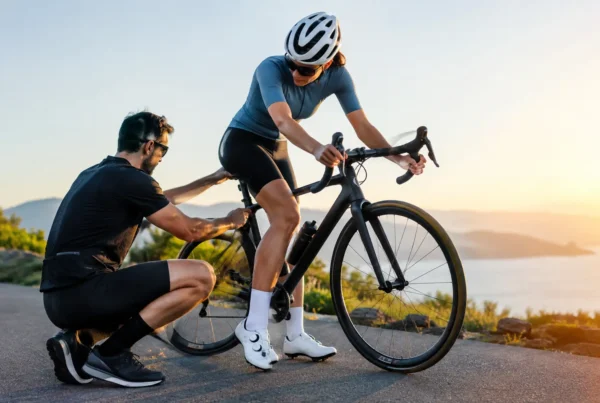
A gravel race bike should be fast enough to encourage a low, efficient position, but sustainable enough that your hands, shoulders and lower back are still working late in the race. A frame that looks aggressive on a product page can be the slower option if it forces you to sit up whenever the surface gets rough.
Start with stack and reach rather than assuming your road-bike size will transfer directly. Gravel riders often benefit from slightly more stack, a shorter stem or a handlebar with more flare, especially for technical descents. The aim is not to make the bike upright. It is to create a position you can hold while braking, cornering and producing power over uneven ground.
Saddle choice, crank length and bar width also matter. Small changes in contact points can make a bigger difference over four hours than a modest saving in frame weight. If you are investing in a premium frame or complete bike, fit guidance should be part of the buying decision, not an afterthought.
Build priorities that pay off on race day
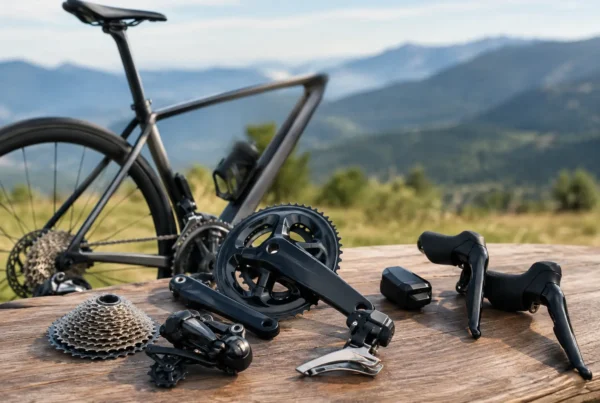
Once the frame is right, keep the build focused. Tubeless tyres, a reliable drivetrain, powerful hydraulic disc brakes and wheels suited to your chosen tyre width are non-negotiable for serious gravel racing. Electronic shifting is valuable for clean, consistent changes under fatigue, but dependable gearing and fresh consumables matter more than adding technology for its own sake.
Carry the essentials without overloading the bike: a plug kit, pump or inflation cartridge, spare link, multitool and enough nutrition for the course. Test every item in training. A loose saddle bag, unfamiliar tyre pressure or bottle cage that ejects bottles can turn a strong ride into a frustrating one.
The best race bike is the one that makes you want to press on when the group accelerates and the surface turns ugly. Choose the platform that fits your events and your body, then set it up with the same care you bring to training. For riders weighing premium race-gravel options, Trifit Bikes can help make that final choice with fit-focused, specialist support before the start line.