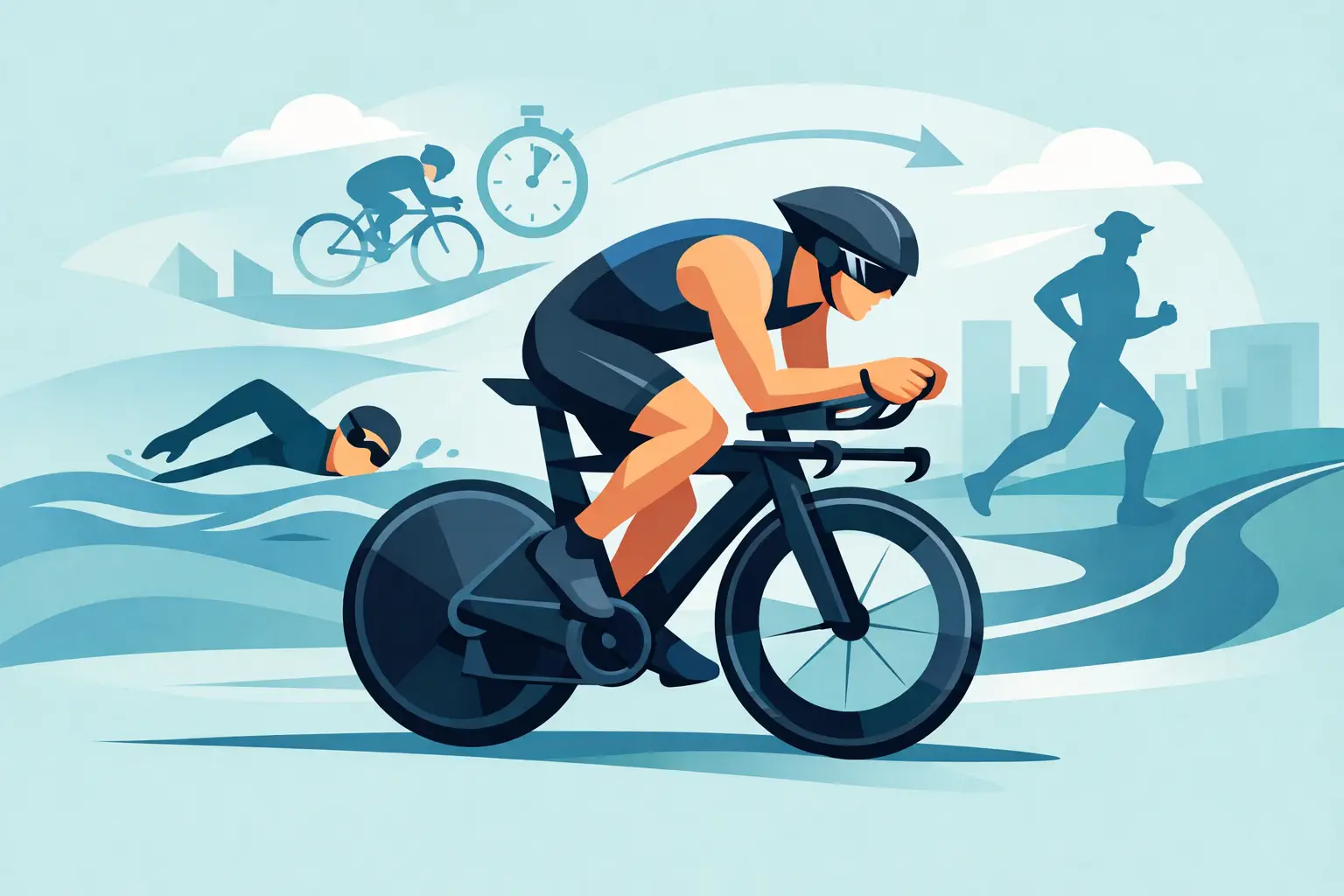
Watch a strong age-grouper roll past on a flat triathlon bike leg and the answer to why do triathletes use TT bikes becomes obvious very quickly – they are built to go faster for the same effort. Not in a vague marketing sense, but in the real, measurable way that matters on race day: lower drag, steadier power output, and a position designed to save speed over long distances.
That does not mean a TT bike is automatically the right choice for every rider or every event. But if your goal is to ride efficiently, arrive at T2 in better shape, and make the most of your watts, there is a reason serious triathletes keep coming back to this category.
Why do triathletes use TT bikes for racing?
The short answer is aerodynamics. Once your speed rises much above steady club-run pace, air resistance becomes the biggest force holding you back. A TT bike is designed around reducing that resistance through frame shaping, front-end setup, rider position and integrated storage.
A standard road bike can be quick, especially with clip-on aero bars, but it starts from a different brief. Road bikes need to corner sharply, climb well out of the saddle, descend confidently in bunch conditions and remain versatile across mixed terrain. A triathlon or time trial bike has a narrower focus. It is built around solo speed.
That focus changes almost everything. The frame tubes are shaped to manage airflow. The front end is lower. The cockpit places the rider with elbows supported and hands forward. The seat tube angle is often steeper, rotating the rider into a more aggressive position that can help open the hip angle while staying aerodynamic.
All of that adds up to one thing – free speed, provided the rider can hold the position.
The biggest advantage is aerodynamic efficiency
If you compare bikes at triathlon race speeds, the rider creates most of the drag, not the frame alone. That is why TT bikes are really rider-position systems as much as they are bikes. The design helps the body present a smaller, cleaner shape to the wind.
This matters because saving even a small amount of drag can be worth meaningful time over 40km, 90km or 180km. You do not need to be racing professionally to benefit. A well-fitted triathlete holding a stable aero position can gain minutes, not seconds, over a long bike leg.
That is the real appeal. You are not necessarily producing more power. You are simply wasting less of it pushing air out of the way.
There is also a consistency benefit. On a road bike, many riders move in and out of position more often, especially if they are trying to stay comfortable. On a TT bike, when the fit is right, the position encourages long stretches of uninterrupted riding. Fewer posture changes often means smoother pacing, and smoother pacing usually means a better run afterwards.
TT bikes help triathletes protect the run
This is where triathlon differs from pure time trialling. The bike split matters, but only in relation to what happens next. A bike that lets you set a fast split and then shuffle through the run has not really done its job.
One reason triathletes use TT bikes is that the geometry can support a position more compatible with running off the bike. The steeper effective seat angle brings the hips forwards, which can reduce some of the muscular demand that riders feel when spending a long time in a traditional road position. That does not mean every rider will instantly run better from a TT bike, but for many, it makes race pacing more sustainable.
A proper triathlon position is usually trying to balance three things at once: aerodynamic gain, power production, and run preservation. Get one of those badly wrong and the bike leg becomes expensive. Get them right and you are not just faster on the bike – you are setting up the rest of the race.
This is also why bike fit matters so much more than catalogue geometry charts alone. The fastest-looking setup is useless if you cannot stay in it for the duration of your event.
Why a road bike with clip-ons is not always the same
A common question from newer athletes is whether a road bike with clip-on bars can do the same job. Sometimes it can get close enough. Sometimes it cannot.
For sprint triathlons, hilly courses, first-time racers or athletes working within a tighter budget, a road bike with clip-ons can be a smart and practical setup. It gives you some aero benefit without the cost or commitment of a dedicated TT machine. For many riders, that is the right starting point.
But there are limits. A road bike’s geometry does not usually place the rider as efficiently over the bottom bracket for sustained aero riding. The front end may not adjust as cleanly. Weight distribution can feel less settled when staying on the extensions for long periods. Storage, hydration and cable integration are usually less refined as well.
That is why dedicated triathlon bikes continue to dominate middle and long-distance racing. They are purpose-built for the exact demands of those events.
Course profile and race type matter
Not every triathlon rewards a TT bike equally. On flatter, faster courses, the benefit is obvious. The longer you can stay in the aero bars and hold steady power, the more the platform makes sense.
On technical courses with repeated sharp turns, rough surfaces or long steep climbs, the advantage can shrink. A lighter road bike with more responsive handling may suit some riders better, particularly if they are not fully confident on a TT bike. Confidence counts. If you are braking too much, sitting up too often or avoiding the aero position because the bike feels unfamiliar, the theoretical gain disappears quickly.
Race rules matter too. Draft-legal triathlon requires road bikes, not TT bikes. Non-drafting events are where TT machines come into their own.
The right question is not whether TT bikes are faster in theory. It is whether they are faster for you, on your course, at your level of skill and over your race distance.
Comfort is part of speed, not separate from it
There is a lazy assumption that TT bikes are only about suffering. In reality, a good setup should feel controlled, supported and sustainable. Yes, the position is more aggressive than an endurance road fit, but the arm pads support upper-body weight, and the saddle position is designed around long periods of seated effort.
When riders say a TT bike is uncomfortable, the issue is often fit rather than concept. Saddle choice, pad width, extension length, stack, reach and crank length all influence whether the position works. A premium frame with the wrong setup will underperform a less exotic bike that actually fits.
This is especially important for age-group athletes who are balancing training around work, family and limited weekly hours. You do not need a bike that only works for twenty perfect minutes. You need one that lets you train consistently and race with confidence.
The performance gains are real, but so are the trade-offs
A TT bike is not automatically the smartest buy for every triathlete. It asks more from the rider in some areas.
Handling is more specialised, especially in crosswinds or on technical descents. Storage and travel can be more awkward, particularly with integrated front ends. Maintenance can be more involved. And the price of entry is higher once you factor in wheels, hydration, fit and contact points.
There is also the issue of flexibility and strength. Holding an aero position well requires adaptation. Riders with tight hips, poor trunk stability or limited time to practise may struggle to realise the bike’s full potential straight away.
None of that makes a TT bike a bad choice. It just means the best setup is the one that matches your racing goals, not the one that looks fastest in a product photo.
So, why do triathletes use TT bikes when every second counts?
Because triathlon rewards efficiency. A TT bike helps serious riders turn their effort into speed more effectively than a standard road setup, especially in non-drafting races over flat to rolling terrain. It gives aerodynamic advantage, supports sustained pacing, and can put the body in a better position for the run when fitted properly.
That is why experienced triathletes often see a TT bike not as a luxury, but as the correct tool for the job. If you are racing to improve, not just to complete, equipment choice starts to matter more.
The key is being honest about your needs. If you race short events occasionally, a road bike may be enough. If you are targeting PBs over Olympic, middle or long distance and want every well-earned watt to count, a TT bike earns its place very quickly.
Speed in triathlon rarely comes from one big change. It usually comes from stacking smart decisions, and choosing a bike built for the demands of your race is one of the clearest gains you can make.