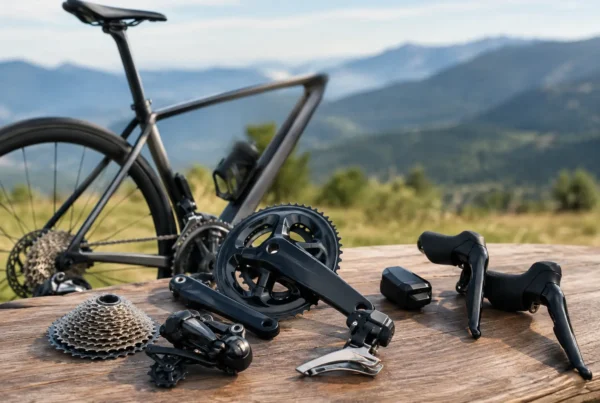
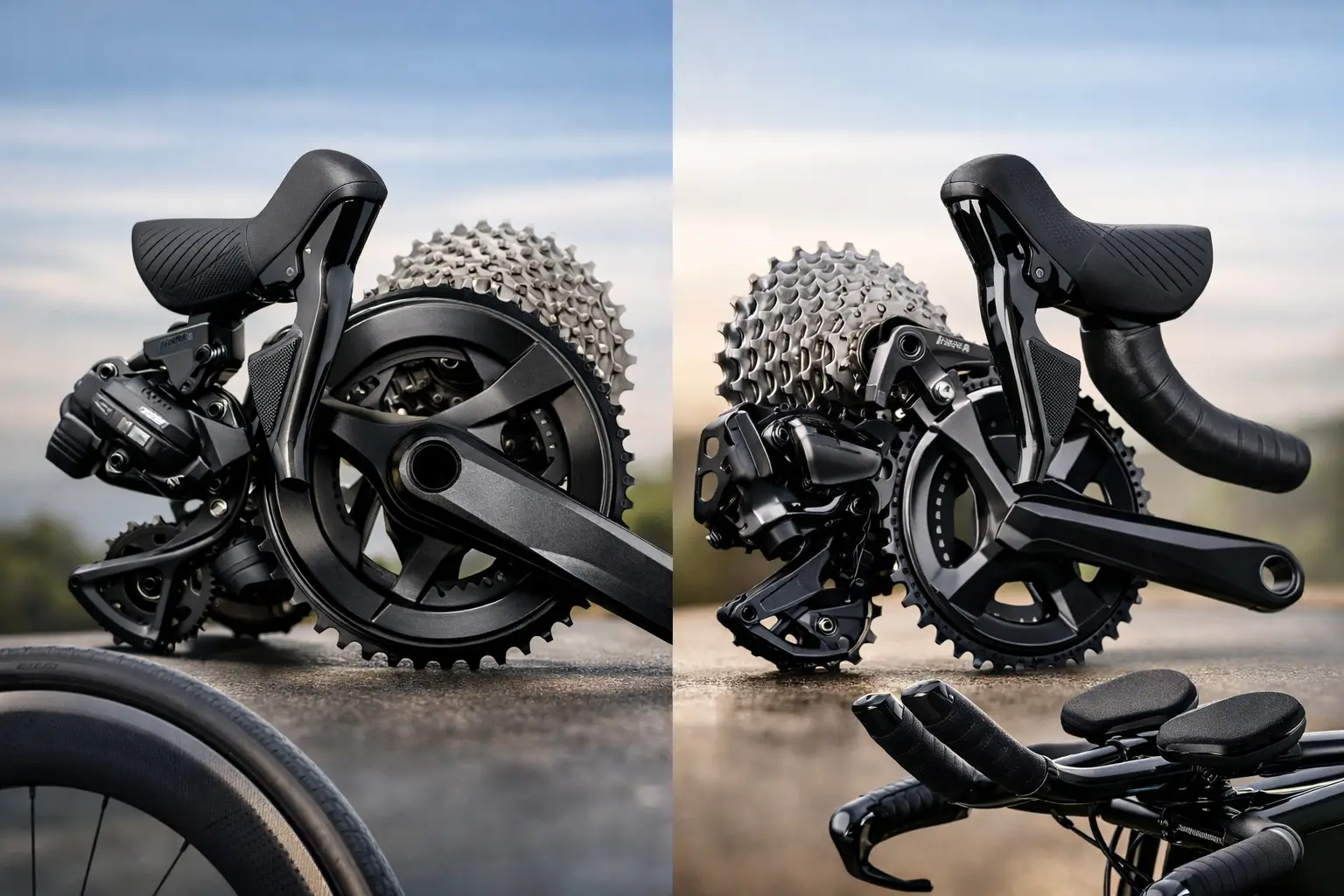
A groupset choice can shape every ride: the shift you make under race pressure, the gear you have left on a steep climb, and how easily your bike adapts to the next event. In the SRAM vs Shimano decision, there is no automatic winner. Both build outstanding electronic and mechanical drivetrains, but their strengths suit different riders, frames and race goals.
For a performance bike purchase, look beyond the logo on the rear derailleur. Consider the riding you do most, the gearing range you need, your wheel and frame compatibility, and how you want the controls to feel when you are tired, cold or pushing for a result.
SRAM vs Shimano: the key difference
At the highest level, SRAM has built much of its current performance offering around wireless AXS shifting, wide-range gearing and simple, modular set-up. Shimano is known for exceptionally refined shifting, familiar ergonomics and a deep ecosystem that runs from race-level road equipment to dependable everyday components.
SRAM AXS makes a particularly clean proposition on a premium road, gravel or triathlon build. Each derailleur has its own removable battery, there are no shift wires running through the frame, and set-up can be straightforward when changing components or travelling with a bike. For riders who value a tidy cockpit and easy adjustment, that is a meaningful advantage.
Shimano Di2 has a more integrated approach. Many modern road systems use a central battery inside the frame and compact wiring between components, while selected configurations offer wireless communication between the levers and derailleur. The result is a very polished feel, long intervals between charging and excellent shift consistency. It is a favourite for riders who want the bike to feel completely settled and unobtrusive once built.
Neither approach is inherently better. SRAM makes battery removal and charging simple. Shimano means fewer separate batteries to monitor. Your preference may come down to whether you want the convenience of external batteries or the fit-and-forget nature of an internal system.
Shifting feel and controls
Shimano’s road shift levers are familiar to a huge number of riders. The button layout is intuitive: one lever moves to a harder gear and the other returns to an easier gear. The hoods tend to feel compact and secure, which matters on long road rides, technical descents and TT events where control changes need to be instinctive.
SRAM’s electronic road controls use a different logic. Press one paddle for a harder gear, the other for an easier gear, with both paddles together typically controlling the front derailleur. It takes a few rides to become automatic, but many riders appreciate the simplicity, especially when using thick gloves or riding hard on rough gravel. AXS also offers extensive button customisation through its app, including sequential shifting options on compatible systems.
This is one area where a test ride is more useful than a specification sheet. If you have ridden Shimano for years, its controls may immediately feel right. If you are building a new race bike and want clean wireless controls with easy customisation, SRAM is compelling.
Gearing: where the choice becomes personal
SRAM’s modern road and gravel gearing is built around smaller chainrings and closely considered cassette ranges. Its 10-tooth smallest sprocket allows a wide overall range without requiring an enormous big chainring. A 48/35T chainset paired with a 10-33T cassette, for example, delivers sensible climbing gears while retaining a strong top end for fast group rides and racing.
For gravel, SRAM’s 1x options are a major draw. One chainring removes front-shift decisions and gives excellent chain retention over rough ground. The latest XPLR systems also bring very wide cassette ranges and, at the top end, 13-speed options designed specifically for high-performance gravel riding. They are well suited to riders who want one bike to cover fast lanes, loose tracks and challenging climbs.
Shimano offers a more conventional road gearing philosophy, with chainring pairings such as 50/34T, 52/36T and 54/40T matched to 11-tooth-start cassettes. It is proven, efficient and easy to understand. Riders who spend most of their time on the road often like the close ratios available through Shimano’s road cassettes, particularly when trying to hold a smooth cadence in a chaingang or on a rolling sportive.
Shimano GRX gives gravel riders both 1x and 2x routes. A 2x GRX set-up is especially attractive for mixed-surface riders who want low climbing gears without the larger gaps sometimes found in wide-range 1x cassettes. If your gravel rides include long tarmac sections, events with fast bunches or regular road training, that extra ratio choice can be worthwhile.
For triathlon and time trial, the decision depends heavily on course profile. A flatter course rewards closely spaced high-speed gears and aero control integration. A hilly course may justify a lower front chainring combination or wider cassette. Both SRAM and Shimano deliver precise electronic shifting from extensions and base-bar controls on compatible builds, so prioritise the gearing that lets you maintain target power and cadence rather than choosing on brand alone.
Braking performance and wheel compatibility
At premium level, both brands offer excellent hydraulic disc braking. Lever feel, pad choice, rotor size and the frame’s overall set-up can influence real-world braking as much as the name on the caliper. Shimano is often praised for its progressive, easy-to-modulate feel. SRAM’s latest systems are powerful and confidence-inspiring, particularly on fast road descents and technical gravel.
Compatibility deserves proper attention before buying. SRAM’s 10-tooth cassettes normally require an XDR freehub body, while many Shimano road cassettes use the widely established HG road freehub standard. The wheelset on your chosen bike may already determine the simplest option. Rotor standards, axle dimensions, derailleur hangers and maximum cassette capacity also matter, especially on custom frameset builds.
For mountain bikes, SRAM Transmission has made the Universal Derailleur Hanger, or UDH, a significant consideration. Transmission derailleurs mount directly to compatible frames and are designed for durability under load. Shimano’s MTB groupsets remain a strong choice, with excellent shifting performance and broad availability, but a rider selecting a new high-end trail or enduro frame should check whether it is built around UDH and whether Transmission is part of the intended specification.
Weight, durability and servicing
Weight differences between equivalent groupsets are often smaller than riders expect once a complete bike is built. Wheels, tyres, cockpit choices and frame size can make a larger difference. Do not sacrifice the gearing or control layout you prefer simply to save a modest number of grams on paper.
SRAM’s removable batteries are handy for travel and quick troubleshooting. Carrying a charged spare is easy, and swapping front and rear batteries can help diagnose an issue. The trade-off is that you need to remember to charge each battery and keep the contacts clean.
Shimano Di2 systems generally offer long battery life from a single internal battery. Mechanical Shimano groupsets also remain a highly dependable, cost-conscious choice, with parts widely available in most workshops. For riders clocking high annual mileage, easy access to replacement chains, cassettes, brake pads and jockey wheels should be part of the value calculation.
Both brands require routine care. Keep the drivetrain clean, check chain wear early, replace brake pads before they are fully worn, and update electronic firmware when appropriate. Premium components perform at their best when the rest of the bike is maintained to the same standard.
Which groupset should you choose?
Choose SRAM if you want a clean wireless installation, value removable batteries, prefer its control logic, or are building a gravel bike around a focused 1x drivetrain. It is also an excellent match for riders who want the broad gearing and modularity of the AXS ecosystem.
Choose Shimano if you favour traditional lever ergonomics, refined front shifting, long battery intervals and a wide choice of compatible road and gravel components. It remains a superb option for road racers, endurance riders and triathletes who want predictable performance with minimal fuss.
The best answer is often the groupset already specified on the right frame and wheel package. At Trifit Bikes, that means looking at the complete performance proposition: fit, intended terrain, race calendar, gearing and future upgrade path. Pick the system that makes you want to ride harder, then make sure the bike is set up to let it do exactly that.