You are deep into a threshold effort, the gradient kicks again, and you need one clean downshift without breaking rhythm. That is where mechanical versus electronic shifting stops being a specification-sheet debate and becomes a real riding decision. Both systems can deliver precise, race-ready gear changes, but they ask different things of your budget, bike setup and maintenance routine.
For a premium road bike, triathlon build, gravel machine or XC mountain bike, the right answer is rarely about which system is objectively better. It is about where you ride, how you race and what you want your bike to feel like when the pace rises.
Mechanical versus electronic shifting: the key difference
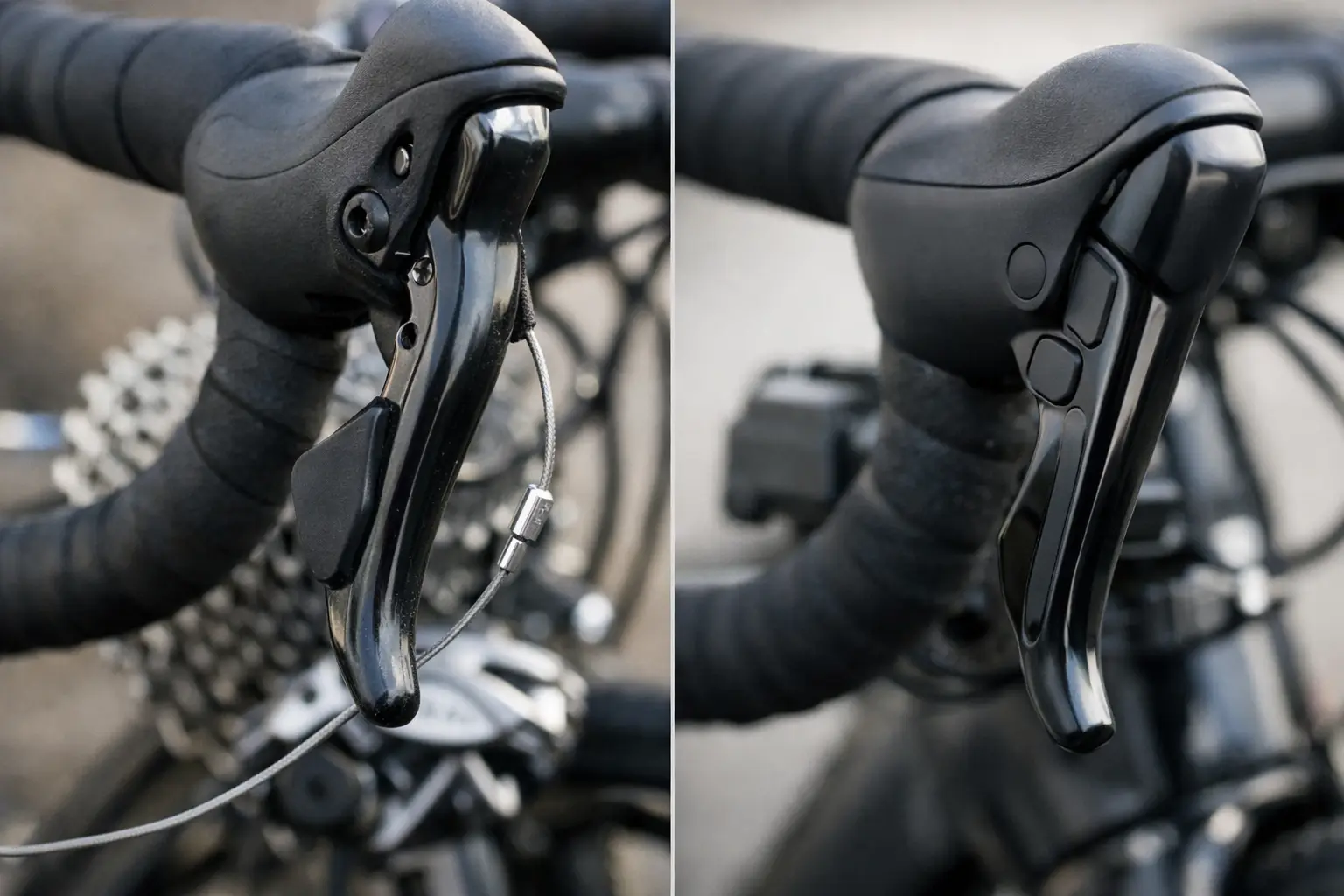
Mechanical shifting uses a cable running from the shifter to the front and rear derailleurs. Press the lever, pull or release cable tension, and the derailleur moves across the cassette or chainrings. It is a direct system with familiar feedback at the lever and a long history of dependable performance.
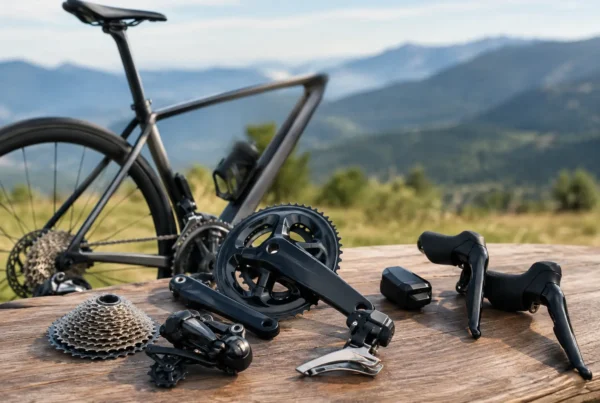
Electronic shifting replaces that cable action with electronic signals and small motors in the derailleurs. Shimano Di2, SRAM AXS and Campagnolo EPS are the best-known examples. A button press sends a command, and the derailleur makes the shift with consistent force and accuracy. Depending on the groupset, the system may use internal wiring, removable batteries or a mix of both.
The practical distinction is straightforward. Mechanical systems depend on correctly routed, tensioned and maintained cables. Electronic systems depend on charged batteries, accurate setup and sound electronic components. Neither is maintenance-free, but the work involved is different.
Why electronic shifting has become the performance default
Electronic groupsets are now common on high-end race bikes for good reason. The shift action is fast, repeatable and light at the controls, even when you are pushing hard through the pedals. That matters on a road race climb, a muddy cyclocross lap or the final minutes of a triathlon bike leg, when fine motor control is not at its best.
Consistency is the real advantage. A mechanical cable can gradually stretch, collect contamination or lose its ideal adjustment. Electronic derailleurs do not suffer from cable stretch, so a properly set-up system generally holds its indexing for longer. Modern systems also manage multi-shifts well, making it easier to move across several sprockets when a steep ramp or sudden tailwind changes your required cadence.
Electronic shifting also creates cleaner cockpit options. On triathlon and TT bikes, satellite shift buttons can be placed on base bars and aero extensions, letting riders change gear without moving their hands away from a stable position. On road bikes, sprint buttons and auxiliary controls can offer similar benefits. The time saved per shift is small, but holding an aero position or maintaining control through a technical section can be significant.
Wireless options, particularly SRAM AXS, simplify installation and make frame changes or travel preparation less dependent on cable routing. Shimano Di2 remains a strong choice for riders who value its refined shift feel, broad availability and established integration on premium road and triathlon platforms.
There is also a quality-of-life gain. Electronic levers usually require less force than mechanical levers, which can be welcome on long rides, rough gravel and cold winter training days. Riders with smaller hands or reduced hand strength often find the lighter actuation particularly appealing.
The electronic trade-offs
The obvious consideration is price. Electronic groupsets cost more to buy, and replacement parts can be expensive. A damaged derailleur hanger is inconvenient with any drivetrain; a damaged electronic rear derailleur can make the incident noticeably more costly.
Battery management is another factor, although it is less dramatic than it first appears. Most systems provide plenty of warning before they run flat, and charging becomes as routine as checking your lights or bike computer before a ride. Still, it requires a habit. A mechanical drivetrain will shift after months in the shed if the cables and chain are in reasonable condition. An electronic drivetrain with an empty battery will not.
Electronic components are engineered for wet roads, grit and demanding racing, but they are not invulnerable. For multi-day remote adventures, some riders prefer the field-serviceable nature of cables and the reassurance of readily available mechanical spares. If self-supported touring is your main priority, simplicity can outweigh the appeal of button-perfect shifts.
The case for mechanical shifting
Mechanical shifting remains an excellent choice for serious cyclists, not a compromise for riders who have missed the memo. Well-adjusted Shimano or SRAM mechanical groupsets deliver crisp, reliable changes and clear tactile feedback. Many riders genuinely prefer the positive lever movement because it tells them exactly what the drivetrain is doing.
The initial cost is lower, leaving more budget for the areas that may affect your riding more: better tyres, a lighter wheelset, a power meter, bike fit or race entry fees. On an upper-mid-tier road or gravel bike, a good mechanical groupset can be the financially smart build specification.
Maintenance is familiar and widely accessible. Replacing an inner cable, outer cable or lever hood is affordable, and most competent home mechanics can diagnose a hesitant shift with basic tools. If a cable starts to fray or shifting loses precision, the problem is usually visible and understandable rather than dependent on software, charging or diagnostics.
Mechanical groupsets can also make sense for winter bikes. Wet, salty roads accelerate wear on chains, cassettes and cables, so a simple drivetrain that is inexpensive to refresh has real appeal. That does not mean electronic shifting is unsuitable for winter use. It simply means the cost of neglect is often easier to absorb with mechanical parts.
The mechanical compromises
Cables need attention. They settle after installation, they can become contaminated, and internal routing on modern aero frames can make replacement more involved than it was on older bikes. The better the frame integration, the more valuable professional workshop support can become.
Mechanical shifting also asks for more hand force, and the quality of the shift can change as cable friction builds. Under full load, electronic systems often retain a more composed, repeatable feel. A correctly adjusted mechanical drivetrain still performs brilliantly, but it rewards regular care.
Choose by bike type and riding goal
For triathlon and time trial, electronic shifting is usually the stronger choice. Multiple shift locations support better aero discipline, and the ability to change gear from extensions and base bars is a genuine performance feature rather than a luxury. If you are investing in a dedicated TT or tri bike, an electronic drivetrain fits the purpose of the machine.
For performance road riding, the decision depends on budget and expectations. Riders buying a premium race bike for frequent events, fast group rides and big training volume will appreciate electronic speed, ergonomics and consistency. Riders who want outstanding performance without pushing the total cost higher may be better served by a quality mechanical groupset and upgraded contact points or wheels.
For gravel, think about the type of gravel you actually ride. Electronic shifting gives tidy controls, quick shifts and the useful simplicity of wireless installation. Mechanical shifting has an advantage for riders who spend days away from charging points, travel to remote areas or want a drivetrain that can be repaired easily on a trip.
For mountain biking, wireless electronic shifting keeps cable routing clean and offers accurate changes under pressure. It is especially attractive on high-spec XC and trail bikes. But a rider who regularly encounters rocks, deep mud and hard crashes may reasonably value lower replacement costs and uncomplicated trailside repairs.
Fit, gearing and setup still matter more
A superb groupset cannot rescue unsuitable gearing, a poor saddle position or a frame that does not fit your riding goals. Before choosing between systems, decide whether the cassette range, chainring sizes and crank length suit your terrain and event plans. A rider tackling rolling British roads may need different gearing from someone preparing for flat time trials or alpine sportives.
Also consider the total build, not just the headline groupset. A mechanically shifted bike with excellent wheels, appropriate tyres and a professional fit can be faster and more enjoyable than an electronic bike chosen solely for its badge. Conversely, if your position and equipment are already dialled in, electronic shifting can remove small distractions and make every gear selection more deliberate.
At Trifit Bikes, the best starting point is to match the drivetrain to the bike you will actually ride, not the one that looks best in a comparison chart. Choose electronic shifting when integrated controls, shift consistency and race-focused convenience justify the investment. Choose mechanical when value, straightforward serviceability and tactile control better fit your priorities. Either way, a properly set-up drivetrain lets you focus on the road, trail or start line ahead.