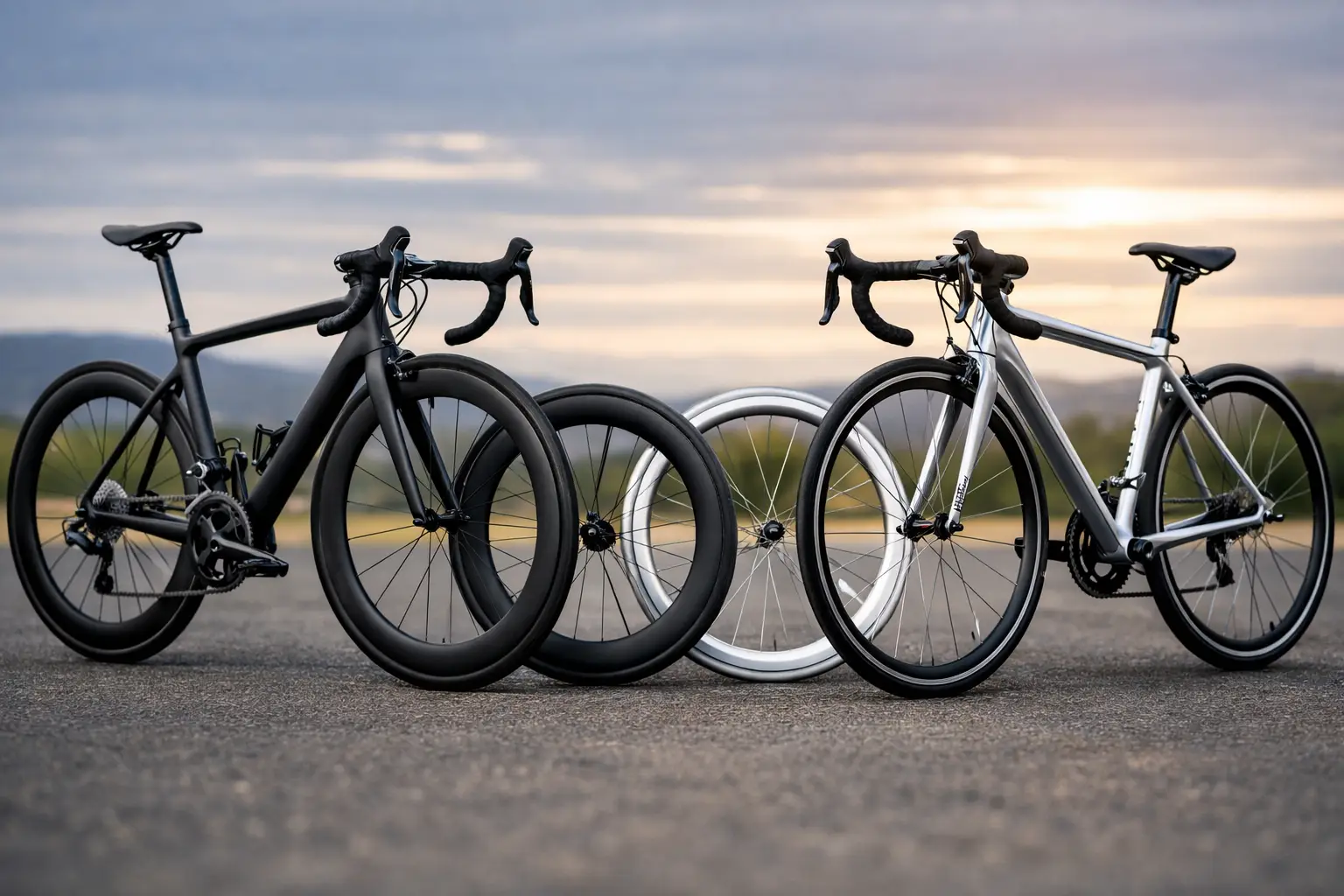
A fast group ride exposes the real difference between marketing claims and meaningful performance. Carbon versus aluminium frames is not simply a question of premium versus entry-level: it is a decision about fit, ride feel, budget and the kind of riding you want to do most. The right frame should help you hold speed, corner with confidence and enjoy the miles, whether you are building towards a PB in a triathlon or heading out for a demanding Sunday road ride.
Carbon has become the default material for high-end road, TT and triathlon bikes, while aluminium remains one of the smartest buys in performance cycling. Neither automatically makes a bike fast. Frame geometry, wheel choice, tyre clearance, rider position and component specification can all have a greater effect than the material printed on the down tube.
Carbon versus aluminium frames: the key differences
Carbon fibre frames are formed from layers of fibre and resin, allowing engineers to tune stiffness, weight and aerodynamic shaping in different areas of the frame. A manufacturer can build a stiff bottom bracket for hard accelerations, reinforce the head tube for precise steering and introduce flex where it improves comfort. This freedom is why carbon dominates race-focused bikes.
Aluminium frames are made from shaped and welded alloy tubes. Modern hydroformed aluminium is a long way from the harsh, basic alloy bikes many riders remember. It can be light, responsive and impressively refined, especially when paired with a quality carbon fork, wider tubeless tyres and sensible pressures. It does have less scope for highly sculpted aerodynamic profiles or finely tuned compliance than carbon.
The practical differences tend to fall into five areas: weight, aerodynamics, ride comfort, handling, durability and price. Each matters, but not in equal measure for every rider.
Weight matters most when the road points up
At a comparable level of equipment, a carbon frame will usually be lighter than an aluminium equivalent. The difference can be noticeable on long climbs, repeated accelerations and when carrying the bike upstairs after a ride. Carbon also gives designers more freedom to keep weight low without relying on extremely thin tube walls.
That said, a light frame is only one part of the complete bike. A well-specced aluminium road bike with reliable wheels and tyres can feel livelier and perform better than a poorly equipped carbon bike. If the budget is fixed, it is often wiser to compare the complete build rather than chase carbon at any cost.
For a rider who regularly targets hilly sportives, mountain events or punchy race circuits, lower weight can be a worthwhile advantage. For flatter routes and triathlon courses, aerodynamic position and rolling resistance are usually more influential than a modest frame-weight saving.
Aerodynamics favour carbon, especially for racing
Carbon allows the deep, shaped tube profiles found on modern aero road and time-trial bikes. It can also integrate cables, storage and cockpit components cleanly, reducing disturbed airflow around the front of the bike. At sustained speed, these details add up.
This is particularly relevant for triathletes and time-trial riders. Once you are riding into the wind at race pace, the quality of your position and the aerodynamic design of the bike are central to free speed. A purpose-built carbon TT frame is designed around those demands in a way that an aluminium frame rarely is.
Road riders should keep the gains in perspective. An aero carbon frame can be quick, but your body produces the largest share of drag. A professionally dialled-in position, close-fitting kit and correctly chosen tyres can make a major difference regardless of frame material. Buy a frame that supports the position you can hold powerfully and comfortably for the duration of your event.
Ride quality is about more than frame material
Carbon is often described as smoother, and there is truth in that. It can be engineered to reduce high-frequency road vibration without feeling vague under load. On broken British lanes, that can leave you fresher late in a long ride and more able to put power down.
But frame material is not the whole comfort story. Tyre volume and pressure are often the biggest levers. Moving from narrow, over-inflated tyres to modern 28mm or 30mm tyres at an appropriate pressure can transform an aluminium bike. A carbon seatpost, well-designed saddle and considered bar setup can also take the edge off rough surfaces.
Do not assume a carbon frame will always feel soft. Race carbon frames can be extremely stiff, direct and demanding. Likewise, a quality aluminium endurance frame can feel composed and comfortable all day. Geometry and component choices decide as much as the material itself.
Handling comes from geometry and fit first
A frame that fits properly will inspire more confidence than one made from a more expensive material in the wrong size. Reach, stack, head angle, wheelbase and your contact points determine how a bike behaves beneath you. These are the figures to check before focusing on carbon or aluminium.
Carbon can give manufacturers the ability to place material exactly where it is needed, which can result in excellent steering precision and efficient power transfer. That does not mean aluminium is imprecise. Good alloy frames are valued for their direct, energetic response, particularly when sprinting or changing pace through rolling terrain.
For triathlon and TT, fit deserves even more attention. The best frame is the one that lets you achieve a sustainable aero position without excessive strain on your shoulders, hips or lower back. A more affordable frame that fits your coordinates is a stronger race choice than a premium one that forces compromise.
Cost and value can point towards aluminium
Aluminium usually delivers more performance per pound at the lower and middle end of the market. Choosing alloy may leave budget for better wheels, a power meter, tubeless tyres or an upgraded groupset – improvements that can be felt every time you ride.
It is also a compelling choice for a first serious road bike, winter trainer, commuter-performance build or crit-racing machine. Aluminium takes everyday knocks well, and cosmetic damage is generally less stressful to assess than a deep scratch or impact on carbon. If you travel frequently, lock up occasionally or ride rough roads through winter, that reassurance has value.
Carbon carries a higher initial price, especially once integrated cockpits and premium electronic groupsets enter the specification. For riders chasing low weight, an aero platform or the best possible race bike, that investment can make sense. The key is to pay for a performance benefit you will use, not just a material badge.
Durability, damage and day-to-day ownership
Both materials can last for many years when looked after. Aluminium is susceptible to fatigue over very long periods and can dent in a hard impact. Carbon does not corrode and resists fatigue well, but it can suffer internal or structural damage after a crash or sharp impact, even where the surface mark appears minor.
Neither point should be exaggerated. Carbon frames are used at the highest level of racing because they are strong and dependable when correctly designed and maintained. Still, if a carbon bike has been dropped, crashed or struck by a bike rack, inspect it carefully and arrange a professional assessment if there is any doubt. Do not ignore creaks, cracks, soft spots or changes in handling.
For second-hand buyers, condition and provenance matter as much as material. Check the frame closely, ask about crashes and servicing, and avoid bargains with an unclear history. A trusted retailer and clear product support offer valuable confidence when making a significant purchase.
Which frame suits your riding?
Choose carbon if you are prioritising racing, low weight, aerodynamic integration or a high-end long-distance ride feel. It is the natural direction for many dedicated road racers, triathletes and time-trial riders, particularly when the frame geometry supports a strong fit.
Choose aluminium if you want a sharp, dependable and excellent-value performance bike. It makes particular sense when your budget needs to cover quality wheels and components, when you need a capable winter bike, or when you simply prefer spending the difference on race entries, coaching and time in the saddle.
At Trifit Bikes, the strongest starting point is not the material alone but the complete setup: the discipline you ride, the courses you target, the position you need and the specification that fits your budget. A frame is the foundation, but it only delivers its best when every other choice supports your riding.
Before you commit, be honest about where you ride and what will make you want to ride more. The fastest bike is rarely the most expensive one on paper. It is the bike that fits you properly, carries speed confidently and makes you eager to pin on a number or head out when the roads are calling.