A wheelset can change the character of a good bike more than almost any other upgrade. It affects how quickly you accelerate, how confidently you corner, how your bike handles crosswinds and how fresh your legs feel after a long ride. Knowing how to choose a bike wheelset starts with being honest about where and how you ride, rather than simply choosing the deepest carbon rims in the catalogue.
How to choose a bike wheelset for your riding
The right wheelset is purpose-built. A 60 mm carbon aero wheel may be a strong choice for flat road races and non-drafting triathlon, but it is not automatically the best option for a windy sportive in the Peak District or a rough gravel event. Start with your main riding discipline, then consider the terrain, tyre size, weather conditions and the performance quality you want most.
Road riders often want a blend of aerodynamic speed, low weight and responsive handling. Triathletes and time-trial riders can prioritise aerodynamic efficiency more heavily, particularly if their events are fast and relatively flat. Gravel riders need greater rim width, dependable tubeless compatibility and strength for repeated impacts. Mountain bikers should put durability, engagement and correct rim width ahead of marginal aerodynamic gains.
Your existing bike also sets the non-negotiables. Confirm whether it uses disc or rim brakes, the axle standard, cassette body and maximum tyre clearance before falling in love with a wheelset.
Choose rim depth for speed you can use
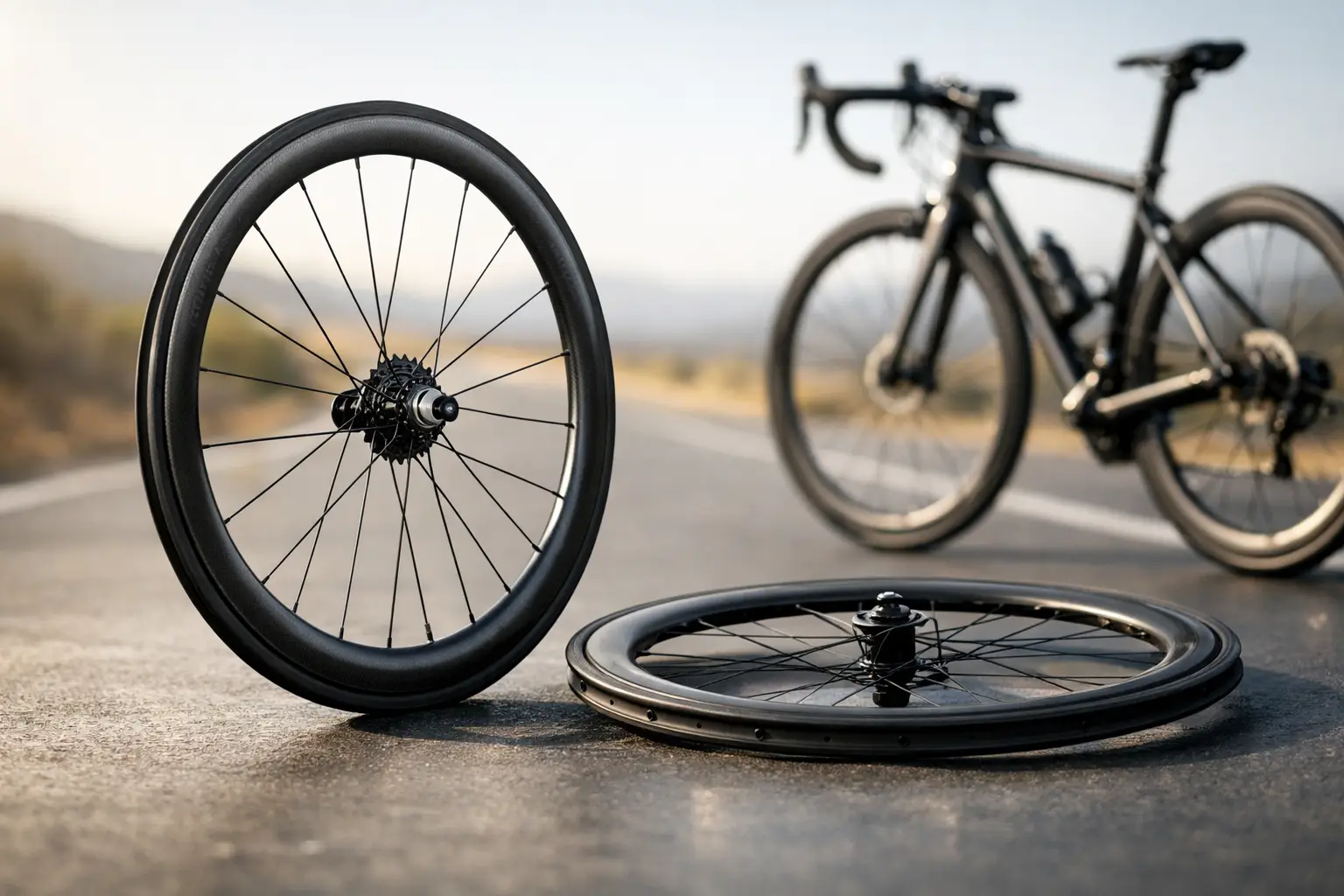
Rim depth is the first specification most performance riders notice. Deeper rims smooth airflow around the wheel and can save meaningful energy at race speeds. The trade-off is additional weight and a greater reaction to side winds.
For all-round road riding, a rim depth around 35-50 mm is often the sweet spot. It delivers a noticeable aero benefit while remaining light enough for rolling terrain and predictable in changeable British weather. If you have one road bike for club rides, sportives and occasional racing, this is usually the sensible performance choice.
Rims in the 50-65 mm range suit riders chasing speed on flatter courses, criteriums and triathlon. They hold speed well once rolling and give a purposeful race-bike feel. However, lighter riders and anyone regularly riding exposed roads should consider whether crosswind handling will cost them confidence.
Deep-section wheels above 65 mm are specialist equipment. They can be exceptionally fast for time trials and triathlon, particularly when paired with an aerodynamic frame and an efficient riding position. A rear disc wheel can add further aero benefit in suitable events, but check race regulations and make sure you are comfortable controlling the bike in gusty conditions.
Do not chase low weight at the expense of the ride
Light wheels make the bike feel eager. They accelerate quickly, reduce rotating mass and are particularly rewarding on sustained climbs or constantly changing terrain. But the lightest wheelset is not always the fastest wheelset over a full ride.
A slightly heavier but more aerodynamic wheel can be faster on flat or rolling roads. Equally, a super-light wheel with very few spokes may not be the right choice for a powerful rider, frequent rough-road use or year-round training. Look at the complete system: rim profile, spoke count, rider weight, tyre volume and intended load all matter.
For road and race use, a good carbon wheelset typically offers the strongest balance of low weight and aero shaping. Aluminium remains an excellent practical option for winter riding, commuting and riders who value easier servicing and a lower replacement cost. Carbon rims are highly capable, but they deserve careful setup and should be matched to the conditions you actually face.
Match rim width to your tyres and terrain
Modern wheels are wider internally than older designs, and that is generally good news. A wider internal rim supports the tyre more effectively, allowing it to maintain a stable profile at lower pressures. The result can be better grip, comfort and rolling efficiency.
For contemporary road tyres in the 28-32 mm range, an internal rim width around 19-23 mm is common. Wider road tyres can be exceptionally quick on real roads because they reduce vibration and allow lower pressures without feeling vague. Check the wheel manufacturer’s approved tyre range and your frame clearance, especially if you ride muddy lanes or fit full mudguards.
Gravel wheels need more internal width to support larger tyres. A 25-30 mm internal rim often works well with 40-50 mm gravel rubber, although the ideal figure depends on tyre construction and how aggressively you ride. Too narrow a rim can leave a broad tyre unstable in hard cornering. Too wide can alter the tyre profile beyond the manufacturer’s recommendation.
Tubeless-ready wheels are worth serious consideration for road, gravel and mountain biking. Lower pressures can improve grip and reduce the likelihood of pinch punctures, while sealant handles many small punctures before they interrupt a ride. Tubeless is not maintenance-free, though. Tyres need compatible rims, sealant needs topping up, and roadside repairs still require practice.
Hooked or hookless rims
Hookless carbon rims are increasingly common, especially in gravel and road wheelsets designed around wider tubeless tyres. They can be lighter and simpler to manufacture, but tyre compatibility and maximum pressure limits are critical. Only use tyres specifically approved for hookless rims and stay within the stated pressure limit.
Hooked rims accept a broader range of tyres and may offer more flexibility for riders using higher pressures. Neither system is universally better. Choose the setup that works safely with your preferred tyres, riding weight and pressure requirements.
Get the standards right before you buy
A premium wheelset is only an upgrade if it fits your bike without compromise. Check these details against your current wheels or frame specification:
- Brake type: disc-brake and rim-brake wheels are not interchangeable.
- Axle fitment: modern road and gravel bikes commonly use 12 x 100 mm front and 12 x 142 mm rear thru-axles, but exceptions exist.
- Rotor mount: disc hubs use either Centre Lock or six-bolt mounting.
- Freehub body: Shimano HG, SRAM XDR and Shimano Microspline are different standards.
- Cassette speeds: confirm whether the freehub and cassette work together, including any required spacer.
- Tyre and frame clearance: a wider rim can make the fitted tyre measure wider than its stated size.
It takes only a few minutes to check these points, and it prevents a costly compatibility problem. If you are replacing an older wheelset, also confirm whether your bike needs quick-release axles or a less common rim-brake spacing.
Look beyond the rim: hubs and spokes matter
The hubs determine how smoothly the wheels roll, how easily they can be serviced and, on mountain and gravel bikes, how quickly power engages when you pedal. High-quality sealed bearings and well-machined hubs are valuable, but do not judge a hub only by the sound of its freehub. A loud hub is not automatically a faster hub.
For road and TT riding, aerodynamic hub shells and reliable bearings matter most. For gravel and mountain riding, serviceability, bearing protection and dependable engagement deserve more attention. If you ride through winter grit and wet lanes, replacement bearings and straightforward servicing can be more useful than shaving a few grams.
Spokes are equally important to strength and feel. Fewer spokes may reduce weight and drag, but a higher spoke count can offer better durability for heavier riders, rough terrain and loaded riding. A well-built wheel with sensible spoke tension will stay true longer than a lighter wheel built too close to its limits.
Spend where it improves your results
Set a budget after deciding the riding purpose. Carbon aero wheels can be a transformative race upgrade, but only if your current tyres, bike fit and training already support the performance you want. For many riders, fitting quality 28-32 mm tyres and setting the correct pressure makes a new wheelset work even better.
If race-day speed is the goal, put your budget towards a wheel depth suited to your courses, reliable hubs and tyres that complement the rim. If you need one wheelset for all seasons, prioritise durability, sensible rim depth and easy maintenance. It is often smarter to keep a dependable training wheelset and reserve premium carbon wheels for key rides and events.
Before your first hard ride, fit the correct cassette and rotors, bed in disc brakes if applicable, check tyre pressures and make sure the wheels are fully seated in the dropouts. The best wheelset should make you want to press on when the road opens up, while still giving you the control to ride hard when the surface, wind or course turns demanding. For specialist guidance on a race-ready setup, Trifit Bikes can help match the wheelset to both your bike and your ambitions.