A deep rear wheel humming at speed is one of cycling’s best sounds. But choosing wheel depth is not about buying the deepest rim you can afford. The right choice has to hold its line in a gust, suit the roads you race on and deliver speed you can actually use. This race wheel depth guide explains where shallow, mid-depth and deep-section wheels make sense for road racing, triathlon and time trials.
What wheel depth actually changes
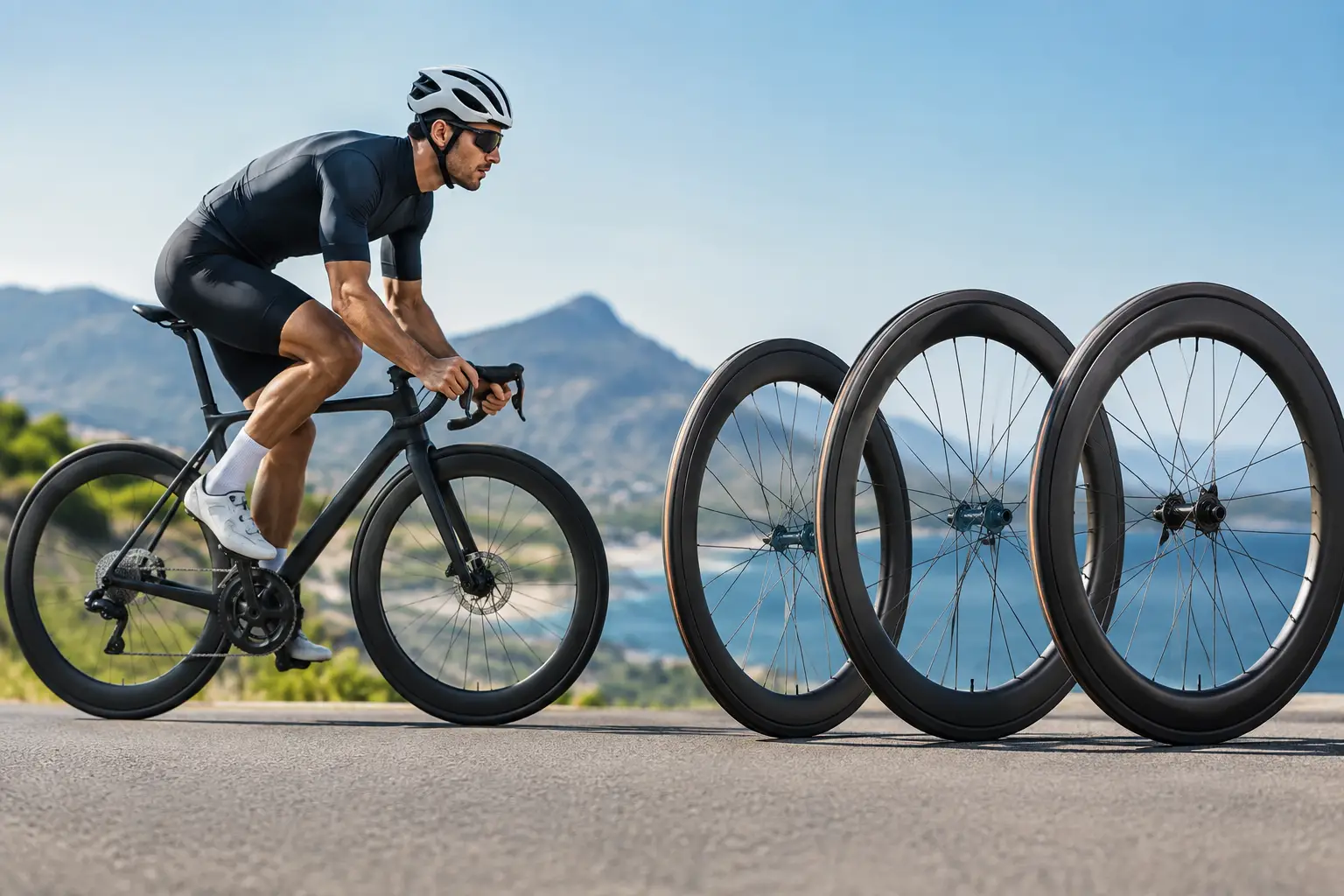
Wheel depth is the measurement from the rim’s braking surface or tyre bed to its deepest point. A 35mm wheel is relatively shallow, a 50mm wheel sits in the versatile middle ground, and a 60mm or deeper wheel is built with outright aerodynamic performance in mind.
A deeper rim presents a more aerodynamic shape to the airflow around the rotating wheel. Once you are riding at race pace, that reduction in drag can be meaningful. It is why time-trial and triathlon bikes are commonly fitted with 60mm front wheels, deeper rear wheels or disc wheels where conditions allow.
The trade-off is handling. Deep rims give side winds more surface to push against, particularly at the front. They can also weigh a little more than shallow climbing wheels, although modern carbon construction has reduced that penalty substantially. The fastest wheel is not necessarily the one with the biggest number on the decal. It is the one that lets you stay aero, ride confidently and apply power when the race gets hard.
Race wheel depth guide: the three useful ranges
30-40mm: climbing and all-weather control
A wheel around 30-40mm remains a serious race option. It is light, responsive and generally calm in gusty conditions, making it a strong choice for hilly road races, sportive riders who want a premium upgrade, and lighter riders who dislike being moved around by crosswinds.
This depth also works well on exposed British roads, where hedgerows, gaps between buildings and changing terrain can create unpredictable blasts of wind. You give away some aerodynamic advantage compared with a deeper wheel at high speed, but you gain a composed front end and a setup that rarely needs a second thought.
Choose this range if your racing includes frequent climbing, technical descents or variable weather, or if your current wheels feel overly nervous when the wind picks up.
45-55mm: the performance all-rounder
For many riders, 45-55mm is the sweet spot. It offers a clear aero benefit on the flat and rolling terrain while remaining practical for everyday training, fast group rides and most race conditions. A modern 50mm carbon wheelset is often the best single wheel upgrade for a road bike.
At this depth, tyre choice and rim width matter as much as the headline number. A wide, modern rim paired with a correctly sized tubeless or clincher tyre can create a smoother transition between tyre and rim, improving real-world aerodynamic efficiency. It can also support lower pressures for better grip and comfort on imperfect tarmac.
For a rider doing club time trials one weekend, road events the next and long training miles through winter, a 50mm wheel provides a highly credible race-ready answer. It looks fast because it is fast, without demanding perfect conditions.
60mm and deeper: speed for committed racing
A 60mm wheel is built for riders prioritising aerodynamic gains. On fast, flatter courses it rewards sustained power, especially when paired with an aggressive position and a bike that has been properly fitted. Triathletes and time-trial riders often see the biggest value here because they spend long periods riding alone into the wind rather than sheltering in a bunch.
The front wheel deserves the most consideration. A 60mm front can be excellent in stable conditions, but a rider who tenses up in crosswinds will lose more speed through poor positioning and cautious cornering than they gain from the deeper rim. A common high-performance compromise is a 50mm front wheel with a 60mm or deeper rear wheel. The rear is less affected by steering inputs, so it is usually easier to manage when gusts arrive.
For a flat, sheltered time trial or triathlon, a deep front and rear wheelset is a logical choice. For an especially fast course with predictable weather, a rear disc wheel can be quicker again. It is a specialist tool, though, and it is not automatically suitable for every event, road surface or wind forecast.
Front and rear wheel depth do not need to match
Matching wheel depths look clean, but performance riders should not choose by appearance alone. Running a shallower front wheel than rear is normal, particularly for lighter riders, those racing on exposed roads, or anyone who wants more predictable steering.
A 50mm front with a 60mm rear is a capable setup for fast road riding and triathlon. A 40mm front and 60mm rear makes sense for a rider who races in changeable coastal conditions. Conversely, a matched 60mm set is a confident choice for a heavier, experienced rider targeting flatter events.
Your weight, confidence and riding position all influence this decision. A tall rider presenting more frontal area to the wind may experience gusts differently from a compact rider. There is no universal depth that performs best for everybody.
Match depth to your event, not the marketing photo
Road racers need a wheel that accelerates, corners accurately and behaves well in a group. Unless your local circuit is consistently flat and sheltered, mid-depth wheels are often the smart purchase. They provide aero efficiency without turning every crosswind into a concentration test.
Time-trial riders should place greater emphasis on aerodynamics, but only after position and fit are sorted. A well-fitted rider holding a sustainable aero position on 50mm wheels will generally be faster than a rider battling to control deeper wheels while sitting upright. When your position is stable and the course is suitable, 60mm-plus wheels become a very worthwhile upgrade.
Triathlon is similar, with one added factor: fatigue. You must still run well after the bike leg. Choose a wheel depth that lets you ride relaxed and deliver steady power rather than fighting the bike through every exposed section. For most UK middle-distance and long-distance athletes, 50-60mm is a strong starting point, adjusted for the course and forecast.
For climbing events, do not assume shallow always wins. On a rolling route, the aero benefit of a 45-50mm wheel can outweigh a modest weight difference. On a course with long, steep ascents ridden at lower speeds, a lighter 30-40mm wheelset may be the better fit. Consider where you spend the most time, not just the steepest kilometre on the route profile.
Wind is more nuanced than rim depth
Modern deep wheels are markedly better in crosswinds than older designs. Rim profiles have evolved to manage airflow at a wider range of yaw angles, which is why some 60mm wheels feel surprisingly stable. Still, no rim profile removes the effect of a sudden side gust.
Assess your usual riding environment honestly. Open moorland, coastal roads and long stretches of exposed dual carriageway demand more caution than tree-lined lanes. If race-day wind is uncertain, a mid-depth front wheel is often the sensible performance choice.
Technique helps too. Keep a light, controlled hold on the bars, look well ahead and allow the bike to move slightly beneath you rather than trying to fight every gust. But equipment should support good technique, not require heroics.
Do not overlook tyres, brakes and compatibility
Before choosing a wheelset, confirm it suits your bike and intended tyres. Disc-brake road bikes have made deep carbon wheels more practical because braking performance is less affected by wet rims, while rim-brake bikes require compatible brake tracks and pads.
Check axle standards, cassette body compatibility, rotor fitment and the tyre widths approved for the rim. Wider internal rims may work best with 28mm or 30mm tyres, which can improve comfort and rolling efficiency on typical British road surfaces. The right tyre pressure is equally valuable: overly hard tyres lose grip and can be slower over rough tarmac.
A quality wheelset should also suit how you train. If you will ride it through wet lanes, commuting miles and year-round group rides, consider bearing protection, spoke availability and the practicality of tubeless setup alongside aerodynamics.
Choose the wheel you will race with confidence
There is no prize for owning a wheel that stays in the garage whenever the forecast turns windy. A 50mm wheelset used for every fast ride will build familiarity, confidence and speed. A 60mm setup used on the right course can be a genuine race advantage. Both are better choices than chasing depth for its own sake.
When selecting premium race wheels, start with your main discipline, typical terrain and the conditions you genuinely expect to ride in. At Trifit Bikes, the aim is simple: help you choose performance equipment that earns its place on race day, not just in the product specification. Pick the depth that lets you hold your line, stay on the power and arrive at the finish knowing you used every watt well.