A fast frame can only do so much if its wheels are holding it back. The right bike wheelsets can make a race bike feel sharper under power, calmer in crosswinds and noticeably quicker once the speed rises. They are one of the most meaningful upgrades available to riders who care about pace, handling and the quality of every mile.
The best choice is not automatically the deepest carbon rim or the lowest figure on a scale. Your terrain, target events, rider weight, tyre choice and local weather all matter. Choose well and your wheelset will support the way you actually ride, rather than asking you to compromise every time the road turns, the wind picks up or the surface deteriorates.
Why bike wheelsets make such a difference
Wheels sit at the centre of several performance factors at once. They affect rotational weight, aerodynamic drag, tyre shape, stiffness, braking behaviour and how precisely the bike tracks through a corner. A wheelset also has a major influence on ride feel. The same frame can feel composed and rapid with one set of wheels, then nervous or dull with another.
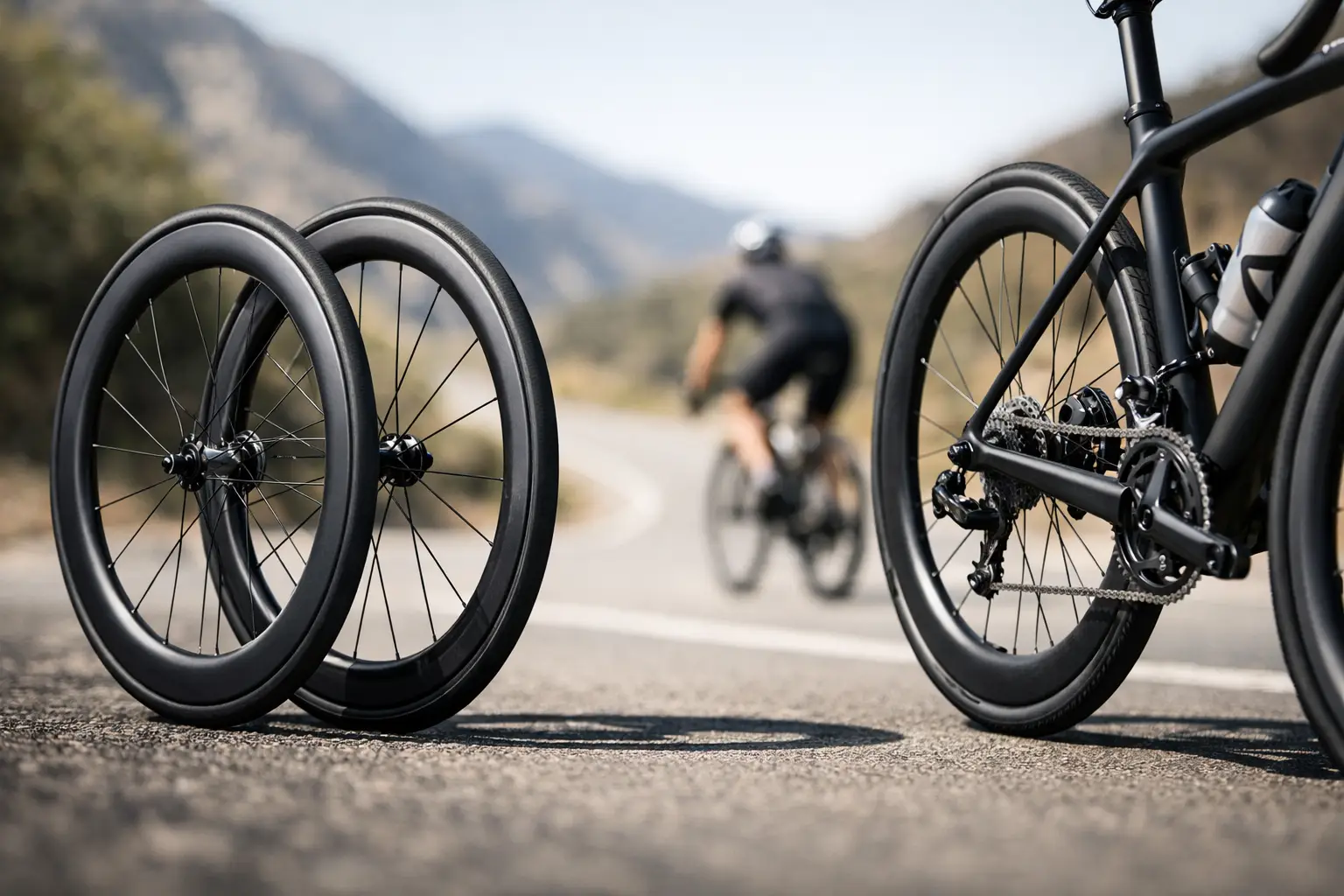
For road and triathlon riders, aerodynamic efficiency is usually the biggest reason to upgrade. At higher speeds, particularly on exposed roads and flat or rolling courses, a deeper rim can reduce drag and help you carry momentum. This is why deep-section carbon wheels are a familiar sight at time trials and long-course triathlon events.
Weight still matters, but context is everything. Saving a few hundred grams is most noticeable on sustained climbs and repeated accelerations. On flatter routes, however, a modestly heavier but more aerodynamic wheelset may be faster overall. The right question is not simply, “What is lightest?” It is, “What will help me ride my usual routes or race my next event more effectively?”
Start with the riding you want to do
Road racing, fast group rides and sportive speed
For many performance road riders, a rim depth between roughly 40 mm and 55 mm is the most versatile starting point. It offers a genuine aerodynamic advantage without the full crosswind sensitivity of a very deep rim. These wheels suit rolling sportives, fast club rides and races where the route includes a little of everything.
Shallower carbon rims, often around 30 mm to 40 mm, make sense for hilly routes and riders who prioritise low weight and responsive climbing. They can also be a sensible option in exposed areas where gusting wind is part of every ride. A predictable wheel is quicker in practice than an aerodynamic one you hesitate to lean into through a fast bend.
Triathlon and time trial
Triathlon and TT bike wheelsets are chosen with a narrower goal: minimise drag while maintaining control and reliability. Front wheel depth deserves particular attention because it has the greatest effect on steering in crosswinds. A deep rear wheel is often easier to manage, while the front should suit both your confidence and the conditions you expect on race day.
A 60 mm front and rear pairing is a proven all-round race setup for many athletes. On sheltered, flatter courses, a deeper front or a disc rear wheel can deliver further gains. For a windy coastal event or a technical course, a slightly shallower front may allow you to stay relaxed in the aero position and hold your line. That confidence is performance.
Gravel and cyclocross
Gravel wheelsets need a different balance. Rim depth has less value when surfaces are loose, rough or unpredictable, while strength, tyre support and sensible weight move higher up the list. A wider internal rim helps give modern gravel tyres their intended profile and can improve stability at lower pressures.
Look for dependable spokes, durable hubs and rims designed to deal with impacts. If you are riding mixed British lanes, bridleways and hardpack tracks, a wheelset that remains true after a rough winter matters more than a marginal aerodynamic saving. Cyclocross riders should take the same approach, with quick engagement and confident cornering as priorities.
Mountain bike riding
Mountain bike wheelsets are built around control and resilience. Trail and enduro riders benefit from stronger rim profiles and higher spoke counts, while cross-country riders may favour lower weight where the terrain permits. Internal width must match the tyre volume you intend to run. An overly narrow rim can leave a wide tyre unsupported, while an excessively wide rim may distort a narrower tyre’s profile.
Rim depth, width and tyre fit
Rim depth gets the attention, but width often has an equally important effect on speed and handling. Modern road tyres commonly perform well on wider internal rims, which support the casing and allow lower pressures without the tyre feeling vague. The result can be more comfort, grip and efficiency on imperfect tarmac.
Check both the internal rim width and the manufacturer’s approved tyre range. A tyre labelled 28 mm may measure wider once mounted on a modern wide rim, which affects frame clearance and mudguard compatibility. For race bikes, leave enough clearance for debris and wheel flex, not just enough to make the tyre fit while stationary.
Tubeless-ready wheels are now a practical choice for many road, gravel and mountain riders. Running tubeless can allow lower pressures and may reduce the chance of a ride-ending puncture, particularly on rough roads and gravel. It does require careful setup, compatible tyres and periodic sealant checks. A traditional inner tube system remains simple, familiar and easy to service at the roadside.
Carbon or alloy: spend where it counts
Carbon wheelsets are popular because they can combine low weight, aerodynamic rim shapes and a refined ride quality. For riders chasing speed on a road, triathlon or TT bike, they are often the most transformative upgrade after getting fit and tyre choice right. Quality carbon rims also offer excellent stiffness and are now widely available with tubeless-ready designs.
Alloy wheelsets should not be dismissed. A well-built aluminium set can be durable, dependable and better suited to year-round training, commuting or rough winter roads. They are also a smart choice if you want a second wheelset for training tyres, saving premium race wheels for events and key sessions.
Disc brakes have changed the calculation further. With braking moved away from the rim, carbon designers can focus on aerodynamic shape and tyre support without the same heat-management demands seen on rim-brake wheels. If your bike uses rim brakes, ensure the braking track and pads are designed to work together, especially for long, wet descents.
Hubs, spokes and the details riders feel
A wheelset is more than its rim. Hub quality affects engagement, bearing smoothness and long-term serviceability. Fast engagement is especially welcome on technical trails, cyclocross courses and punchy climbs, where you are repeatedly on and off the pedals. On a steady triathlon course, it is less of a deciding factor than aerodynamics and tyre setup.
Spoke count and lacing pattern affect strength, stiffness and service needs. Lighter road wheels may use fewer spokes to save weight and reduce drag; heavier riders, rough roads and gravel riding often justify more spokes and a tougher build. There is no advantage in choosing a delicate wheelset that demands constant truing for the way you ride.
Also confirm the practical standards before buying: axle type, disc rotor fitting, cassette body and frame clearance. Shimano, SRAM and Campagnolo cassettes can require different freehub bodies, while SRAM XDR is common on modern road and gravel builds. Getting these details right avoids delays when it is time to fit the wheels.
A better buying decision than chasing specifications
Before comparing claimed weights, think about the conditions in which you spend most of your time. A rider preparing for a flat, fast triathlon may gain more from a 60 mm aero wheelset and optimised tyres than from the lightest climbing wheels available. A rider tackling Yorkshire gradients every weekend may reach for a lighter, shallower option. Someone training through winter and racing in summer may be best served by two wheelsets with distinct roles.
Tyres deserve the same attention as rims. A premium wheelset paired with old, hard tyres cannot deliver its full potential. Select a tyre width that matches your roads and riding, use appropriate pressure, and make sure the tyre and rim combination is approved. These comparatively small choices influence rolling resistance, grip and comfort every time you ride.
At Trifit Bikes, the goal is to help serious riders match high-performance equipment to a real riding objective, whether that is a personal best, a faster sportive or a more capable race build. Choose the wheelset that gives you confidence to commit on your key roads and courses. That is where the seconds, and the enjoyment, tend to be found.