
The first hard acceleration tells you what the Aeroad is built for. It does not feel like a lightweight climber dressed in aero tubing; it feels like a purpose-led race bike that wants speed, pressure through the pedals and a rider prepared to hold an efficient position. This Canyon Aeroad review looks beyond headline watt savings to assess how the bike performs on UK roads, who it suits and where its compromises sit.
Canyon Aeroad review: what kind of bike is it?
The Canyon Aeroad is an aero road race platform designed for fast club rides, breakaways, criteriums, road races and riders who simply want their hard-earned fitness to translate into more speed. Its integrated cockpit, deep-profile frame shapes and race-led geometry make its intent obvious before a wheel has turned.
That focus matters. An aero bike should not be judged solely by whether it feels rapid on a smooth, flat road. It also needs to corner cleanly on a damp descent, stay composed when the road surface turns rough and allow the rider to produce power without constantly fighting the position. The Aeroad succeeds because it is more complete than the old stereotype of a stiff, awkward aero machine.
Across the range, the principle stays consistent while frame material, wheel depth, drivetrain and finishing kit vary. Higher-tier CFR and CF SLX builds target the lightest weight and most refined component packages, while CF models can offer a more accessible route into the same aerodynamic design language. Specifications change by model year and stock availability, so the frame size, wheelset and groupset on the bike in front of you deserve as much attention as the model name.
Speed that feels usable, not nervous
At higher speeds, the Aeroad is exceptionally convincing. It gathers pace quickly and, more importantly, holds it with little sense of wasted momentum. On rolling roads, that can be more valuable than a marginal saving on the scales. Once the bike is moving above roughly 30 km/h, its aerodynamic intent becomes tangible: you can settle into the drops, keep pressure on the pedals and feel the bike carry speed over crests and through exposed sections.
The frame is stiff around the bottom bracket and front end, giving hard accelerations a sharp, immediate response. Sprinters and powerful riders will appreciate that directness. It feels planted when pushing a bigger gear, rather than twisting or wandering beneath effort.
That stiffness does not make the bike unmanageable for lighter riders. The modern Aeroad has enough balance to reward smooth pedalling as well as brute force. It is fast when ridden hard, but it does not demand constant aggression just to feel alive.
The handling is similarly race-focused. Steering is quick enough for tight corners and rapid changes of line, yet stable enough to inspire confidence on fast descents. Wider modern road tyres make a meaningful contribution here. Running a sensible pressure on quality 28 mm or 30 mm tyres, where the chosen wheels and frame clearance permit, can improve grip, comfort and rolling speed over imperfect tarmac.
Ride quality on British roads
Aero road bikes live or die on real surfaces, not laboratory-smooth asphalt. The Aeroad transmits more road texture than an endurance model, particularly through the cockpit and saddle area, but it is not punishing when set up properly. The difference between a harsh ride and a controlled one often comes down to tyre choice, pressure and fit.
A rider who chooses narrow tyres at excessive pressure will get the expected chatter from a race bike with deep sections and an integrated front end. A rider who uses modern wider tyres, appropriate pressure and a well-matched saddle is likely to find the Aeroad perfectly manageable for long, fast rides. It remains a race machine, however. If your weekly riding is mainly broken lanes, all-day fondos and relaxed café mileage, a more comfort-led platform may be the better investment.
The frame is particularly good at keeping the rider composed when the pace rises. Over uneven roads, it does not feel vague or disconnected. You still know what the front tyre is doing, which is exactly what you want when entering a rough corner at speed.
Climbing and crosswinds
The Aeroad is not marketed as a pure climbing bike, and riders chasing the lightest possible build for long Alpine gradients may prefer a dedicated lightweight platform. Yet dismissing it on hilly terrain would be a mistake. Its efficient power transfer and ability to retain speed make it a strong performer on typical British climbs, where gradients are often short, irregular and followed immediately by fast descents or exposed rolling roads.
On steep, low-speed ramps, the extra mass of deeper wheels and aero hardware can be noticed compared with a featherweight climbing bike. Whether that matters depends on the rider and terrain. A strong rider competing on undulating circuits may gain far more from the Aeroad’s speed everywhere else than they lose on a few minutes of sustained climbing.
Crosswinds are a more personal consideration. Modern aero wheels are far more predictable than older deep-section designs, but a deep front wheel will always need a measured approach in strong gusts. Lighter riders, or those regularly riding coastal and exposed routes, may prefer a more moderate wheel depth. The Aeroad’s stable handling helps, but no frame design can remove the effect of a sudden side gust.
Fit and cockpit: the decision that cannot be rushed
The biggest buying mistake with any performance aero bike is treating size as a simple seat-tube measurement. The Aeroad places the rider in a low, efficient race position, and the integrated cockpit makes the front-end decision especially important. Stack, reach, stem length and handlebar width all affect comfort, control and how much aerodynamic benefit you can genuinely use.
A narrower handlebar can reduce frontal area and give the bike a clean race look, but it should not come at the cost of breathing, shoulder comfort or confident steering. Likewise, a low front end is only fast if you can sustain it. A rider who is forced to sit upright after 40 minutes loses far more than an aggressive spacer set-up will ever gain.
Before choosing a size, compare the geometry with a bike that already fits well, not just your height. Consider your flexibility, injury history, preferred riding duration and whether you race regularly. Serious riders should also think about their race position: can you maintain it in the drops while applying power, braking and cornering confidently?
At Trifit Bikes, fit-focused guidance is particularly valuable for this kind of purchase. A premium aero road bike is too significant an investment to select on colour, groupset or a single online size chart alone.
Groupsets, wheels and the builds that make sense
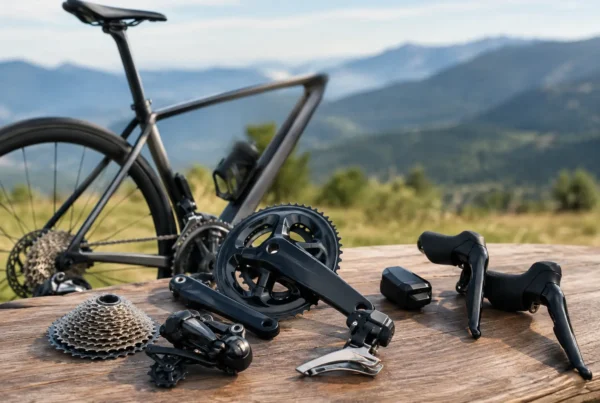
The right Aeroad build is not automatically the most expensive one. Electronic shifting is a natural match for a bike designed around speed and clean integration, with Shimano Di2 and SRAM AXS options offering precise changes under load and reliable race-day operation. The choice between them often comes down to ergonomic preference, gearing needs and how you want to manage batteries and drivetrain maintenance.
Wheel choice deserves equal attention. Deep carbon wheels deliver much of the visual and aerodynamic appeal, but a wheelset needs to suit the routes you actually ride. A versatile mid-depth wheel is often the smart option for mixed terrain and variable weather, while deeper rims make more sense for flatter races, fast group rides and riders confident in crosswinds.
Do not overlook gearing. Compact chainsets and broad-range cassettes can still provide plenty of top-end speed while making the bike more useful on steep UK gradients. Unless your racing is almost entirely flat, choosing a sensible low gear is a performance decision, not a concession.
The trade-offs to understand before buying
The Aeroad is highly capable, but it is not the correct answer for every rider. Its integrated design looks excellent and supports aerodynamic efficiency, yet it can make major cockpit changes more involved than on a conventional bike. That is a reasonable exchange for a rider who knows their fit, less so for someone still experimenting with reach, bar width and position.
Its race geometry also places a premium on good mobility and core stability. You do not need professional-level flexibility, but you should be realistic about the position you can hold. Riders returning from injury, prioritising comfort over speed or needing generous stack height may be happier on an endurance-oriented road bike.
There is also the practical question of use. The Aeroad can handle winter miles with the right care, but a high-end aero frame, carbon wheels and electronic drivetrain deserve sensible protection from road salt, grime and neglected maintenance. For a rider with one bike, it can absolutely cover training and racing. For a rider with a winter bike already in the garage, it becomes an even more compelling fast-day machine.
Is the Canyon Aeroad worth it?
For the rider who values outright road speed, sharp handling and a modern race position, the Aeroad is one of the most persuasive aero road bikes available. It feels engineered around the moments that matter in fast riding: closing a gap, holding a wheel into a headwind, committing to a descent and launching clear on a rolling road.
Buy it because its fit works, its specification matches your racing and riding plans, and its aerodynamic focus suits the way you want to ride. Set it up with the right tyres and a position you can maintain, then let it do what it does best: turn committed effort into speed you can feel.