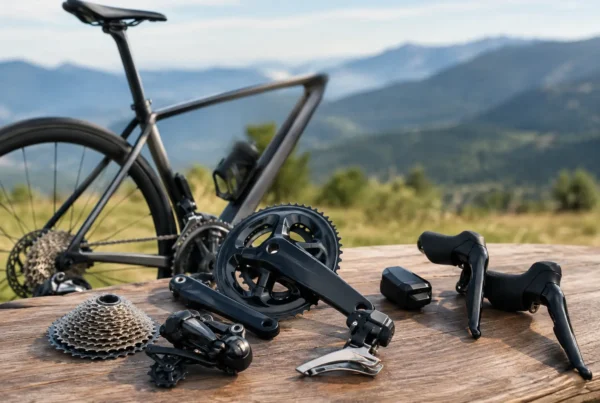

The best reason to choose SRAM Force AXS is not simply that it is wireless. It is that the system gives a race bike a clean, highly adjustable cockpit while delivering fast, decisive shifting under real riding pressure. In this SRAM Force AXS review, we look at where it excels, where the compromises sit, and who should put it on their next road, gravel or triathlon build.
SRAM Force AXS review: the performance proposition
Force AXS sits in SRAM’s premium performance tier: lighter and more refined than Rival AXS, without the full price of Red AXS. For riders building a serious road bike, it strikes a persuasive balance. You get electronic 12-speed shifting, hydraulic disc braking, broad gearing options and access to the wider AXS ecosystem.
The headline benefit is the lack of cables running between the shift levers, derailleurs and battery. That makes a difference beyond appearances. It simplifies installation, creates a tidier front end on modern internally routed frames and gives more freedom when setting up aero extensions, satellite buttons or a highly customised handlebar position.
On the road, Force AXS feels purposeful. Shifts are quick, positive and easy to recognise through the levers. The system does not try to hide every mechanical sound, particularly when cross-chaining or shifting under a hard load, but it is effective and predictable. For racing, predictability matters more than theatre.
Shifting quality and controls
The familiar SRAM control logic remains one of Force AXS’s strongest features. Press the right paddle for a harder gear, the left for an easier gear, and press both to shift the front derailleur. It is intuitive after a short ride, even for cyclists moving across from another electronic groupset.
The levers are comfortable for most hand sizes, with a useful feel from both the hoods and drops. SRAM’s AXS app allows riders to assign functions to each button, so there is scope to tailor the setup around individual preferences. You can also add compatible wireless Blips for climbing positions, sprinting or triathlon and TT extensions.
That flexibility is particularly valuable for triathletes. A well-positioned set of buttons can reduce unnecessary movement when you are holding an aero position, helping you manage cadence through rolling terrain without compromising your posture. The exact arrangement depends on the cockpit, extension design and race distance, so it is worth considering this before committing to a frame or bar system.
The front derailleur is impressively capable when set up correctly. It delivers confident shifts across the chainrings and uses trim management to help minimise rub. As with any electronic drivetrain, accurate alignment at installation is essential. A poor initial setup will not be rescued by technology.
Gearing options suit modern performance bikes
Force AXS uses SRAM’s X-Range approach: smaller chainrings paired with closely spaced cassette sprockets. Typical road combinations include 46/33T and 48/35T chainrings, matched to 10-30T, 10-33T or 10-36T cassettes. The result is a broad spread of gears without the large jumps that can disrupt cadence on fast group rides or rolling race courses.
For many UK road riders, a 48/35T chainset with a 10-33T cassette is the sweet spot. It offers a genuinely usable top gear while retaining a low ratio for steep lanes, long sportives and tired legs late in an event. Stronger riders on flatter routes may prefer 10-30T, while a 10-36T cassette makes Force AXS a compelling option for hilly gravel riding and all-road builds.
There is a trade-off. SRAM’s 10-tooth smallest sprocket requires an XDR freehub body, so it is not a direct fit for every existing wheelset. Buyers upgrading an older bike should check hub compatibility early. On a new premium bike build, it is rarely an issue, but it is still a specification worth confirming.
The system’s wide-range capacity is one reason Force AXS works so well across categories. A race-focused road bike can retain tight cadence steps, while a gravel bike can run lower gears without moving to a separate drivetrain platform. That versatility is valuable if you want one bike to cover quick club rides, training miles and rougher weekend routes.
Braking and real-world confidence
Force AXS hydraulic disc brakes offer strong, controlled stopping power with excellent modulation. The feel at the lever is firm and reassuring rather than abruptly on-off, which is what you want on wet descents, fast corners and technical gravel. A single-finger braking position is realistic for most situations, leaving a secure grip on the bars.
Rotor size and pad choice still matter. A lighter rider on flat roads may be entirely happy with 160 mm front and 140 mm rear rotors, while heavier riders, mountain descenders and loaded gravel riders may benefit from larger rotors where frame and fork clearance allow. The groupset supplies the quality; the final braking character comes from the whole setup.
Routine hydraulic brake care is not difficult, but it is less forgiving of neglected maintenance than a mechanical system. Keep the rotors clean, inspect pad wear and use the correct bleed procedure when lever feel begins to soften. For a performance bike, this is normal ownership rather than a reason to avoid the system.
Weight, batteries and maintenance
Force AXS offers a meaningful weight saving over SRAM Rival AXS, but it is not aimed at riders chasing the last possible gram. Red AXS remains the lighter choice for an uncompromising race build. Force earns its position by delivering very close to top-tier functionality at a more sensible level of investment.
The removable derailleur batteries are a practical highlight. They are interchangeable between front and rear derailleurs, easy to carry as a spare and simple to recharge off the bike. For travel, that is more convenient than relying on a frame-integrated charging port. The coin-cell batteries in the shifters last much longer and are easily replaced.
The obvious responsibility is charging discipline. A wireless drivetrain is only as ready as its batteries. Check them before a race weekend, a cycling holiday or an important long ride, and carry a charged spare battery if the event matters. The AXS app can show battery status, but a quick visual check before leaving home is just as sensible.
Maintenance is otherwise pleasingly straightforward. With no shift cables to stretch, fray or replace, indexing remains consistent once the derailleurs are correctly aligned. The drivetrain still needs the basics: a clean chain, sensible lubrication, a checked hanger and timely replacement of worn components. Electronic shifting reduces adjustment, not the need for care.
Who should choose Force AXS?
Force AXS makes most sense for the rider investing in a premium road, gravel or triathlon bike who wants race-ready electronic shifting without paying the premium attached to the lightest flagship group. It suits competitive club riders, dedicated sportive cyclists and athletes who value a clean, adaptable setup.
It is especially strong on bikes with an aero or internally routed front end, where wireless controls simplify a potentially complicated build. It also makes sense for riders who want a practical power-meter route, as compatible Force AXS crank and spindle-based power meter options can keep data collection neatly integrated with the drivetrain.
The case is less clear if you have a perfectly functioning mechanical groupset and no need for extra control points, wider gearing or a cleaner cockpit. Mechanical drivetrains remain dependable, easier to repair anywhere and less demanding about charging. Likewise, riders focused entirely on the lowest possible build weight may decide that Red AXS justifies the extra spend.
For most performance-minded buyers, though, Force AXS lands in the productive middle ground. It feels fast, gives you useful choices in gearing and setup, and has the polish expected on serious modern bikes. When selecting your next build, prioritise the frame fit, wheel choice and gearing for the routes you actually ride, then let Force AXS provide the confident shifting platform that helps you make the most of them.