A triathlon bike can make a meaningful difference to your split, but only when you can stay comfortable enough to use it. The fastest-looking frame in the transition area is not automatically the right one for your body, race distance or local courses. Knowing how to choose a triathlon bike starts with an honest look at fit, then builds towards aerodynamics, components and the details that make race day simpler.
How to choose a triathlon bike: start with fit
Fit is the foundation of a fast triathlon position. Unlike a conventional road bike, a tri bike is designed to place your forearms on aero extensions and rotate your body forwards around the bottom bracket. This can reduce your frontal area, but it also changes how your hips, back, shoulders and neck work over time.
A strong position is low enough to be aerodynamic, yet sustainable for the full bike leg and the run that follows. If you are straining to look ahead, sliding forwards on the saddle or constantly needing to sit up, a more aggressive frame will not make you faster. You are likely to lose time through reduced power, poor handling and fatigue.
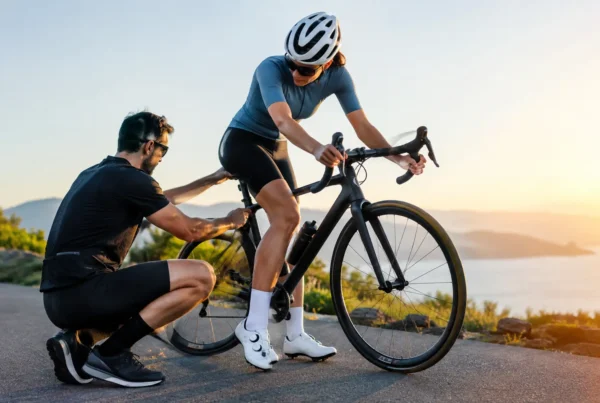
Before committing to a frame size, consider a professional bike fit or at least compare your current position with the manufacturer’s stack and reach figures. Stack is the vertical height at the front of the bike; reach is its horizontal length. These measurements are far more useful than choosing a size simply because you ride a medium road bike. Frame sizing varies significantly between brands.
Saddle position matters just as much. Triathlon-specific saddles and a steeper seat tube angle support a forward hip position, helping many riders hold aero bars without restricting their pedal stroke. There is no single ideal position, however. Flexibility, injury history, core strength and event duration all affect what you can hold efficiently.
Match the frame to your race distance
A short, flat time trial and a full-distance triathlon ask different questions of a bike and its rider. For sprint and Olympic-distance events, you may be able to sustain a lower, narrower position because the effort is shorter. For middle- and long-distance racing, comfort, nutrition access and stable handling become increasingly valuable.
Most modern triathlon frames offer excellent aerodynamic shaping, hidden or integrated cable routing and clean front-end profiles. The choice is rarely between an aerodynamic bike and a non-aerodynamic one. Instead, look at how adjustable the cockpit is and whether the bike allows you to achieve your fit without a stack of spacers or an extreme stem setup.
A highly integrated superbike can look exceptionally clean and cut through the wind brilliantly, but it may have fewer adjustment options and can take longer to travel with or service. A frame with a more conventional stem and extension system may be slightly less tidy in the wind tunnel, yet easier to refine as your position develops. For many first-time tri-bike buyers, that flexibility is worth more than a marginal aero gain.
Think about the courses you actually race
British triathlon courses are rarely identical. A fast, exposed dual-carriageway route rewards aero efficiency and deep wheels. A rolling course with rough lanes, sharp turns and frequent changes in gradient places more value on confident steering, responsive gearing and tyre choice.
If your calendar includes varied terrain, avoid buying solely for one perfectly flat race. A well-fitted triathlon bike with sensible gearing will perform across far more events than an ultra-specialised setup that only feels good in ideal conditions.
Choose a cockpit you can adjust
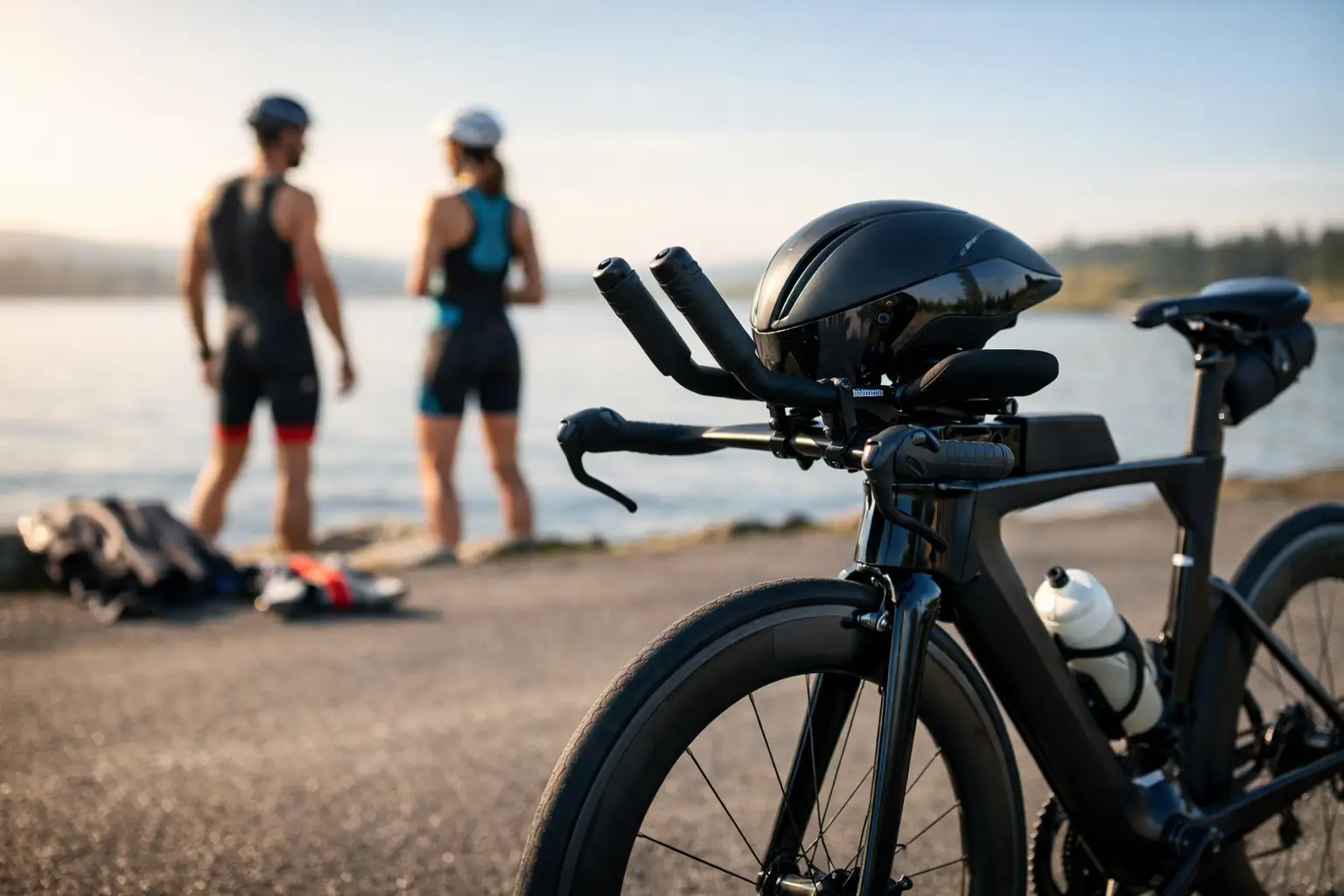
The cockpit is where aerodynamics become practical. Look for arm cups that offer width and fore-aft adjustment, extensions that can be cut or changed, and enough pad stack adjustment to create a sustainable torso angle. Pads should support your forearms securely without forcing tension into your shoulders.
Extension shape is personal. Straight, ski-bend and S-bend extensions each create a different wrist and hand position. Some riders prefer the relaxed grip of a ski-bend, while others favour straighter extensions for a lower, more direct feel. The right choice is the one that lets you keep your hands stable while braking, changing gear and taking on fuel.
Integrated hydration and storage deserve attention here. The cleanest solution is not always the most useful. You need to reach bottles, nutrition and tools without repeatedly leaving the aero position or disrupting the bike’s handling. For longer races, a practical arrangement you will use consistently beats a beautifully integrated system that is difficult to refill or remove.
Select wheels and tyres for speed you can control
Wheels have a noticeable effect on both speed and handling. Deeper carbon rims can provide valuable aerodynamic gains at race pace, especially on open roads. They also demand more confidence when crosswinds arrive. If you are new to deep-section wheels or often race on exposed coastal routes, a moderate-depth wheelset is a smart, versatile starting point.
Tyre clearance is worth checking before you buy. Wider modern tyres can improve comfort, grip and rolling efficiency on typical UK road surfaces, provided they suit the rim and frame. A bike that only accommodates a very narrow tyre limits your options as roads, conditions and tyre technology change.
Tubeless tyres can offer excellent puncture protection and ride quality, though they require careful setup and regular sealant checks. Inner tubes remain straightforward and easy to manage at an event. Neither option is automatically faster for every rider. Choose the setup you can maintain confidently, then practise fixing it before race day.
Get gearing right for your terrain and power
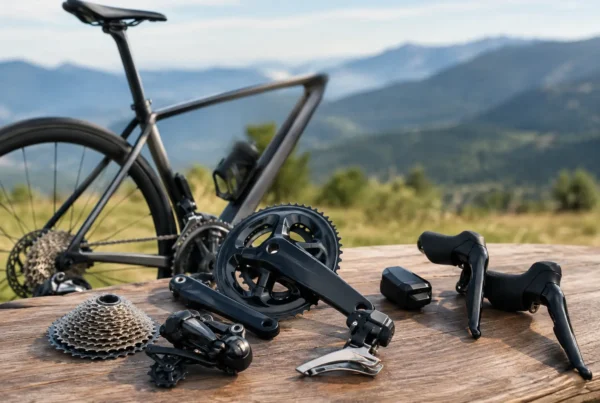
Electronic shifting is a popular choice on premium triathlon bikes for good reason. Shimano Di2 and SRAM AXS systems allow reliable shifts from the aero extensions and the base bar, so you can respond to gradients and corners without changing hand position. That convenience is particularly valuable on technical or rolling courses.
Chainring and cassette choice should reflect your fitness and the gradients you race, not what looks most professional. A larger chainring can suit powerful riders on flat, fast routes, but it becomes a liability if you are grinding at a low cadence on climbs. A compact or semi-compact setup with a wider cassette may be the quicker option if it helps you hold power and protect your legs for the run.
The same principle applies to crank length. Shorter cranks can help some riders maintain a tighter hip angle in an aero position, especially if they struggle with hip flexion at the top of the pedal stroke. This is a fit decision, not a fashion choice, and is best considered alongside saddle height and cockpit setup.
Do not overlook storage, travel and maintenance
A triathlon bike is a race tool, but it still needs to live in the real world. Check how easily the front end can be adjusted, whether proprietary parts are readily available and how complicated the bike will be to pack for an overseas event. Fully integrated routing looks superb, yet can add time and cost when cables, brake hoses or bearings need attention.
Also consider how you will transport it to training and races. If you regularly remove the wheels for a car journey, or plan to fly to major events, a setup that is easy to disassemble can remove a lot of pre-race stress. Fast riding begins with arriving at the start line with a bike you trust.
Budget should include the complete race setup, not just the frameset price. Pedals, a bike fit, bottles, storage, tools, tyres and potentially race wheels can all affect the final cost. It is often better to buy a frame that fits perfectly with a solid, serviceable build than stretch for top-tier components on a bike that leaves little room for adjustment.
Test the position before making the final call
Where possible, spend time in the aero position before purchase. A brief roll around a car park will not tell you whether you can remain controlled after two hours, but it can reveal obvious issues with reach, pad width and handling. Ask whether the bike’s adjustment range supports the position you need now and gives you room to progress.
Trifit Bikes can help serious riders narrow the choice between premium triathlon frames and complete bikes, with fit-focused guidance before a significant purchase. The goal is not simply to buy the most expensive aero package. It is to build a machine that lets you ride consistently fast, fuel confidently and arrive at T2 ready to race.
Choose the bike that makes you want to stay on the extensions for one more mile. That is usually the bike that will reward you when the race gets hard.