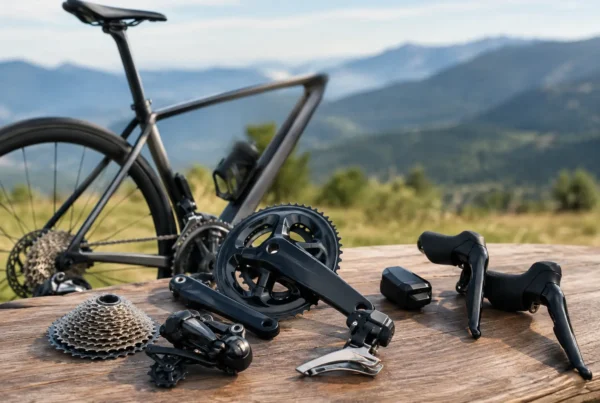
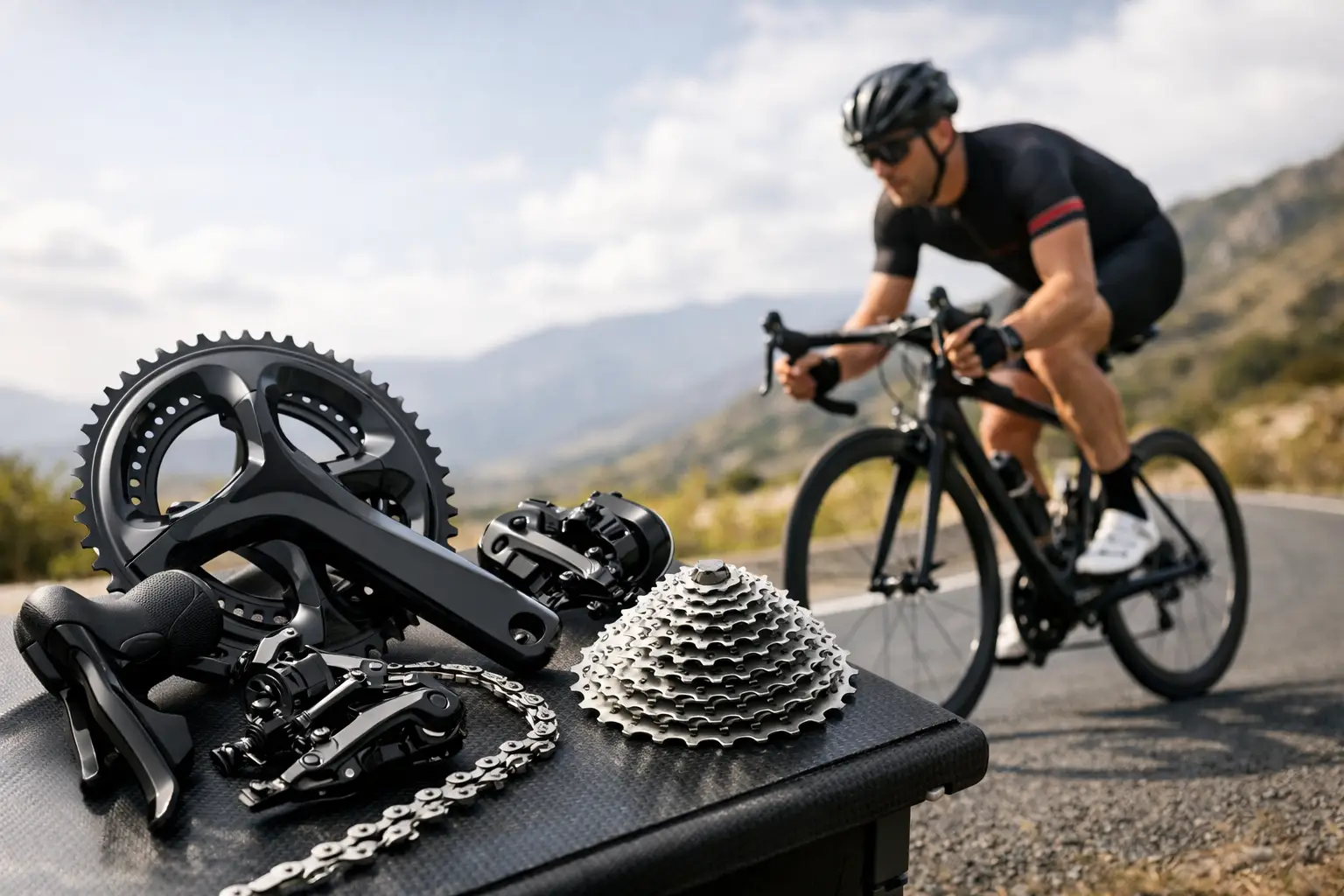
A road bike groupset guide matters most when two bikes appear almost identical on paper but carry a very different price tag. Frame material, wheel depth and paint may catch the eye first, yet the groupset determines how the bike shifts, brakes and feels every time you ride. For a sportive, fast club run, criterium or race-focused training block, it is one of the specifications that genuinely changes the experience.
A groupset combines the drivetrain and braking controls: shifters, brakes, front and rear derailleurs, chainset, cassette and chain. The right choice is not automatically the most expensive one. It is the system that gives you the gearing, braking confidence and shift performance your riding demands, while fitting the budget you would rather spend on wheels, tyres or a proper bike fit.
Road bike groupset guide: choose for your riding
Start with where and how you ride. A rider tackling rolling local roads and weekend sportives needs a wider gear range than a powerful racer spending most of their time in a fast bunch. A triathlete may value the clean cable routing and programmable shift options of electronic gearing, while a rider who travels frequently may prefer the straightforward serviceability of a mechanical setup.
Also consider the complete bike, not just the badge on the derailleur. A premium carbon frame paired with a mid-tier groupset can be an excellent purchase if it delivers the right fit and a strong wheelset. Equally, an electronic top-tier groupset will not compensate for a frame that is too aggressive, too long or simply uncomfortable after three hours in the saddle.
For most performance road riders, the decision comes down to Shimano, SRAM or, less commonly on complete bikes, Campagnolo. All three make highly capable systems. Their differences are in shift feel, gear architecture, price and the way each system suits your priorities.
Shimano: familiar, refined and widely supported
Shimano remains the default choice on a huge number of road bikes for good reason. Its shifting is light, predictable and exceptionally familiar to riders, workshops and event mechanics across the UK. Spares are widely available, which matters if you are maintaining a bike through a big season or replacing a worn chain and cassette before an important event.
At the performance end, Shimano 105 Di2, Ultegra Di2 and Dura-Ace Di2 use 12-speed electronic shifting. The front shift is crisp, the rear shift is fast under sensible load, and the lever ergonomics suit a broad range of hand sizes. Shimano’s semi-wireless cockpit setup also keeps the front of the bike neat, while the derailleurs are connected by a battery wire for reliable power management.
105 Di2 is a serious option rather than a compromise for riders who want electronic shifting without paying for the lightest materials. Ultegra Di2 is the sweet spot for many ambitious road riders: lighter, premium in feel and fitted to a wide selection of race-ready bikes. Dura-Ace Di2 is designed for riders who want every marginal saving in weight and a flagship finish.
Shimano mechanical 105, Tiagra and Sora still make good sense on value-focused road bikes. Mechanical shifting is dependable, easier to understand at a glance and less costly to replace after a mishap. The trade-off is more frequent cable adjustment and a heavier lever action than modern electronic systems.
SRAM: wireless simplicity and flexible gearing
SRAM AXS has changed expectations for electronic road groupsets. Its fully wireless setup uses individual batteries on the derailleurs and compact coin-cell batteries in the shifters. There are no shift wires routed through the frame, which creates a clean build and makes installation or component changes more straightforward.
SRAM’s current road platform is built around 12-speed cassettes and typically uses a 10-tooth smallest sprocket. That allows broad gearing ranges without excessively large chainrings. A common performance configuration is a 48/35 chainset with a 10-33 cassette, providing closely spaced gears for fast riding alongside a genuinely useful climbing option.
Force AXS is an excellent high-performance choice, combining low weight, accurate wireless shifting and strong braking. Rival AXS brings the same core wireless experience to a more accessible price point, with a small weight penalty. Red AXS is SRAM’s flagship system for riders chasing the lightest complete build and race-level finishing detail.
SRAM is also particularly compelling for riders considering a 1x drivetrain. Removing the front derailleur simplifies the system and gives excellent chain retention, useful for rough roads, all-road riding and some gravel-led road setups. On a pure road bike, however, 2x remains the better choice for most riders. It offers smaller jumps between gears and a broader spread for changing gradients, especially on long UK rides where the route can go from exposed flat lanes to steep climbs without warning.
One practical consideration is battery management. AXS batteries are quick to swap and easy to charge, but they need a routine. Keep a charged spare in your ride bag for an event or race weekend. Shimano’s single internal battery requires less frequent attention, although charging is less convenient if you forget at the last minute.
Campagnolo: distinctive feel for the enthusiast
Campagnolo is less common on new complete bikes but remains a compelling option for riders who value its distinctive Italian engineering and lever feel. Its mechanical systems offer a characterful shift action, while Super Record Wireless provides a premium electronic alternative with independent derailleur batteries.
Availability, pricing and compatibility can be more specialised than Shimano or SRAM, so it tends to suit the rider who actively wants Campagnolo rather than someone choosing purely on value. If you have a preferred local mechanic and enjoy the ownership experience as much as the numbers on a specification sheet, it can be a rewarding choice.
Get the gearing right before chasing grams
Gear ratios affect your ride more than the small weight gap between adjacent groupset levels. A standard 53/39 chainset is now largely reserved for very strong racers and flat, fast competition. Compact 50/34 chainsets remain popular because they offer sensible climbing gears without sacrificing top-end speed for the vast majority of riders.
Semi-compact 52/36 is an effective middle ground for strong sportive riders, racers and triathletes who spend plenty of time at high speed. Pair it with an 11-30 or 11-34 cassette in Shimano terms, or the SRAM equivalent, and you have a useful range without large cadence jumps.
For hilly terrain, do not be reluctant to use a 34-tooth largest sprocket or larger where your groupset supports it. Spinning efficiently up a steep climb protects the legs for the rest of the ride. A lower gear is not an admission of weakness; it is a practical performance tool.
Disc brakes, controls and real-world feel
Hydraulic disc brakes are now the performance road standard, delivering powerful, controlled braking in wet weather and on long descents. They also accommodate wider tyres, which can improve comfort, grip and speed on typical British road surfaces. Most premium road bikes now use flat-mount hydraulic calipers, and there is little reason to seek rim brakes unless you specifically want a lightweight legacy build or own compatible wheels.
Electronic shifting is not essential, but it is a meaningful upgrade for frequent riders. It stays consistent in poor weather, reduces maintenance associated with cables and allows custom button functions on many systems. Mechanical groupsets remain excellent when budget, simplicity and field serviceability matter more than the final degree of convenience.
Pay attention to lever shape as well. You spend hours holding the hoods, so comfort is performance. Shimano, SRAM and Campagnolo all feel different in the hand. If possible, test ride or at least handle bikes with the systems you are considering before committing.
Think carefully before upgrading a groupset
A full groupset upgrade is rarely as simple as replacing shifters and derailleurs. Moving from mechanical to electronic may require different brake hoses, battery mounts, routing hardware and compatible frame ports. Changing between brands can mean a new freehub body, cassette, chain, crankset and bottom bracket standard. The labour and small parts add up quickly.
For that reason, buying the right complete bike from the start is often better value. If the frame fits, the wheels suit your riding and the groupset gives you the gearing you need, you can focus on training rather than planning costly changes. At Trifit Bikes, performance-bike selection should always begin with fit and intended use, then narrow down the drivetrain specification that supports both.
The best groupset is the one you trust when the pace lifts, the road pitches upward and the finish still feels a long way off. Choose the gearing that lets you ride your strongest, keep it clean and correctly maintained, and put the saved mental energy into the next hard effort.