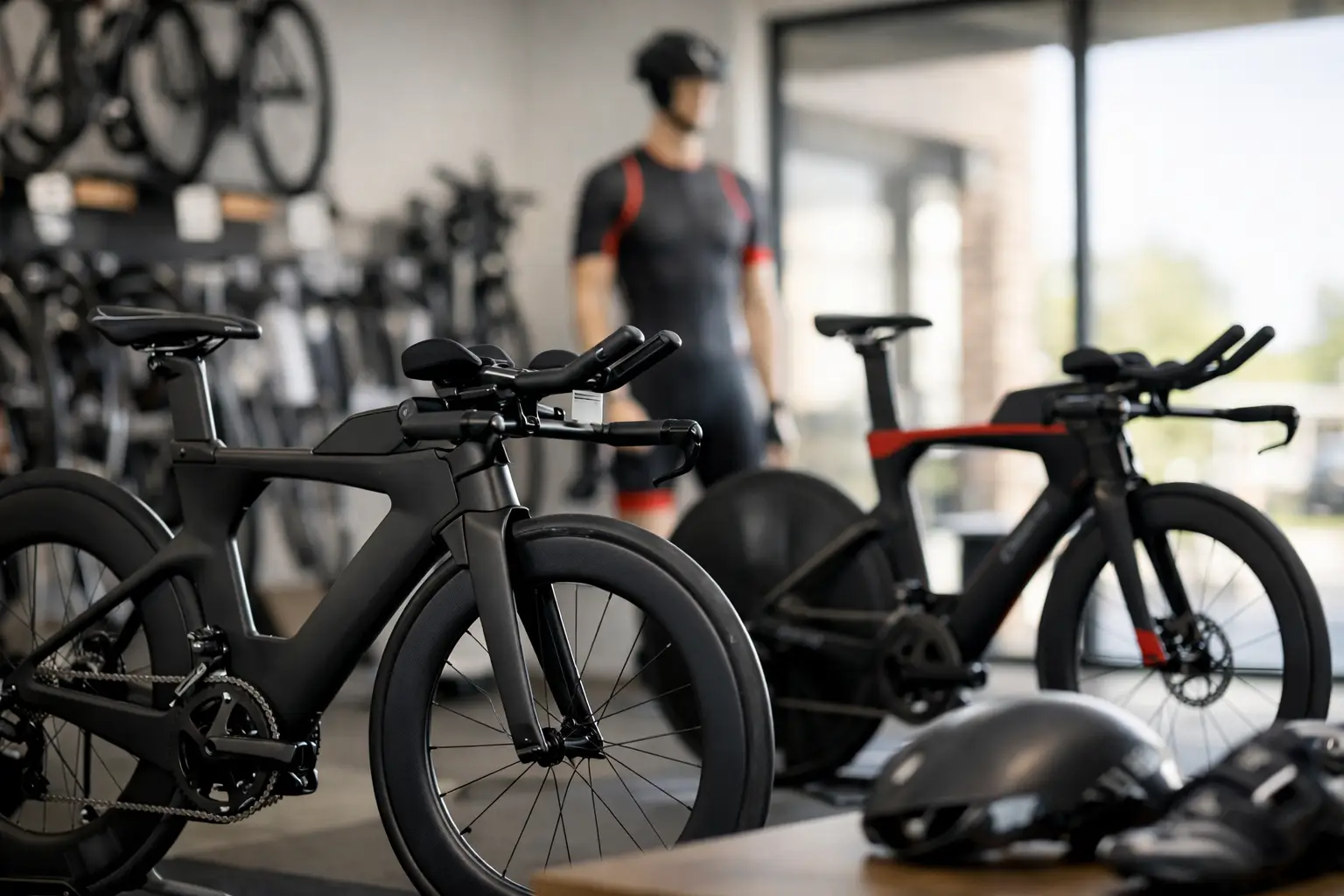
The wrong tri bike feels fast on the product page and awkward the moment you settle onto the extensions. That is why shoppers looking at triathlon TT bikes for sale usually are not just comparing paint, price, or brand prestige. They are trying to avoid an expensive mistake and find a machine that genuinely suits their position, race goals, and budget.
If you are buying in the premium or upper-mid market, the margins matter. A better front end can save watts, a cleaner groupset can sharpen shifting under load, and the right frame shape can make it easier to hold your aero position for longer. But none of that counts for much if the stack and reach are wrong, the storage setup does not suit your racing, or the bike is simply more aggressive than your body wants to tolerate over 90 or 180 kilometres.
How to judge triathlon TT bikes for sale properly
A good buying decision starts with being honest about what sort of rider you are. Some athletes need a pure race bike built around aerodynamic efficiency at all costs. Others need a fast platform that still leaves room for a slightly higher front end, more forgiving fit options, and practical storage for long-course events. Those are not the same brief, even if both riders type the same search term.
Frame geometry should come before almost everything else. In triathlon and time trial, fit is performance. A bike that allows you to stay comfortably aero for the whole ride will usually beat a theoretically faster frame that forces you to sit up, shuffle on the saddle, or fight the bars. When comparing models, pay close attention to stack, reach, armrest adjustability, pad width, and the amount of front-end tuning available. Integrated cockpits look sharp and test well in the wind, but they can limit adjustment on some builds. That trade-off may be perfectly acceptable for an experienced rider who already knows their numbers. It can be a problem for someone still refining position.
Then there is intended use. A dedicated 10-mile or 25-mile tester may lean harder towards a more aggressive TT-focused setup with minimal storage and a stripped race feel. A triathlete racing middle and long distance often values onboard hydration, nutrition storage, and a position they can hold without burning through their hips and lower back before the run. Fast is not one thing. It depends on the course and on how you race.
What separates a strong tri bike from an average one
The best triathlon TT bikes for sale tend to get three things right at once – aerodynamics, fit range, and integration. Plenty of bikes do one or two of those well. Fewer manage the full package.
Aerodynamics are still central. Deep tube shaping, hidden cabling, clean fork transitions, and well-designed cockpit systems all matter. At this level, though, it is less about one dramatic feature and more about how the whole bike works together. A frame can test brilliantly in isolation, but if the front end is difficult to adjust or the storage creates drag when fitted poorly, real-world gains can shrink quickly.
Integration is another separator. Smart integrated hydration and nutrition storage can make a serious difference for triathletes because it keeps race essentials accessible without turning the bike into a collection of bolt-on compromises. That said, fully integrated systems can add cost and complexity. If you travel regularly with your bike or like changing setup between events, a simpler arrangement may be easier to live with.
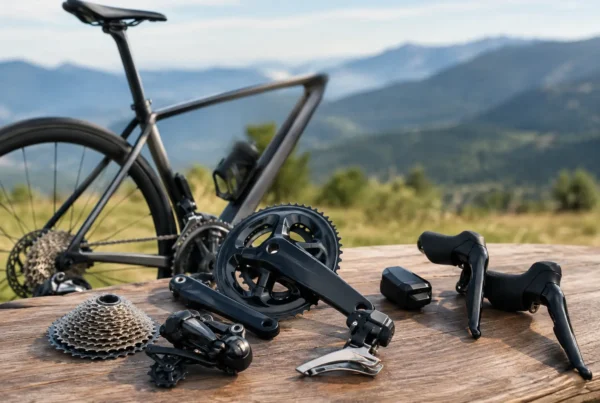
Groupset choice is worth a close look as well. Electronic shifting has become the benchmark in this category for good reason. Shimano Di2 and SRAM AXS both bring clean, reliable shifting and the option for satellite shifters that make a tri cockpit more versatile. The practical difference often comes down to your preference for hood feel, gearing options, battery management, and how the rest of your bike is built. Mechanical setups can still offer value, but on a premium tri bike they are now the exception rather than the standard.
Wheel and tyre clearance should not be ignored. Modern race bikes are moving towards wider tyres for a reason. In many conditions, a well-matched 25mm or 28mm setup can offer lower rolling resistance and better control than an old-school narrower choice. That means more confidence on rougher roads and potentially a faster ride overall, not just a comfier one.
Which rider suits which type of bike
If you are stepping into triathlon from road cycling, it can be tempting to buy the most aggressive machine available and assume you will adapt. Sometimes that works. Often it does not. Riders new to dedicated tri geometry usually benefit from a bike with generous adjustability and a position that can evolve over time. That gives you room to build comfort and confidence rather than forcing a race-day posture in week one.
For experienced triathletes chasing marginal gains, the decision gets more specific. You may already know your fit coordinates, preferred extension shape, crank length, and saddle position. In that case, it becomes easier to shop by frame concept and build kit. A highly integrated aero platform with premium carbon wheels and electronic shifting starts to make clear sense because you can actually use what it offers.
Time trial riders can be a slightly different case. If your focus is club TTs, short open events, or national-level testing, your priority may be raw speed over storage practicality. A bike optimised for UCI-friendly setup or stripped-back TT racing could be the right answer, whereas a tri-specific bike may include features you do not need.
Price, value and where the smart money goes
Premium tri bikes are not cheap, so value matters. The highest price tag does not automatically buy the best ownership experience. Sometimes the smarter purchase is the bike one tier below the flagship, especially if it gives you the same frame platform with a slightly less exotic wheelset or groupset. Frames shape the ride and fit potential. Wheels and components can be upgraded later.
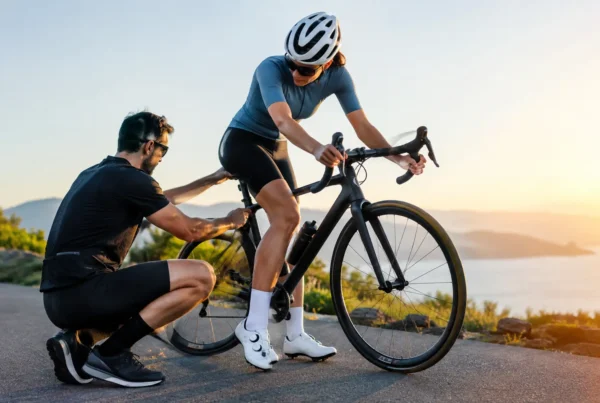
This is where a specialist retailer earns its place. When you are spending serious money, you want more than a product listing and a checkout page. You want clear sizing support, honest guidance on whether a particular frame suits your position, and the reassurance of secure payment and reliable delivery. For riders shopping performance bikes online, that confidence is not a bonus. It is part of the purchase.
Brand reputation also plays a role, but it should be framed correctly. Big names such as Cervelo, Argon 18, Factor, Canyon, and Cannondale all have strong credibility in this category. The better question is not which brand sounds fastest. It is which model gives you the right fit window, build quality, and race features for your actual use.
Common mistakes when buying triathlon TT bikes for sale
One of the biggest mistakes is buying by spec sheet alone. Deep wheels, electronic shifting, and an aero frame look compelling, but they do not guarantee speed if the bike cannot be set up around you. Another is underestimating fit. Riders will spend hours comparing chainsets and cassette options, then make a frame decision based on availability or discount alone. That is backwards.
There is also the issue of overbuying. If you race a handful of sprint triathlons each season and train mostly indoors, a top-end superbike may not be the smartest place to put your budget. You may get more from a strong mid-to-high build plus a professional fit, a reliable wheel upgrade, and a better helmet. On the other hand, if you are targeting long-course racing or chasing PBs seriously, the gains from a refined platform become easier to justify.
Travel and maintenance matter more than some riders expect. Fully integrated front ends can be brilliant on race day and irritating in a bike box. Hidden brakes and proprietary parts can look clean and perform well, but they may take more effort to service. That does not make them a bad choice. It simply means you should know what ownership looks like before you buy.
Buying with confidence online
Shopping online for a tri bike no longer needs to feel like guesswork, provided the retailer understands the category properly. The strongest buying experience combines curated product choice with fit-minded support. That means helping riders narrow options by geometry, not just by discount, and making it easier to understand whether a given bike is genuinely race-ready for their needs.
That is exactly why specialist stores matter in this market. A rider comparing premium triathlon and TT platforms needs more than generic ecommerce copy. They need informed guidance, secure checkout, and the confidence that the bike arriving at the door is one they can actually race. Trifit Bikes is built around that kind of purchase – specialist selection, trusted support, and performance-led bikes chosen for riders who care about speed.
The best bike is rarely the one with the loudest headline claim. It is the one that fits cleanly, holds speed without fighting you, and gives you confidence every time you settle onto the pads. Buy for the position you can sustain, the racing you actually do, and the setup you will still trust when the start line gets close.