You do not need many miles on a time trial bike to feel the difference. The first proper effort usually tells the story – more speed for the same power, especially once the road opens up and the pace stays high. That is the short answer to why are TT bikes faster, but the real reason is more specific: they are built to reduce drag, hold an efficient aero position, and keep that advantage for longer.
For riders choosing between a road bike and a dedicated TT machine, the gains are not marketing fluff. They come from a combination of frame design, cockpit layout, wheel choice, storage integration and rider fit. On the right course, with the right position, that package can save serious time.
Why are TT bikes faster in the first place?
At racing speeds, air resistance is the main enemy. Once you are moving quickly on flat or rolling roads, most of the energy you produce goes into pushing air out of the way. A TT bike is designed around that problem from the ground up.
A standard road bike needs to balance climbing, descending, bunch riding, comfort and handling. A TT bike has a narrower brief. It is made to go fast solo, in a straight line, for sustained efforts. That allows designers to prioritise aerodynamic efficiency far more aggressively.
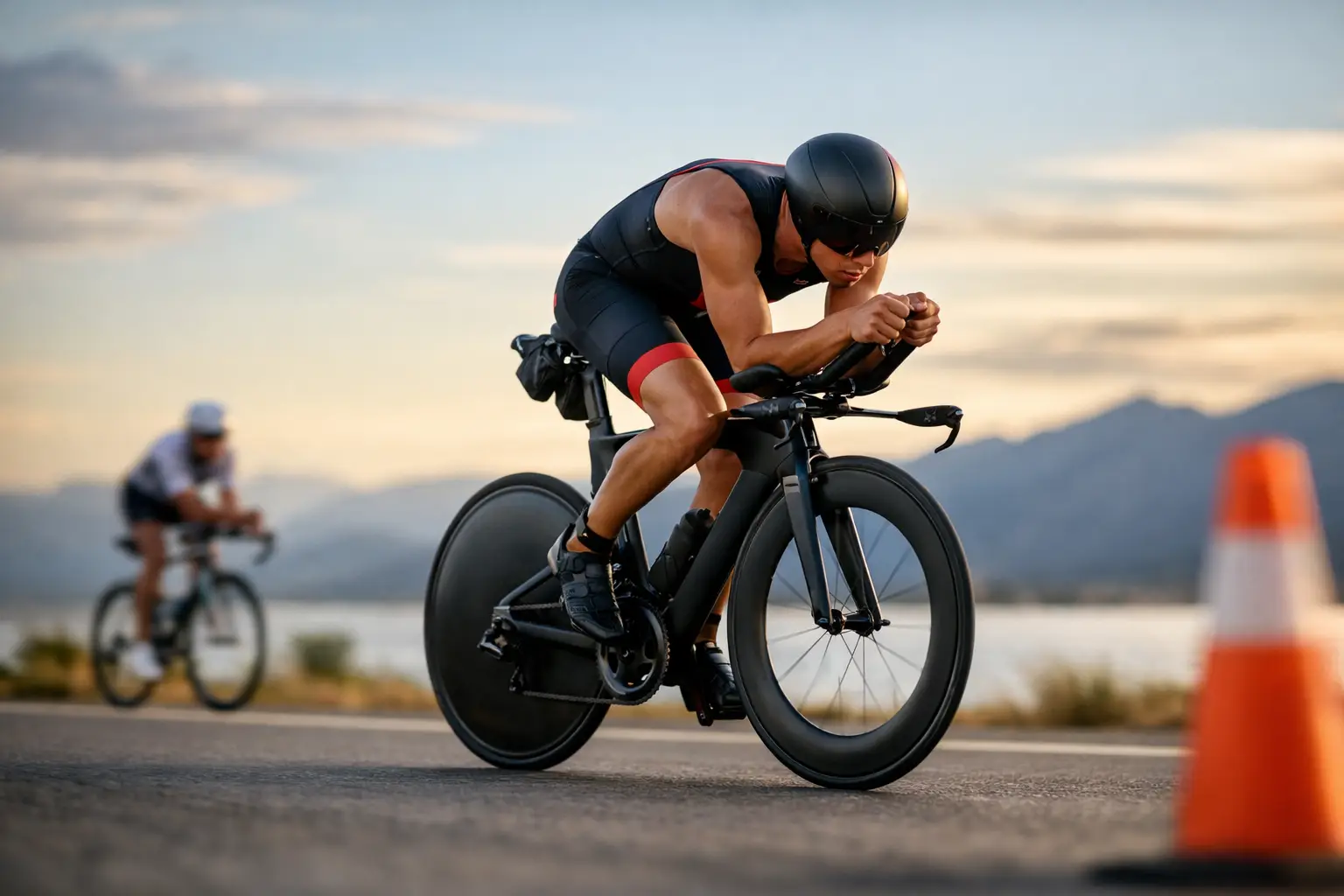
The biggest factor is not just the bike. It is the rider’s position on the bike. On a TT setup, the front end uses aerobars so you can bring your arms in, lower your torso, and reduce your frontal area. That change alone can be worth more than any frame tube shape or expensive wheelset. Put simply, a smaller, cleaner shape through the air is faster.
Aerodynamics matter more than weight for most TT riding
A lot of riders still think in terms of bike weight first. That makes sense if you spend your weekends climbing steep lanes or attacking hilly road races. But for time trials and triathlon bike legs, aerodynamics usually matter more.
Saving a few hundred grams helps when gravity is the dominant force. Saving drag helps almost everywhere once speed rises. On a flat 25-mile TT, an aero gain can be worth far more than a lighter frame. That is why TT bikes often look deeper, more sculpted and more integrated than road bikes. Every section of the bike is trying to manage airflow.
Deep tube profiles, hidden cables, integrated cockpits and close-fitting brakes all exist for the same reason. They reduce turbulence and help the bike move through the air more cleanly. Even the storage solutions on triathlon-focused bikes are often designed to sit within the airflow rather than disrupt it.
There is a trade-off, of course. Some TT bikes are heavier than comparable road bikes, and they can feel less lively at low speeds. But that is not a flaw. It is a design choice made in favour of free speed where it counts most.
The rider position is the real speed advantage
If you ask experienced racers why are TT bikes faster, many will give the same answer: position. The frame matters, but the rider’s shape in the wind matters more.
Aerobars bring the elbows together and allow a lower, narrower posture than drop handlebars normally permit. That reduced frontal area cuts drag dramatically. It also lets riders support their upper body more efficiently over a long effort, which can help maintain a consistent output.
The geometry of a TT bike supports that position. Compared with a road bike, the seat angle is often steeper, the reach to the front end is different, and the cockpit is built around the assumption that you will spend a lot of time on the extensions. That shifts the rider into a posture that is both aerodynamic and, when fitted properly, sustainable.
That last part matters. A low front end is only fast if you can actually hold it. If your neck is straining, your hips are rocking or you keep sitting up to breathe, the theoretical aero gain disappears quickly. Fit is not an afterthought with TT bikes. It is central to the whole concept.
Frame design and integration add speed around the edges
Once position is sorted, the bike itself starts to stack extra gains. TT frames use tube shapes designed to manage airflow at the yaw angles riders commonly see outdoors. Forks, head tubes, seat stays and seatposts are all optimised to reduce drag.
Modern premium builds push this further with integrated front ends, hidden hoses and cables, deep aero seatposts and carefully shaped storage. In many cases, bottle placement and nutrition storage are not just practical details. They are part of the aerodynamic package.
Wheel choice plays a major role too. Deep-section front wheels and disc or deep rear wheels reduce drag and help maintain speed once up to pace. This is one reason a complete TT setup can feel so efficient on open roads. The system is working together rather than relying on one standout component.
That said, there is always a handling balance to consider. Deep wheels and aggressive frame shapes can be more sensitive in crosswinds. For experienced riders on suitable courses, the speed benefit is usually worth it. For newer riders, confidence and control still matter.
TT bikes are built for sustained power, not bunch riding
A road bike has to do a bit of everything. A TT bike does not. That single-purpose design is exactly why it can be faster.
The geometry encourages a position that opens the hips differently and supports a steady aerodynamic effort. In triathlon, that can also help riders save key muscle groups for the run, depending on fit and individual physiology. In pure time trialling, it lets riders settle into a controlled, repeatable power output without constantly changing hand position or body posture.
This is also why TT bikes are less suited to technical club rides or group riding. The braking position is different, low-speed handling can feel more demanding, and the setup is not intended for close drafting situations. They are specialist machines. Used in the right setting, that specialism is what makes them quick.
How much faster is a TT bike than a road bike?
This is where the honest answer is: it depends. Course profile, wind conditions, rider flexibility, pacing and fit all matter.
For a strong rider on a flat or rolling course, a properly fitted TT bike can be noticeably faster than a road bike even at the same power. Sometimes the gain is measured in seconds over a short club event. Sometimes it becomes minutes over longer distances. The faster the event and the steadier the effort, the more the aerodynamic advantage tends to show itself.
But not every rider sees the same result immediately. If the fit is poor, the bars are too low, or the rider is uncomfortable on the extensions, a TT bike may not deliver its full potential. Likewise, on a very steep, highly technical course, the difference may shrink.
The key point is that TT bikes create the opportunity for greater speed. Real-world gains depend on setup and the rider’s ability to use that setup well.
Why fit and setup make or break the advantage
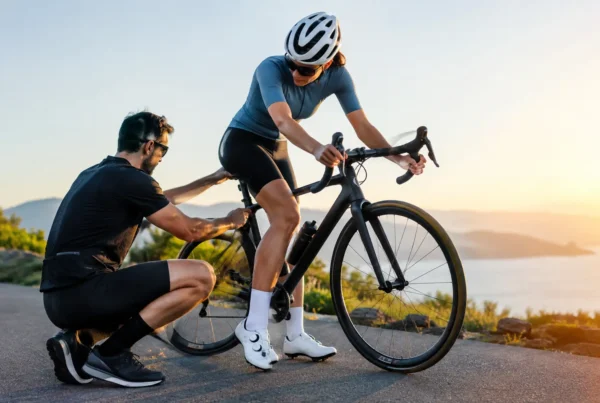
A high-end TT frame with premium components will not automatically be fast. The position has to match the rider. Saddle height, pad stack, pad reach, extension angle, crank length and even tyre choice all influence whether the bike is genuinely quicker or just more expensive.
This is where informed buying matters. Riders shopping in the premium market usually know that groupset level and wheel depth are important, but fit often delivers the bigger return. A bike that supports an efficient, repeatable aero position is a better performance investment than one with a more glamorous spec but the wrong geometry.
It is also worth remembering that comfort and speed are not opposites here. On a TT bike, comfort usually means sustainability. If you can stay aero, keep your head stable and produce power without excess strain, you are more likely to convert the bike’s aerodynamic design into actual time saved.
So, are TT bikes always the faster choice?
Not always. If your riding is mostly social road miles, hilly sportives, technical descents or mixed-terrain routes, a road bike is the better all-round tool. It is more versatile, easier to handle in a wider range of situations and generally more practical outside solo race efforts.
But if your goal is to race triathlon, target PBs in time trials, or maximise speed on solo efforts, the answer is usually clear. A TT bike is faster because it is designed to be. It reduces drag, supports an aero position and turns more of your effort into forward speed.
For riders who care about every watt, every second and every detail of race-day setup, that advantage is exactly why dedicated TT machines continue to earn their place. The fastest bike is not the one with the boldest claim. It is the one that fits, lets you stay aero and makes speed feel repeatable when it matters most.